|
Sidescan-Sonar Imagery of the Shoreface and Inner Continental Shelf, Wrightsville Beach, North Carolina
Figure 11.
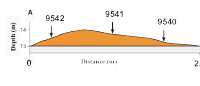
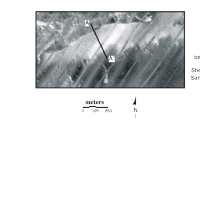
Below, left: Cross-section (A-A') of an inner shelf crescentic dune, with accompanying sidescan sonar imagery.
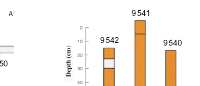
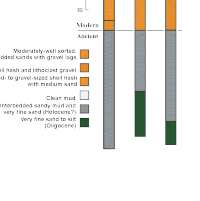
Below, right: Interpretation of cores penetrating the inner shelf dune above. The contact between modern and ancient sediments is distinguished primarily by sediment composition: the modern dunes consist of reworked, residual sediment (bio- and litho-clastic debris) derived from nearby hardgrounds, while the ancient relict) sediments are comprised of in-place, laminated sands and muds indicative of a backbarrier lagoon environment.
Click on figures to zoom in
|