|
|
|
|

The Water Resources Division of the U.S. Geological Survey, in cooperation with many other agencies, obtains a large amount of data pertaining to the water resources of North Dakota each water year. These data, accumulated during many water years, constitute a valuable data base for developing an improved understanding of the water resources of the State. To make these data readily available to interested parties outside the U.S. Geological Survey, the data are published annually in this report series entitled "Water Resources Data - North Dakota."
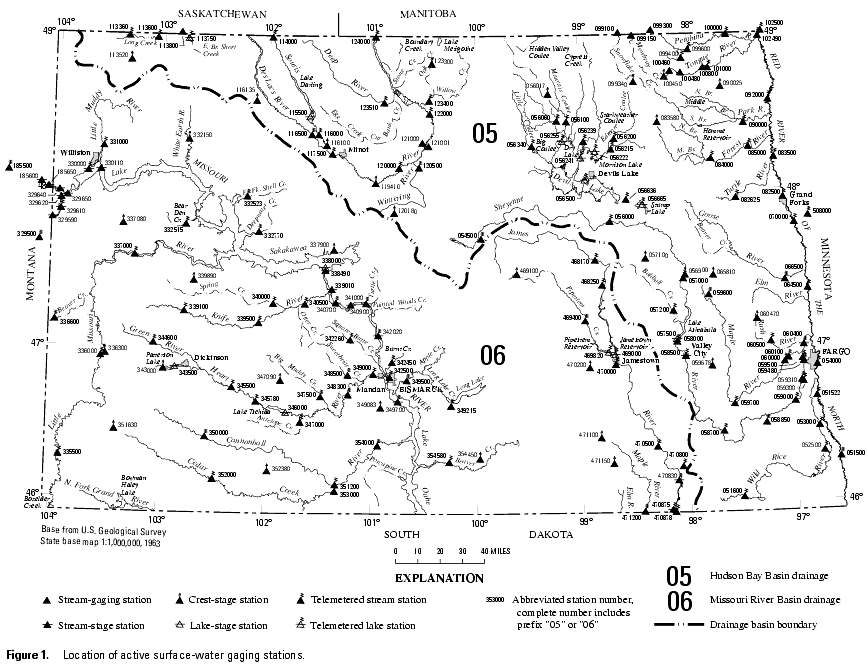
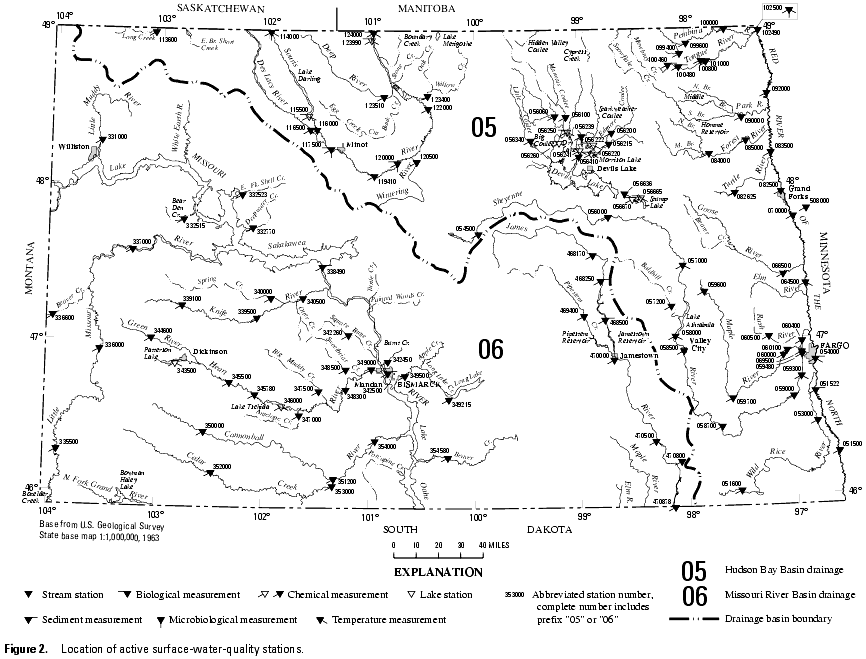
This report includes records of discharge, stage, and water quality for streams and contents, stage, and water quality for lakes and reservoirs. Specifically, it contains records of water discharge for 106 streamflow-gaging stations; stage only for 23 river-stage stations; contents and/or stage for 14 lake or reservoir stations; annual maximum discharge for 31 crest-stage stations; and water quality for 92 streamflow-gaging stations, 6 river-stage stations, 15 lake or reservoir stations, 22 miscellaneous sample sites on rivers, and 67 miscellaneous sample sites on lakes and wetlands. Locations of these stations are shown in figures 1 and 2 except for the miscellaneous water-quality sites. Data are included for 5 water-quality monitor sites on streams and for 2 precipitation-chemistry stations. These data represent that part of the National Water Data System collected by the U.S. Geological Survey and cooperating State and Federal agencies in North Dakota.
This series of annual reports for North Dakota began with the 1961 water year with a report that contained only data relating to the quantities of surface water. For the 1964 water year, a similar report was introduced that contained only data relating to water quality. For the l975-95 water years, the report format was changed to present, in one volume, data on quantities of surface water, quality of surface and ground water, and ground-water levels. Beginning with the 1996 water year, ground-water levels and ground-water quality data have been published in a separate volume for North Dakota.
Prior to introduction of this series and for several water years concurrent with it, water-resources data for North Dakota were published in U.S. Geological Survey Water-Supply Papers. Data on stream discharge and stage and on lake or reservoir contents and stage, through September 1960, were published annually under the title "Surface-Water Supply of the United States, Parts 5 and 6." For the 1961-70 water years, the data were published in two 5-year reports. Data on chemical quality, temperature, and suspended sediment for the 1941-70 water years were published annually under the title "Quality of Surface Waters of the United States," and ground-water levels for the 1935-74 water years were published under the title "Ground-Water Levels in the United States." The above mentioned Water-Supply Papers may be consulted in the libraries of the principal cities of the United States and may be purchased from U.S. Geological Survey, Information Services, Box 25286, Denver, CO 80225-0286.
Publications similar to this report are published annually by the U.S. Geological Survey for all States. These official Survey reports have an identification number consisting of the two-letter State abbreviation, the last two digits of the water year, and the volume number. For example this volume is identified as "U.S. Geological Survey Water-Data Report ND-04-1." For archiving and general distribution, the reports for l971-74 water years also are identified as water-data reports. These water-data reports are for sale in paper copy or in microfiche by the National Technical Information Service, U.S. Department of Commerce, Springfield, VA 22161. Beginning with the 2001 water year, an electronic version of the water-data reports may be accessed from http://water.usgs.gov/pubs/wdr/#ND/.
Additional information, including current prices, for ordering specific reports may be obtained from the District Chief at the address given on the back of the title page or by telephoning (701) 250-7406.
The U.S. Geological Survey and agencies of the State of North Dakota have had cooperative agreements for the collection of streamflow records since 1903, ground-water levels since 1937, and water-quality records since 1946. Organizations that assisted in collecting the data in this report through cooperative agreement with the Survey are: North Dakota State Water Commission, Dale Frink, State Engineer; North Dakota Department of Health, Terry L. Dwelle, M.D., State Health Officer; Devils Lake Basin Joint Water Resource Board, Mike Connor, Director; Lower Heart River Water Resources District, Bill Robinson, Chairman; Morton County Water Resources District, A. C. Mork, Chairman; Red River Joint Water Resource Board, Donald Elston, Chairman; Red River Watershed Management Board, Ronald Osowski, Chairman; Southeast Cass Water Resources District, Thomas L. Fischer, Chairman; City of Minot, Curt Zimbleman, Mayor; North Dakota Department of Transportation, D. A. Sprynczynatyk, P.E., Director; Cass County Joint Water Resource District, Thomas L. Fischer, Chairman; Nelson County Water Resource District, Ben Varnson, Chairman; Three Affiliated Tribes, Tex G. Hall, Tribal Chairman; Spirit Lake Sioux Nation, Phillip G. Longie, Tribal Chairman; Burleigh County Water Resource District, Ken Royce, Chairman; City of Bismarck, John Warford, Mayor; and City of Grand Forks, Michael Brown, Mayor.
Assistance with funds or services was given by the U.S. Army Corps of Engineers, the Bureau of Reclamation, the International Joint Commission of the U.S. State Department, the U.S. Fish and Wildlife Service, the National Park Service, and the U.S. Forest Service.
Certain stations are maintained under agreement with Canada and the records are obtained and compiled in a manner equally acceptable to both countries. Most of these are designated as "international gaging stations."
Organizations that provided data are acknowledged in station descriptions.
In North Dakota, normal annual precipitation ranges from about 13 inches in the west-central part of the State to about 22 inches in the southeastern part of the State (U.S. Department of Commerce, 2002, Monthly station normals of temperature, precipitation, and heating and cooling degree days, 1971-2000, North Dakota: U.S. Department of Commerce, National Oceanic and Atmospheric Administration, National Environmental Satellite, Data, and Information Service, National Climatic Data Center, Asheville, North Carolina, Climatography of the United States, No. 81). Three-fourths of this precipitation occurs during April through September. The greatest normal monthly precipitation for the entire State occurs during June. Normal, as used in reference to meteorological data in this report, is a mean value for the reference period 1971 through 2000. Meteorological data were obtained from publications of the National Climatic Data Center (U.S. Department of Commerce, National Oceanic and Atmospheric Administration, National Climatic Data Center, 2003, 2004, Climatological data, North Dakota: Asheville, North Carolina, v. 111, no. 10-12, and v. 112, no. 1-9).
North Dakota is divided into nine climatological divisions (fig. 3). Precipitation during water year 2004 generally was above normal for all of the climatological divisions except the west-central, southwest, and south-central divisions where precipitation was below normal. A comparison of monthly precipitation for water year 2004 to normal monthly precipitation for 1971-2000 for the nine climatological divisions in North Dakota is shown in figure 3. Data shown in figure 3 are means of monthly precipitation for reporting stations within each climatological division.
Statewide monthly precipitation was 74 percent of normal from October through February and ranged from 29 percent of normal in November to 133 percent of normal in December. Precipitation was less than normal in all nine climatological divisions in October, November, January, and February.
Statewide total monthly precipitation was 107 percent of normal and ranged from 44 percent of normal in April to 179 percent of normal in March. Precipitation was less than normal in all nine climatological divisions in October and April.
During November, statewide precipitation was 95 percent of normal. Total precipitation ranged from 0.37 inch (57 percent) in both the east-central and central divisions to 0.68 inch (154 percent) in the northwest division.
During December and January, all nine climatological divisions had greater-than-normal precipitation except for the southeast division where precipitation was slightly less than normal during January (0.46 inch, 98 percent). During February, all nine climatological divisions had less-than-normal precipitation except for the southwest division where precipitation was greater than normal (0.46 inch, 139 percent).
During late March, a large precipitation event pushed all nine climatological divisions to greater-than-normal precipitation except for the northwest division where precipitation was slightly less than normal (0.64 inch, 98 percent). The greatest amount of precipitation was 2.28 inches (268 percent) in the northeast division.
During April, statewide precipitation was 44 percent of normal, and all nine climatological divisions had less-than-normal precipitation. Total precipitation ranged from 0.46 inch (32 percent) in the northwest division to 1.05 inches (80 percent) in the northeast.
During May, statewide precipitation was 173 percent of normal, and six of the nine climatological divisions had greater-than-normal precipitation. Total precipitation ranged from 1.25 inches (48 percent) in the southwest division to 5.65 inches (233 percent) in the east-central division.
During June, when statewide precipitation usually is greatest, seven of the nine climatological divisions reported less-than-normal precipitation. Only the northwest and north-central divisions had greater-than-normal precipitation. Total precipitation was 4.15 inches (141 percent) in the northwest division and 3.34 inches (118 percent) in the north-central division.
Statewide precipitation during July was less than normal for five of the nine climatological divisions. Total precipitation ranged from 1.81 inches (76 percent) in the west-central division to 3.35 inches (118 percent) in the east-central division.
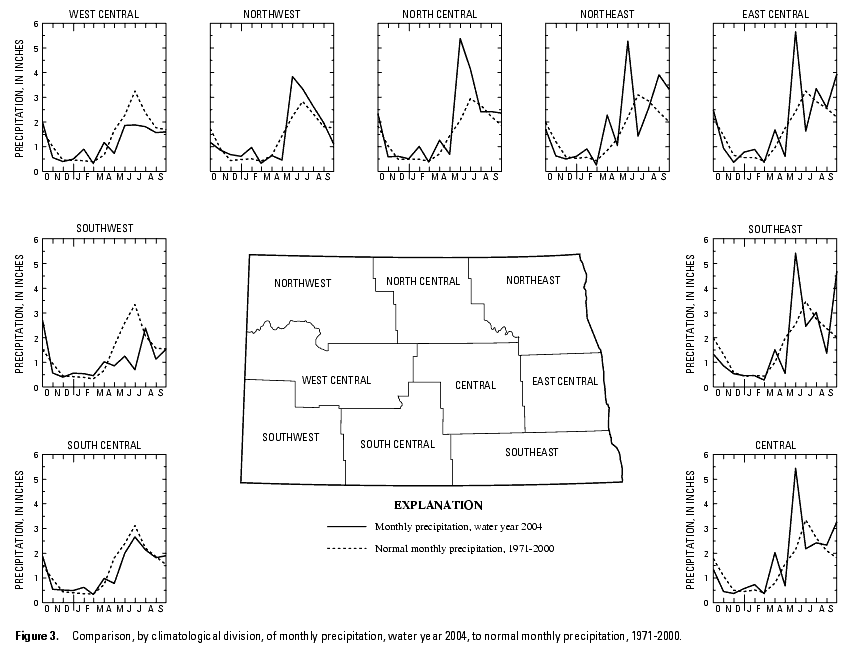
Statewide precipitation during August was less than normal for four of the nine climatological divisions. Total precipitation ranged from 1.13 inches (72 percent) in the southwest division to 3.91 inches (163 percent) in the northeast division.
Statewide monthly mean precipitation during September was greater than normal for six of the nine climatological divisions. Total precipitation ranged from 1.10 inches (62 percent) in the northwest division to 4.70 inches (234 percent) in the southeast division. Total yearly precipitation was less than normal for the southwest division (71 percent), west-central division (81 percent), and south-central division (91 percent). Total yearly precipitation was greater than normal in the remaining six divisions and ranged from 110 percent of normal in the northwest division to 129 percent of normal in the north-central division.
Temperatures during October were above normal statewide. During November through April, statewide monthly mean temperatures were well below normal for November (-7.6×F) and January (-4.0×F); well above normal for December (7.8×F); and slightly above normal for February (1.4×F), March (4.0×F), and April (1.6×F). The slightly warmer temperatures did not result in an earlier than normal spring breakup. The influence of temperatures on streamflow in North Dakota is diminished substantially after the snowpack has melted. Temperatures have little effect on streamflow from May through September.
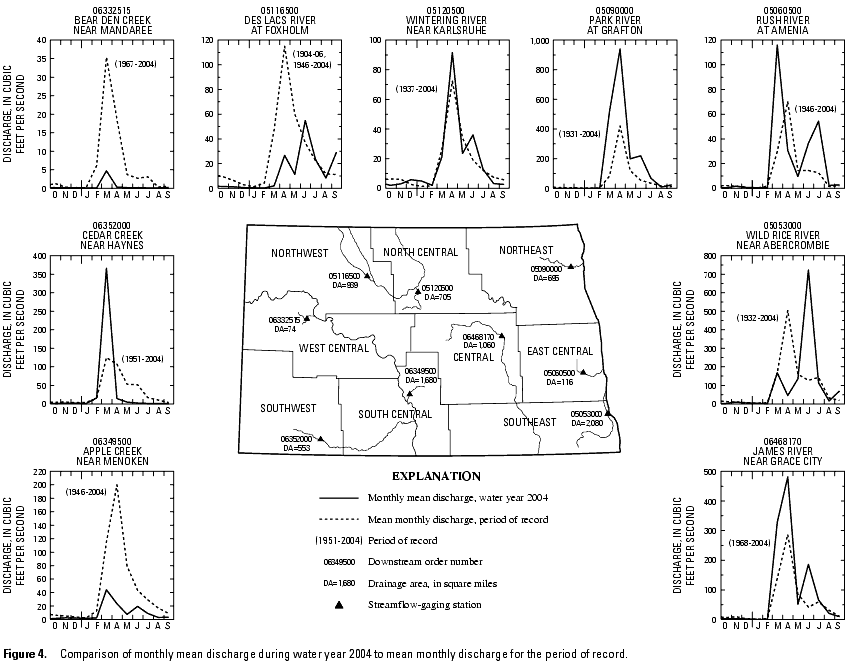
The largest mean monthly discharge of North Dakota rivers generally is coincident with snowmelt runoff. Because above-freezing temperatures normally occur earlier in the southwestern part of the State than in the northeastern part of the State, snowmelt runoff usually begins first on the Missouri River tributaries in southwestern North Dakota and progresses from southwest to northeast across the State. Hydrographs of mean monthly discharge (fig. 4) for the period of record for selected streams within each of the climatological divisions verify this pattern. For example, the largest mean monthly discharges for the period of record for Bear Den Creek near Mandaree, which is in the west-central division, and for Cedar Creek near Haynes, which is in the southwest division, occur in March, whereas the largest mean monthly discharges for the remaining streamflow-gaging stations occur in April.
Although many inferences about hydrologic conditions in the State can be made from precipitation (fig. 3) and streamflow (fig. 4) data, sound hydrologic judgment should be used. Variability of rainfall intensity and distribution should be considered when making conclusions about hydrologic response to rainfall, especially for small basins. Problems also may occur because different reporting periods are used in figures 3 and 4. Normal monthly precipitation is computed using data for a 30-year period (1971-2000), but mean monthly discharge is computed using data for the period of record at each streamflow-gaging station--59 years (1946-2004) in the case of Apple Creek near Menoken.
According to the National Weather Service "Weekly Palmer Drought Index Report" (written commun., 2004), western North Dakota experienced drought conditions at the beginning of the water year while central and eastern North Dakota were moist. Conditions were classified as moderate to severe drought in the southwest climatological division to normally dry in the rest of the state.
Near normal to greater-than-normal precipitation combined with below normal and near normal temperatures caused a considerable snowpack to develop by the end of February, especially in the north-central and northwest climatological division where water equivalents were 3 to 4 inches or greater. The snowpack combined with late March precipitation resulted in greater-than-normal discharges, except for discharges recorded in the south-central, north-central, and west-central divisions where average monthly discharges were less than normal. Discharges in the northeast division were greater than normal because of March 27 precipitation that fell on an unmelted snowpack and frozen ground. The event pushed streamflows on the Forest River, located in the northeast climatological division, to levels only exceeded by floods in 1948 and 1950.
By May, spring precipitation and snowmelt had brought the State out of drought status, except for the southwest portion of the State. The southwest portion remained classified as abnormally dry to severe drought and the rest of the State was classified as moist.
During June, the area west of the Missouri River was classified as moderate to severe drought, and the southwest portion of the State remained classified as dry. Decreased rainfall and near normal temperatures in July resulted in the entire western half of the State to be classified as mild to severe drought while the rest of the State remained classified as moist.
The State continued to dry out in August as precipitation continued to favor the northeast and east-central portions of the State. The driest parts of the State were the southwest and west-central portions, which remained classified as severe drought. The rest of the State was classified as normal except for the northeast and east-central portions, which were classified as unusually moist.
Widespread rainfall in September caused the eastern half of the State to be classified as unusually moist to very moist. The rest of the State was classified as normal, except for the southwest and west-central portions, which were classified as severe drought.
Very few summer peaks exceeded the snowmelt peaks. Summer peaks that exceeded snowmelt peaks are shown in figure 4 in the hydrographs for Des Lacs River at Foxholm and Wild Rice River near Abercrombie.
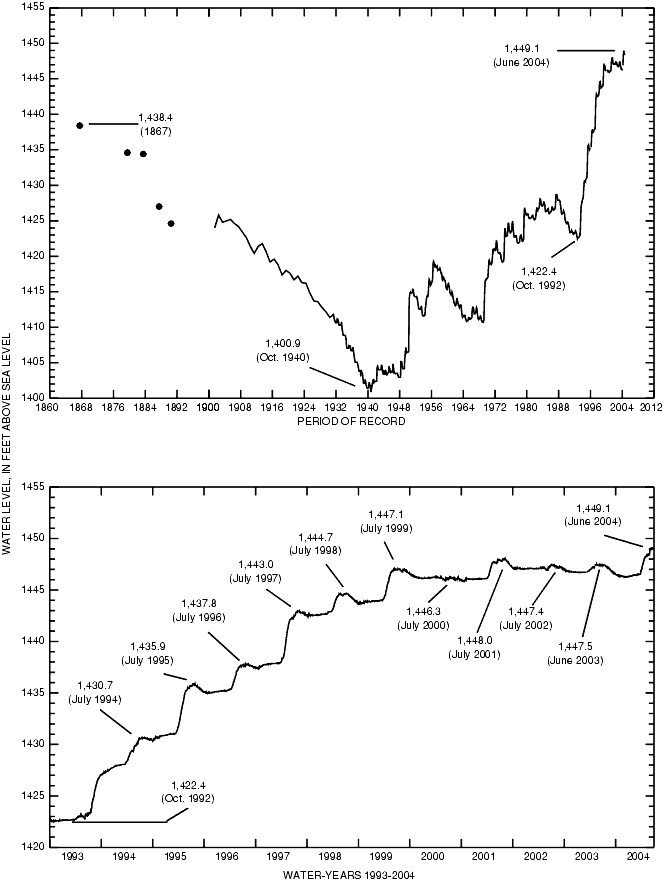
The Devils Lake Basin is a 3,810-square-mile closed basin adjacent to the headwaters of the Sheyenne River. Geologic evidence indicates that, in the past, water flowed from the Devils Lake Basin into the Sheyenne River. However, since 1867 when water levels of Devils Lake first were recorded, Devils Lake has not flowed into the Sheyenne River Basin and the level of the lake has varied greatly in response to wet and dry periods (fig. 5). From 1867 to 1940, the water level generally declined from a maximum of 1,438.4 feet above sea level in 1867 to a minimum of 1,400.9 feet above sea level in 1940. After 1940, the water level generally increased except during 1956-68 and 1987-93. The decline from 1987 to 1993 occurred as a result of a drought in the basin. From 1993 to 1999, the water level increased each year as a result of greater-than-normal precipitation and runoff in the basin. During 2000, for the first time since 1993, the maximum water level did not exceed the maximum from the previous year. During 2004, a new period of record daily maximum of 1,449.1 feet occurred on June 17, 2004, which surpassed the previous record of 1,448.3 feet set on July 21, 2001.
As Devils Lake rises, the surface area increases and requires greater volumes of inflow for each incremental increase in elevation. For example, at an elevation of 1,422.4 feet (the lake level at the end of the 1987-92 drought), the surface area of the lake is about 44,000 acres, whereas at an elevation of 1,449 feet, the surface area of the lake is about 137,000 acres.
During water year 2001, Devils Lake flowed over the divide into Stump Lake for the first time since records have been kept. The elevation of the divide is 1,446.5 feet (James Landenberger, North Dakota State Water Commission, oral commun., 2002). Flow from Devils Lake to Stump Lake occurred again during the summer of 2004. The maximum daily discharge of 250 cubic feet per second occurred on June 12, 2004. The maximum daily elevation for Stump Lake during water year 2004 was 22.97 feet, about 25 feet lower than Devils Lake, and occurred on September 30, 2004.
Chemical quality of streamflow at any particular site is dependent upon many factors, including source of streamflow, composition of soil over which water flows, location, and time of year; therefore, the quality of streamflow varies considerably across the State. Chemical quality of streamflow also is dependent upon the volume of streamflow. During periods of low flow, most of the flow is derived from ground-water inflow, which is mineralized, and the resulting streamflow has large dissolved-solids concentrations. During periods of high flow, most of the flow is derived from snowmelt or precipitation runoff, which is less mineralized, and the resulting streamflow has low dissolved-solids concentrations.
Five stations were selected to show the water-quality variability in rivers throughout the State. Specific conductance, an indicator of dissolved solids in water, is used to show the variability among these stations and among months at a given station. The mean, maximum, and minimum specific conductance for the period of record and the specific conductances measured during the 2004 water year for each station are shown in table 1.
Specific conductance is used as an indicator of the suitability of water for irrigation and other uses. The U.S. Salinity Laboratory (U.S. Salinity Laboratory Staff, 1954, Diagnosis and improvement of saline and alkali soils: U.S. Department of Agriculture Handbook 60, 160 p.) has developed an index using specific conductance as an indicator of salinity hazard for irrigation water. The salinity hazard and corresponding specific conductance are as follow:
In the United States, the Red River of the North drains all of eastern North Dakota, much of northwestern Minnesota, and a small part of northeastern South Dakota. Of the five stations listed in table 1, the Red River of the North at Grand Forks (05082500) has the smallest mean monthly specific-conductance values for each month. The smaller mean values are caused partly by more precipitation occurring in the Red River of the North Basin, especially in Minnesota, than in other parts of North Dakota. The salinity hazard of stream water during the irrigation season (April through October) was medium or high in the months when specific-conductance measurements were made.
The Souris River upstream of Sherwood drains about 9,000 square miles of southeastern Saskatchewan, Canada, and a small part of northwestern North Dakota. Generally, the Souris River near Sherwood (05114000) has larger specific-conductance values than the Red River of the North and the James River but smaller specific-conductance values than the Little Missouri River and the Cannonball River. The salinity hazard of stream water during the irrigation season (April through October) was high in the months when specific-conductance measurements were made.
Figure 5. Devils Lake water levels for the period of record and for water years 1993-2004.
Table 1. Statistical summary of specific-conductance values for the period of record and listing of measured specific-conductance values for water year 2004
year
2004
of
recordThe Little Missouri River drains parts of southwestern North Dakota, northwestern South Dakota, northeastern Wyoming, and southeastern Montana. The Cannonball River drains parts of southwestern North Dakota and northwestern South Dakota. Of the five stations listed in table 1, the Little Missouri River near Watford City (06337000) and the Cannonball River at Breien (06354000) have the largest mean specific-conductance values for the period of record. The salinity hazard of stream water during the irrigation season (April through October) was high in the months when specific-conductance measurements were made at each of these stations.
The James River drains east-central North Dakota. Flow in the James River Basin is regulated by the Jamestown and Pipestem Reservoirs, which are used primarily for flood control. High flows from snowmelt and rainfall are stored in the reservoirs and released throughout the summer. Specific-conductance values for the James River at LaMoure (06470500) generally are smallest from March through October during high flow or when the stored runoff water is released. The salinity hazard of stream water during the irrigation season (April through October) was high in the months when measurements were made.
Since October 1, 1950, hydrologic-station records in USGS reports have been listed in order of downstream direction along the main stream. All stations on a tributary entering upstream from a main-stream station are listed before that station. A station on a tributary entering between two main-stream stations is listed between those stations. A similar order is followed in listing stations on first rank, second rank, and other ranks of tributaries. The rank of any tributary on which a station is located with respect to the stream to which it is immediately tributary is indicated by an indention in that list of stations in the front of this report. Each indentation represents one rank. This downstream order and system of indentation indicates which stations are on tributaries between any two stations and the rank of the tributary on which each station is located.
As an added means of identification, each hydrologic station and partial-record station has been assigned a station number. These station numbers are in the same downstream order used in this report. In assigning a station number, no distinction is made between partial-record stations and other stations; therefore, the station number for a partial-record station indicates downstream-order position in a list composed of both types of stations. Gaps are consecutive. The complete 8-digit (or 10-digit) number for each station such as 06342500, which appears just to the left of the station name, includes a 2-digit part number "06" plus the 6-digit (or 8-digit) downstream order number "342500." In areas of high station density, an additional two digits may be added to the station identification number to yield a 10-digit number. The stations are numbered in downstream order as described above between stations of consecutive 8-digit numbers.
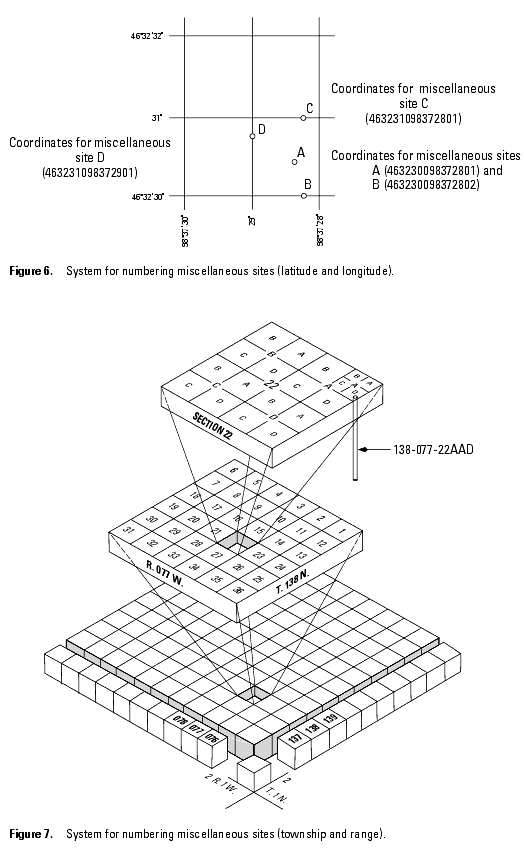
The USGS well and miscellaneous site-numbering system is based on the grid system of latitude and longitude. The system provides the geographic location of the well or miscellaneous site and a unique number for each site. The number consists of 15 digits. The first 6 digits denote the degrees, minutes, and seconds of latitude, and the next 7 digits denote degrees, minutes, and seconds of longitude; the last 2 digits are a sequential number for wells within a 1-second grid. In the event that the latitude-longitude coordinates for a well and miscellaneous site are the same, a sequential number such as "01," "02," and so forth, would be assigned as one would for wells (see fig. 6). The 8-digit, downstream order station numbers are not assigned to wells and miscellaneous sites where only random water-quality samples or discharge measurements are taken. During water year 2003, the true latitude and longitude listed in the LOCATION paragraph was changed slightly at some locations. The change was made based on new information and does not signify a change in the gage location unless otherwise noted.
In addition to the well number that is based on the latitude and longitude for each well, another well number may be provided which in many states is based on the Public Land Survey System, a set of rectangular surveys that is used to identify land parcels. This well number is familiar to the water users of North Dakota and shows the location of the well by quadrant, township, range section, and position within the section (see fig. 7). The capital letter at the beginning of the location number indicates the quadrant in which the well is located. Four quadrants are formed by the intersection of the base line and the principal meridian-A indicates the northeast quadrant, B the northwest, C the southwest, and D the southeast. The first numeral indicates the township, the second the range, and the third the section in which the well is located. Lowercase letters following the section number locate the well within the section. The first letter denotes the quarter section, the second the quarter-quarter section, and the third the quarter-quarter-quarter section. The letters are assigned within the section in a counter-clockwise direction beginning with (a) in the northeast quarter of the section. Letters are assigned within each quarter section and quarter-quarter section in the same manner. Where two or more wells are located within the smallest subdivision, consecutive numbers beginning with 1 are added to the letters in the order in which the wells are inventoried. For example, site 138-077-22AAD is in the SE1/4NE1/4NE1/4 sec.22, T.138 N., R.077 W. Consecutive terminal numbers are added if more than one site is recorded within a 10-acre tract.
Hydrologic Benchmark Network is a network of 61 sites in small drainage basins in 39 States that was established in 1963 to provide consistent streamflow data representative of undeveloped watersheds nationwide, and from which data could be analyzed on a continuing basis for use in comparison and contrast with conditions observed in basins more obviously affected by human activities. At selected sites, water-quality information is being gathered on major ions and nutrients, primarily to assess the effects of acid deposition on stream chemistry. Additional information on the Hydrologic Benchmark Program may be accessed from http://water.usgs.gov/hbn/.
National Stream-Quality Accounting Network (NASQAN) is a network of sites used to monitor the water quality of large rivers within the Nation's largest river basins. From 1995 through 1999, a network of approximately 40 stations was operated in the Mississippi, Columbia, Colorado, and Rio Grande River Basins. For the period 2000 through 2004, sampling was reduced to a few index stations on the Colorado and Columbia Rivers so that a network of 5 stations could be implemented on the Yukon River. Samples are collected with sufficient frequency that the flux of a wide range of constituents can be estimated. The objective of NASQAN is to characterize the water quality of these large rivers by measuring concentration and mass transport of a wide range of dissolved and suspended constituents, including nutrients, major ions, dissolved and sediment-bound heavy metals, common pesticides, and inorganic and organic forms of carbon. This information will be used (1) to describe the long-term trends and changes in concentration and transport of these constituents; (2) to test findings of the National Water-Quality Assessment (NAWQA) Program; (3) to characterize processes unique to large-river systems such as storage and re-mobilization of sediments and associated contaminants; and (4) to refine existing estimates of off-continent transport of water, sediment, and chemicals for assessing human effects on the world's oceans and for determining global cycles of carbon, nutrients, and other chemicals. Additional information about the NASQAN Program may be accessed from http://water.usgs.gov/nasqan/.
The National Atmospheric Deposition Program/National Trends Network (NADP/NTN) is a network of monitoring sites that provides continuous measurement and assessment of the chemical constituents in precipitation throughout the United States. As the lead Federal agency, the USGS works together with over 100 organizations to provide a long-term, spatial and temporal record of atmospheric deposition generated from this network of 250 precipitation-chemistry monitoring sites. The USGS supports 74 of these 250 sites. This long-term, nationally consistent monitoring program, coupled with ecosystem research, provides critical information toward a national scorecard to evaluate the effectiveness of ongoing and future regulations intended to reduce atmospheric emissions and subsequent impacts to the Nation's land and water resources. Reports and other information on the NADP/NTN Program, as well as data from the individual sites, may be accessed from http://bqs.usgs.gov/acidrain/.
The USGS National Water-Quality Assessment (NAWQA) Program is a long-term program with goals to describe the status and trends of water-quality conditions for a large, representative part of the Nation's ground- and surface-water resources; to provide an improved understanding of the primary natural and human factors affecting these observed conditions and trends; and to provide information that supports development and evaluation of management, regulatory, and monitoring decisions by other agencies.
Assessment activities are being conducted in 42 study units (major watersheds and aquifer systems) that represent a wide range of environmental settings nationwide and that account for a large percentage of the Nation's water use. A wide array of chemical constituents is measured in ground water, surface water, streambed sediments, and fish tissues. The coordinated application of comparative hydrologic studies at a wide range of spatial and temporal scales will provide information for water-resources managers to use in making decisions and a foundation for aggregation and comparison of findings to address water-quality issues of regional and national interest.
Communication and coordination between USGS personnel and other local, State, and Federal interests are critical components of the NAWQA Program. Each study unit has a local liaison committee consisting of representatives from key Federal, State, and local water-resources agencies, Indian nations, and universities in the study unit. Liaison committees typically meet semiannually to discuss their information needs, monitoring plans and progress, desired information products, and opportunities to collaborate efforts among the agencies. Additional information about the NAWQA Program may be accessed from http://water.usgs.gov/nawqa/.
The USGS National Streamflow Information Program (NSIP) is a long-term program with goals to provide framework streamflow data across the Nation. Included in the program are creation of a permanent Federally funded streamflow network, research on the nature of streamflow, regional assessments of streamflow data and databases, and upgrades in the streamflow information delivery systems. Additional information about NSIP may be accessed from http://water.usgs.gov/nsip/.
The base data collected at gaging stations (fig. 1) consist of records of stage and measurements of discharge of streams or canals, and stage, surface area, and volume of lakes or reservoirs. In addition, observations of factors affecting the stage-discharge relation or the stage-capacity relation, weather records, and other information are used to supplement base data in determining the daily flow or volume of water in storage. Records of stage are obtained from a water-stage recorder that is either downloaded electronically in the field to a laptop computer or similar device or is transmitted using telemetry such as GOES satellite, land-line or cellular-phone modems, or by radio transmission. Measurements of discharge are made with a current meter or acoustic Doppler current profiler, using the general methods adopted by the USGS. These methods are described in standard textbooks, USGS Water-Supply Paper 2175, and the Techniques of Water-Resources Investigations of the United States Geological Survey (TWRIs), Book 3, Chapters A1 through A19 and Book 8, Chapters A2 and B2, which may be accessed from http://water.usgs.gov/pubs/twri/. The methods are consistent with the American Society for Testing and Materials (ASTM) standards and generally follow the standards of the International Organization for Standardization (ISO).
For stream-gaging stations, discharge-rating tables for any stage are prepared from stage-discharge curves. If extensions to the rating curves are necessary to express discharge greater than measured, the extensions are made on the basis of indirect measurements of peak discharge (such as slope-area or contracted-opening measurements, or computation of flow over dams and weirs), step-backwater techniques, velocity-area studies, and logarithmic plotting. The daily mean discharge is computed from gage heights and rating tables, then the monthly and yearly mean discharges are computed from the daily values. If the stage-discharge relation is subject to change because of frequent or continual change in the physical features of the stream channel, the daily mean discharge is computed by the shifting-control method in which correction factors based on individual discharge measurements and notes by engineers and observers are used when applying the gage heights to the rating tables. If the stage-discharge relation for a station is temporarily changed by the presence of aquatic growth or debris on the controlling section, the daily mean discharge is computed by the shifting-control method.
The stage-discharge relation at some stream-gaging stations is affected by backwater from reservoirs, tributary streams, or other sources. Such an occurrence necessitates the use of the slope method in which the slope or fall in a reach of the stream is a factor in computing discharge. The slope or fall is obtained by means of an auxiliary gage at some distance from the base gage.
An index velocity is measured using ultrasonic or acoustic instruments at some stream-gaging stations and this index velocity is used to calculate an average velocity for the flow in the stream. This average velocity along with a stage-area relation is then used to calculate average discharge.
At some stations, stage-discharge relation is affected by changing stage. At these stations, the rate of change in stage is used as a factor in computing discharge.
At some stream-gaging stations in the northern United States, the stage-discharge relation is affected by ice in the winter; therefore, computation of the discharge in the usual manner is impossible. Discharge for periods of ice effect is computed on the basis of gage-height record and occasional winter-discharge measurements. Consideration is given to the available information on temperature and precipitation, notes by gage observers and hydrologists, and comparable records of discharge from other stations in the same or nearby basins.
For a lake or reservoir station, capacity tables giving the volume or contents for any stage are prepared from stage-area relation curves defined by surveys. The application of the stage to the capacity table gives the contents, from which the daily, monthly, or yearly changes are computed.
If the stage-capacity curve is subject to changes because of deposition of sediment in the reservoir, periodic resurveys of the reservoir are necessary to define new stage-capacity curves. During the period between reservoir surveys, the computed contents may be increasingly in error due to the gradual accumulation of sediment.
For some stream-gaging stations, periods of time occur when no gage-height record is obtained or the recorded gage height is faulty and cannot be used to compute daily discharge or contents. Such a situation can happen when the recorder stops or otherwise fails to operate properly, the intakes are plugged, the float is frozen in the well, or for various other reasons. For such periods, the daily discharges are estimated on the basis of recorded range in stage, prior and subsequent records, discharge measurements, weather records, and comparison with records from other stations in the same or nearby basins. Likewise, lake or reservoir volumes may be estimated on the basis of operator's log, prior and subsequent records, inflow-outflow studies, and other information.
The records published for each continuous-record surface-water discharge station (stream-gaging station) consist of four parts: (1) the station manuscript or description; (2) the data table of daily mean values of discharge for the current water year with summary data; (3) a tabular statistical summary of monthly mean flow data for a designated period, by water year; and (4) a summary statistics table that includes statistical data of annual, daily, and instantaneous flows as well as data pertaining to annual runoff, 7-day low-flow minimums, and flow duration.
The manuscript provides, under various headings, descriptive information, such as station location; period of record; historical extremes outside the period of record; record accuracy; and other remarks pertinent to station operation and regulation. The following information, as appropriate, is provided with each continuous record of discharge or lake content. Comments follow that clarify information presented under the various headings of the station description.
LOCATION.-Location information is obtained from the most accurate maps available. The location of the gaging station with respect to the cultural and physical features in the vicinity and with respect to the reference place mentioned in the station name is given. River mileages, given for only a few stations, were determined by methods given in "River Mileage Measurement," Bulletin 14, Revision of October 1968, prepared by the Water Resources Council or were provided by the U.S. Army Corps of Engineers.
DRAINAGE AREA.-Drainage areas are measured using the most accurate maps available. Because the type of maps available varies from one drainage basin to another, the accuracy of drainage areas likewise varies. Drainage areas are updated as better maps become available.
PERIOD OF RECORD.-This term indicates the time period for which records have been published for the station or for an equivalent station. An equivalent station is one that was in operation at a time that the present station was not and whose location was such that its flow reasonably can be considered equivalent to flow at the present station.
REVISED RECORDS.-If a critical error in published records is discovered, a revision is included in the first report published following discovery of the error.
GAGE.-The type of gage in current use, the datum of the current gage referred to a standard datum, and a condensed history of the types, locations, and datums of previous gages are given under this heading.
REMARKS.-All periods of estimated daily discharge either will be identified by date in this paragraph of the station description for water-discharge stations or flagged in the daily discharge table. (See section titled Identifying Estimated Daily Discharge.) Information is presented relative to the accuracy of the records, to special methods of computation, and to conditions that affect natural flow at the station. In addition, information may be presented pertaining to average discharge data for the period of record; to extremes data for the period of record and the current year; and, possibly, to other pertinent items. For reservoir stations, information is given on the dam forming the reservoir, the capacity, the outlet works and spillway, and the purpose and use of the reservoir.
COOPERATION.-Records provided by a cooperating organization or obtained for the USGS by a cooperating organization are identified here.
EXTREMES OUTSIDE PERIOD OF RECORD.-Information here documents major floods or unusually low flows that occurred outside the stated period of record. The information may or may not have been obtained by the USGS.
REVISIONS.-Records are revised if errors in published records are discovered. Appropriate updates are made in the USGS distributed data system, NWIS, and subsequently to its Web-based National data system, NWISWeb (http://water.usgs.gov/nwis/nwis). Users are encouraged to obtain all required data from NWIS or NWISWeb to ensure that they have the most recent data updates. Updates to NWISWeb are made on an annual basis.
Although rare, occasionally the records of a discontinued gaging station may need revision. Because no current or, possibly, future station manuscript would be published for these stations to document the revision in a REVISED RECORDS entry, users of data for these stations who obtained the record from previously published data reports may wish to contact the District Office (address given on the back of the title page of this report) to determine if the published records were revised after the station was discontinued. If, however, the data for a discontinued station were obtained by computer retrieval, the data would be current. Any published revision of data is always accompanied by revision of the corresponding data in computer storage.
Manuscript information for lake or reservoir stations differs from that for stream stations in the nature of the REMARKS and in the inclusion of a stage-capacity table when daily volumes are given.
Tables of peak discharge above base discharge are included for some stations where secondary instantaneous peak discharge data are used in flood-frequency studies of highway and bridge design, flood-control structures, and other flood-related projects. The base discharge value is selected so an average of three peaks a year will be reported. This base discharge value has a recurrence interval of approximately 1.1 years or a 91-percent chance of exceedence in any 1 year.
The daily table of discharge records for stream-gaging stations gives mean discharge for each day of the water year. In the monthly summary for the table, the line headed TOTAL gives the sum of the daily figures for each month; the line headed MEAN gives the arithmetic average flow in cubic feet per second for the month; and the lines headed MAX and MIN give the maximum and minimum daily mean discharges, respectively, for each month. Discharge for the month is expressed in cubic feet per second per square mile (line headed CFSM); or in inches (line headed IN); or in acre-feet (line headed AC-FT). Values for cubic feet per second per square mile and runoff in inches or in acre-feet may be omitted if extensive regulation or diversion is in effect or if the drainage area includes large noncontributing areas. At some stations, monthly and (or) yearly observed discharges are adjusted for reservoir storage or diversion, or diversion data or reservoir volumes are given. These values are identified by a symbol and a corresponding footnote.
A tabular summary of the mean (line headed MEAN), maximum (MAX), and minimum (MIN) of monthly mean flows for each month for a designated period is provided below the mean values table. The water years of the first occurrence of the maximum and minimum monthly flows are provided immediately below those values. The designated period will be expressed as FOR WATER YEARS __-__, BY WATER YEAR (WY), and will list the first and last water years of the range of years selected from the PERIOD OF RECORD paragraph in the station manuscript. The designated period will consist of all of the station record within the specified water years, including complete months of record for partial water years, and may coincide with the period of record for the station. The water years for which the statistics are computed are consecutive, unless a break in the station record is indicated in the manuscript.
A table titled SUMMARY STATISTICS follows the statistics of monthly mean data tabulation. This table consists of four columns with the first column containing the line headings of the statistics being reported. The table provides a statistical summary of yearly, daily, and instantaneous flows, not only for the current water year but also for the previous calendar year and for a designated period, as appropriate. The designated period selected, WATER YEARS __-__, will consist of all of the station records within the specified water years, including complete months of record for partial water years, and may coincide with the period of record for the station. The water years for which the statistics are computed are consecutive, unless a break in the station record is indicated in the manuscript. All of the calculations for the statistical characteristics designated ANNUAL (see line headings below), except for the ANNUAL 7-DAY MINIMUM statistic, are calculated for the designated period using complete water years. The other statistical characteristics may be calculated using partial water years.
The date or water year, as appropriate, of the first occurrence of each statistic reporting extreme values of discharge is provided adjacent to the statistic. Repeated occurrences may be noted in the REMARKS paragraph of the manuscript or in footnotes. Because the designated period may not be the same as the station period of record published in the manuscript, occasionally the dates of occurrence listed for the daily and instantaneous extremes in the designated-period column may not be within the selected water years listed in the heading. When the dates of occurrence do not fall within the selected water years listed in the heading, it will be noted in the REMARKS paragraph or in footnotes. Selected streamflow duration-curve statistics and runoff data also are given. Runoff data may be omitted if extensive regulation or diversion of flow is in effect in the drainage basin.
The following summary statistics data are provided with each continuous record of discharge. Comments that follow clarify information presented under the various line headings of the SUMMARY STATISTICS table.
ANNUAL MEAN.-The arithmetic mean for the individual daily mean discharges for the year noted or for the designated period.
ANNUAL 7-DAY MINIMUM.-The lowest mean discharge for 7 consecutive days for a calendar year or a water year. Note that most low-flow frequency analyses of annual 7-day minimum flows use a climatic year (April 1-March 31). The date shown in the summary statistics table is the initial date of the 7-day period. This value should not be confused with the 7-day 10-year low-flow statistic.
MAXIMUM PEAK FLOW.-The maximum instantaneous peak discharge occurring for the water year or designated period. Occasionally the maximum flow for a year may occur at midnight at the beginning or end of the year, on a recession from or rise toward a higher peak in the adjoining year. In this case, the maximum peak flow is given in the table and the maximum flow may be reported in a footnote or in the REMARKS paragraph in the manuscript.
MAXIMUM PEAK STAGE.-The maximum instantaneous peak stage occurring for the water year or designated period. Occasionally the maximum stage for a year may occur at midnight at the beginning or end of the year, on a recession from or rise toward a higher peak in the adjoining year. In this case, the maximum peak stage is given in the table and the maximum stage may be reported in the REMARKS paragraph in the manuscript or in a footnote. If the dates of occurrence of the maximum peak stage and maximum peak flow are different, the REMARKS paragraph in the manuscript or a footnote may be used to provide further information.
INSTANTANEOUS LOW FLOW.-The minimum instantaneous discharge occurring for the water year or for the designated period.
ANNUAL RUNOFF.-Indicates the total quantity of water in runoff for a drainage area for the year. Data reports may use any of the following units of measurement in presenting annual runoff data:
Acre-foot (AC-FT) is the quantity of water required to cover 1 acre to a depth of 1 foot and is equivalent to 43,560 cubic feet or about 326,000 gallons or 1,233 cubic meters.
Cubic feet per square mile (CFSM) is the average number of cubic feet of water flowing per second from each square mile of area drained, assuming the runoff is distributed uniformly in time and area.
Inches (INCHES) indicate the depth to which the drainage area would be covered if all of the runoff for a given time period were uniformly distributed on it.
10 PERCENT EXCEEDS.-The discharge that has been exceeded 10 percent of the time for the designated period.
50 PERCENT EXCEEDS.-The discharge that has been exceeded 50 percent of the time for the designated period.
90 PERCENT EXCEEDS.-The discharge that has been exceeded 90 percent of the time for the designated period.
Data collected at partial-record stations follow the information for continuous-record sites. Data for partial-record discharge stations are presented in two tables. The first table lists annual maximum stage and discharge at crest-stage stations, and the second table lists discharge measurements at low-flow partial-record stations. The tables of partial-record stations are followed by a listing of discharge measurements made at sites other than continuous-record or partial-record stations. These measurements are often made in times of drought or flood to give better areal coverage to those events. Those measurements and others collected for a special reason are called measurements at miscellaneous sites.
Estimated daily-discharge values published in the water-discharge tables of annual state data reports are identified. This identification is shown either by flagging individual daily values with the letter "e" and noting in a table footnote, "e-Estimated," or by listing the dates of the estimated record in the REMARKS paragraph of the station description.
The accuracy of streamflow data depends primarily on (1) the stability of the stage-discharge relation or, if the control is unstable, the frequency of discharge measurements, and (2) the accuracy of observations of stage, measurements of discharge, and interpretations of records.
The degree of accuracy of the records is stated in the REMARKS in the station description. "Excellent" indicates that about 95 percent of the daily discharges are within 5 percent of the true value; "good" within 10 percent; and "fair," within 15 percent. "Poor" indicates that daily discharges have less than "fair" accuracy. Different accuracies may be attributed to different parts of a given record.
Values of daily mean discharge in this report are shown to the nearest hundredth of a cubic foot per second for discharges of less than 1 ft3/s; to the nearest tenths between 1.0 and 10 ft3/s; to whole numbers between 10 and 1,000 ft3/s; and to 3 significant figures above 1,000 ft3/s. The number of significant figures used is based solely on the magnitude of the discharge value. The same rounding rules apply to discharge values listed for partial-record stations.
Discharge at many stations, as indicated by the monthly mean, may not reflect natural runoff due to the effects of diversion, consumption, regulation by storage, increase or decrease in evaporation due to artificial causes, or to other factors. For such stations, values of cubic feet per second per square mile and of runoff in inches are not published unless satisfactory adjustments can be made for diversions, for changes in contents of reservoirs, or for other changes incident to use and control. Evaporation from a reservoir is not included in the adjustments for changes in reservoir contents, unless it is so stated. Even at those stations where adjustments are made, large errors in computed runoff may occur if adjustments or losses are large in comparison with the observed discharge.
Information of a more detailed nature than that published for most of the stream-gaging stations such as discharge measurements, gage-height records, and rating tables is available from the District office. Also, most stream-gaging station records are available in computer-usable form and many statistical analyses have been made.
Information on the availability of unpublished data or statistical analyses may be obtained from the District office (see address that is shown on the back of the title page of this report).
Rainfall data generally are collected using electronic data loggers that measure the rainfall in 0.01-inch increments every 15 minutes using either a tipping-bucket rain gage or a collection well gage. Twenty-four hour rainfall totals are tabulated and presented. A 24-hour period extends from just past midnight of the previous day to midnight of the current day. Snowfall-affected data can result during cold weather when snow fills the rain-gage funnel and then melts as temperatures rise. Snowfall-affected data are subject to errors. Missing values are indicated by this symbol "---" in the table.
Precipitation records collected at surface-water gaging stations are identified with the same station number and name as the stream-gaging station. Where a surface-water daily-record station is not available, the precipitation record is published with its own name and latitude-longitude identification number.
Information pertinent to the history of a precipitation station is provided in descriptive headings preceding the tabular data. These descriptive headings give details regarding location, period of record, and general remarks.
The following information is provided with each precipitation station. Comments that follow clarify information presented under the various headings of the station description.
LOCATION.-See Data Presentation in the EXPLANATION OF STAGE- AND WATER-DISCHARGE RECORDS section of this report (same comments apply).
PERIOD OF RECORD.-See Data Presentation in the EXPLANATION OF STAGE- AND WATER-DISCHARGE RECORDS section of this report (same comments apply).
REMARKS.-Remarks provide added information pertinent to the collection, analysis, or computation of records.
Surface-water samples for analysis usually are collected at or near stream-gaging stations. The quality-of-water records are given immediately following the discharge records at these stations.
The descriptive heading for water-quality records gives the period of record for all water-quality data; the period of daily record for parameters that are measured on a daily basis (specific conductance, water temperature, sediment discharge, and so forth); extremes for the current year; and general remarks.
For ground-water records, no descriptive statements are given; however, the well number, depth of well, sampling date, or other pertinent data are given in the table containing the chemical analyses of the ground water.
Most of the methods used for collecting and analyzing water samples are described in the TWRIs, which may be accessed from http://water.usgs.gov/pubs/twri/.
One sample can define adequately the water quality at a given time if the mixture of solutes throughout the stream cross-section is homogeneous. However, the concentration of solutes at different locations in the cross section may vary widely with different rates of water discharge, depending on the source of material and the turbulence and mixing of the stream. Some streams must be sampled at several verticals to obtain a representative sample needed for an accurate mean concentration and for use in calculating load.
Chemical-quality data published in this report are considered to be the most representative values available for the stations listed. The values reported represent water-quality conditions at the time of sampling as much as possible, consistent with available sampling techniques and methods of analysis. In the rare case where an apparent inconsistency exists between a reported pH value and the relative abundance of carbon dioxide species (carbonate and bicarbonate), the inconsistency is the result of a slight uptake of carbon dioxide from the air by the sample between measurement of pH in the field and determination of carbonate and bicarbonate in the laboratory.
For chemical-quality stations equipped with digital monitors, the records consist of daily maximum and minimum values (and sometimes mean or median values) for each constituent measured, and are based on 15-minute or 1-hour intervals of recorded data beginning at 0000 hours and ending at 2359 hours for the day of record.
[£, less than or equal to; ±, plus or minus value shown; ×C, degree Celsius; >, greater than; %, percent; mg/L, milligram per liter; pH unit, standard pH unit]
Records of surface-water quality ordinarily are obtained at or near stream-gaging stations because discharge data are useful in the interpretation of surface-water quality. Records of surface-water quality in this report involve a variety of types of data and measurement frequencies.
Water-quality data for surface-water sites are grouped into one of three classifications. A continuous-record station is a site where data are collected on a regularly scheduled basis. Frequency may be one or more times daily, weekly, monthly, or quarterly. A partial-record station is a site where limited water-quality data are collected systematically over a period of years. Frequency of sampling is usually less than quarterly. A miscellaneous sampling site is a location other than a continuous- or partial-record station, where samples are collected to give better areal coverage to define water-quality conditions in the river basin.
A careful distinction needs to be made between continuous records as used in this report and continuous recordings that refer to a continuous graph or a series of discrete values recorded at short intervals. Some records of water quality, such as temperature and specific conductance, may be obtained through continuous recordings; however, because of costs, most data are obtained only monthly or less frequently. Locations of stations for which records on the quality of surface water appear in this report are shown in figure 2.
One of four accuracy classifications is applied for measured physical properties at continuous-record stations on a scale ranging from poor to excellent. The accuracy rating is based on data values recorded before any shifts or corrections are made. Additional consideration also is given to the amount of publishable record and to the amount of data that have been corrected or shifted.
Water-quality records collected at a surface-water daily record station are published immediately following that record, regardless of the frequency of sample collection. Station number and name are the same for both records. Where a surface-water daily record station is not available or where the water quality differs significantly from that at the nearby surface-water station, the continuing water-quality record is published with its own station number and name in the regular downstream-order sequence. Water-quality data for partial-record stations and for miscellaneous sampling sites appear in separate tables following the table of discharge measurements at miscellaneous sites.
In obtaining water-quality data, a major concern is assuring that the data obtained represent the naturally occurring quality of the water. To ensure this, certain measurements, such as water temperature, pH, and dissolved oxygen, must be made on site when the samples are taken. To assure that measurements made in the laboratory also represent the naturally occurring water, carefully prescribed procedures must be followed in collecting the samples, in treating the samples to prevent changes in quality pending analysis, and in shipping the samples to the laboratory. Procedures for on-site measurements and for collecting, treating, and shipping samples are given in TWRIs Book 1, Chapter D2; Book 3, Chapters A1, A3, and A4; and Book 9, Chapters A1-A9. Most of the methods used for collecting and analyzing water samples are described in the TWRIs, which may be accessed from http://water.usgs.gov/pubs/twri/. Also, detailed information on collecting, treating, and shipping samples can be obtained from the USGS Distrct office (see address that is shown on the back of title page in this report).
Water temperatures are measured at most of the water-quality stations. In addition, water temperatures are taken at the time of discharge measurements for water-discharge stations. For stations where water temperatures are taken manually once or twice daily, the water temperatures are taken at about the same time each day. Large streams have a small diurnal temperature change; shallow streams may have a daily range of several degrees and may follow closely the changes in air temperature. Some streams may be affected by waste-heat discharges.
At stations where recording instruments are used, either mean temperatures or maximum and minimum temperatures for each day are published. Water temperatures measured at the time of water-discharge measurements are on file in the District office.
Suspended-sediment concentrations are determined from samples collected by using depth-integrating samplers. Samples usually are obtained at several verticals in the cross section, or a single sample may be obtained at a fixed point and a coefficient applied to determine the mean concentration in the cross section.
During periods of rapidly changing flow or rapidly changing concentration, samples may be collected more frequently (twice daily or, in some instances, hourly). The published sediment discharges for days of rapidly changing flow or concentration were computed by the subdivided-day method (time-discharge weighted average). Therefore, for those days when the published sediment discharge value differs from the value computed as the product of discharge times mean concentration times 0.0027, the reader can assume that the sediment discharge for that day was computed by the subdivided-day method. For periods when no samples were collected, daily discharges of suspended sediment were estimated on the basis of water discharge, sediment concentrations observed immediately before and after the periods, and suspended-sediment loads for other periods of similar discharge.
At other stations, suspended-sediment samples are collected periodically at many verticals in the stream cross section. Although data collected periodically may represent conditions only at the time of observation, such data are useful in establishing seasonal relations between quality and streamflow and in predicting long-term sediment-discharge characteristics of the stream.
In addition to the records of suspended-sediment discharge, records of the periodic measurements of the particle-size distribution of the suspended sediment and bed material are included for some stations.
Samples for biochemical oxygen demand (BOD) and indicator bacteria are analyzed locally. All other samples are analyzed in the USGS laboratory in Lakewood, Colorado, unless otherwise noted. Methods used in analyzing sediment samples and computing sediment records are given in TWRI, Book 5, Chapter C1. Methods used by the USGS laboratories are given in the TWRIs, Book 1, Chapter D2 and Book 5, Chapters A1, A3, and A4. The TWRI publications may be accessed from http://water.usgs.gov/pubs/twri/. These methods are consistent with ASTM standards and generally follow ISO standards.
For continuing-record stations, information pertinent to the history of station operation is provided in descriptive headings preceding the tabular data. These descriptive headings give details regarding location, drainage area, period of record, type of data available, instrumentation, general remarks, cooperation, and extremes for parameters currently measured daily. Tables of chemical, physical, biological, radiochemical data, and so forth, obtained at a frequency less than daily are presented first. Tables of "daily values" of specific conductance, pH, water temperature, dissolved oxygen, and suspended sediment then follow in sequence.
In the descriptive headings, if the location is identical to that of the discharge gaging station, neither the LOCATION nor the DRAINAGE AREA statements are repeated. The following information is provided with each continuous-record station. Comments that follow clarify information presented under the various headings of the station description.
LOCATION.-See Data Presentation information in the EXPLANATION OF STAGE- AND WATER-DISCHARGE RECORDS section of this report (same comments apply).
DRAINAGE AREA.-See Data Presentation information in the EXPLANATION OF STAGE- AND WATER-DISCHARGE RECORDS section of this report (same comments apply).
PERIOD OF RECORD.-This indicates the time periods for which published water-quality records for the station are available. The periods are shown separately for records of parameters measured daily or continuously and those measured less than daily. For those measured daily or continuously, periods of record are given for the parameters individually.
INSTRUMENTATION.-Information on instrumentation is given only if a water-quality monitor temperature record, sediment pumping sampler, or other sampling device is in operation at a station.
REMARKS.-Remarks provide added information pertinent to the collection, analysis, or computation of the records.
COOPERATION.-Records provided by a cooperating organization or obtained for the USGS by a cooperating organization are identified here.
EXTREMES.-Maximums and minimums are given only for parameters measured daily or more frequently. For parameters measured weekly or less frequently, true maximums or minimums may not have been obtained. Extremes, when given, are provided for both the period of record and for the current water year.
REVISIONS.-Records are revised if errors in published water-quality records are discovered. Appropriate updates are made in the USGS distributed data system, NWIS, and subsequently to its Web-based National data system, NWISWeb (http://waterdata.usgs.gov/nwis). Users of USGS water-quality data are encouraged to obtain all required data from NWIS or NWISWeb to ensure that they have the most recent updates. Updates to the NWISWeb are made on an annual basis.
The surface-water-quality records for partial-record stations and miscellaneous sampling sites are published in separate tables following the table of discharge measurements at miscellaneous sites. No descriptive statements are given for these records. Each station is published with its own station number and name in the regular downstream-order sequence.
The following remark codes may appear with the water-quality data in this section:
The USGS National Water Quality Laboratory collects quality-control data on a continuing basis to evaluate selected analytical methods to determine long-term method detection levels (LT-MDLs) and laboratory reporting levels (LRLs). These values are re-evaluated each year on the basis of the most recent quality-control data and, consequently, may change from year to year.
This reporting procedure limits the occurrence of false positive error. Falsely reporting a concentration greater than the LT-MDL for a sample in which the analyte is not present is 1 percent or less. Application of the LRL limits the occurrence of false negative error. The chance of falsely reporting a non-detection for a sample in which the analyte is present at a concentration equal to or greater than the LRL is 1 percent or less.
Accordingly, concentrations are reported as less than LRL for samples in which the analyte was either not detected or did not pass identification. Analytes detected at concentrations between the LT-MDL and the LRL and that pass identification criteria are estimated. Estimated concentrations will be noted with a remark code of "E." These data should be used with the understanding that their uncertainty is greater than that of data reported without the E remark code.
Data generated from quality-control (QC) samples are a requisite for evaluating the quality of the sampling and processing techniques as well as data from the actual samples themselves. Without QC data, environmental sample data cannot be adequately interpreted because the errors associated with the sample data are unknown. The various types of QC samples collected by this District office are described in the following section. Procedures have been established for the storage of water-quality-control data within the USGS. These procedures allow for storage of all derived QC data and are identified so that they can be related to corresponding environmental samples. These data are not presented in this report but are available from the District office.
Blank samples are collected and analyzed to ensure that environmental samples have not been contaminated in the overall data-collection process. The blank solution used to develop specific types of blank samples is a solution that is free of the analytes of interest. Any measured value signal in a blank sample for an analyte (a specific component measured in a chemical analysis) that was absent in the blank solution is believed to be due to contamination. Many types of blank samples are possible; each is designed to segregate a different part of the overall data-collection process. The types of blank samples collected in this district are:
Field blank-A blank solution that is subjected to all aspects of sample collection, field processing preservation, transportation, and laboratory handling as an environmental sample.
Trip blank-A blank solution that is put in the same type of bottle used for an environmental sample and kept with the set of sample bottles before and after sample collection.
Equipment blank-A blank solution that is processed through all equipment used for collecting and processing an environmental sample (similar to a field blank but normally done in the more controlled conditions of the office).
Sampler blank-A blank solution that is poured or pumped through the same field sampler used for collecting an environmental sample.
Filter blank-A blank solution that is filtered in the same manner and through the same filter apparatus used for an environmental sample.
Splitter blank-A blank solution that is mixed and separated using a field splitter in the same manner and through the same apparatus used for an environmental sample.
Preservation blank-A blank solution that is treated with the sampler preservatives used for an environmental sample.
Reference material is a solution or material prepared by a laboratory. The reference material composition is certified for one or more properties so that it can be used to assess a measurement method. Samples of reference material are submitted for analysis to ensure that an analytical method is accurate for the known properties of the reference material. Generally, the selected reference material properties are similar to the environmental sample properties.
Replicate samples are a set of environmental samples collected in a manner such that the samples are thought to be essentially identical in composition. Replicate is the general case for which a duplicate is the special case consisting of two samples. Replicate samples are collected and analyzed to establish the amount of variability in the data contributed by some part of the collection and analytical process. Many types of replicate samples are possible, each of which may yield slightly different results in a dynamic hydrologic setting, such as a flowing stream. The types of replicate samples collected in this district are:
Concurrent samples-A type of replicate sample in which the samples are collected simultaneously with two or more samplers or by using one sampler and alternating the collection of samples into two or more compositing containers.
Sequential samples-A type of replicate sample in which the samples are collected one after the other, typically over a short time.
Split sample-A type of replicate sample in which a sample is split into subsamples, each subsample contemporaneous in time and space.
Spike samples are samples to which known quantities of a solution with one or more well-established analyte concentrations have been added. These samples are analyzed to determine the extent of matrix interference or degradation on the analyte concentration during sample processing and analysis.
The USGS provides near real-time stage and discharge data for many of the gaging stations equipped with the necessary telemetry and historic daily mean and peak-flow discharge data for most current or discontinued gaging stations through the World Wide Web (WWW). These data may be accessed from http://water.usgs.gov.
Water-quality data and ground-water data also are available through the WWW. In addition, data can be provided in various machine-readable formats on various media. Information about the availability of specific types of data or products, and user charges, can be obtained locally from each Water Discipline District Office. (See address that is shown on the back of the title page of this report.)
Specialized technical terms related to streamflow, water-quality, and other hydrologic data, as used in this report, are defined below. A complete list of specialized technical terms used in all annual data reports may be accessed from http://water.usgs.gov/ADR_Defs_2004.pdf. Terms such as algae, water level, and precipitation are used in their common everyday meanings, definitions of which are given in standard dictionaries. Not all terms defined in this alphabetical list apply to every State. See also table for converting English units to International System (SI) Units. Other glossaries that also define water-related terms are accessible from http://water.usgs.gov/glossaries.html.
Acid neutralizing capacity (ANC) is the equivalent sum of all bases or base-producing materials, solutes plus particulates, in an aqueous system that can be titrated with acid to an equivalence point. This term designates titration of an "unfiltered" sample (formerly reported as alkalinity).
Alkalinity is the capacity of solutes in an aqueous system to neutralize acid. This term designates titration of a "filtered" sample.
Annual runoff is the total quantity of water in runoff for a drainage area for the year. Data reports may use any of the following units of measurement in presenting annual runoff data:
Acre-foot (AC-FT, acre-ft) is the quantity of water required to cover 1 acre to a depth of 1 foot and is equal to 43,560 cubic feet, 325,851 gallons, or 1,233 cubic meters.
Cubic foot per second per square mile [CFSM, (ft3/s)/mi2] is the average number of cubic feet of water flowing per second from each square mile of area drained, assuming the runoff is distributed uniformly in time and area.
Inch (IN., in.) as used in this report, refers to the depth to which the drainage area would be covered with water if all of the runoff for a given time period were uniformly distributed on it.
Bacteria are microscopic unicellular organisms, typically spherical, rodlike, or spiral and threadlike in shape, often clumped into colonies. Some bacteria cause disease, while others perform an essential role in nature in the recycling of materials; for example, by decomposing organic matter into a form available for reuse by plants.
Fecal coliform bacteria are bacteria that are present in the intestine or feces of warm-blooded animals. They are often used as indicators of the sanitary quality of the water. In the laboratory, they are defined as all organisms that produce blue colonies within 24 hours when incubated at 44.5 ×C plus or minus 0.2 ×C on M-FC medium (nutrient medium for bacterial growth). Their concentrations are expressed as number of colonies per 100 mL of sample.
Fecal streptococcal bacteria are bacteria found in the intestine of warm-blooded animals. Their presence in water is considered to verify fecal pollution. They are characterized as gram-positive, cocci bacteria that are capable of growth in brain-heart infusion broth. In the laboratory, they are defined as all the organisms that produce red or pink colonies within 48 hours at 35 ×C plus or minus 1.0 ×C on KF-streptococcus medium (nutrient medium for bacterial growth). Their concentrations are expressed as number of colonies per 100 mL of sample.
Non-ideal colony count (K) is a remark code used in reporting bacteria densities when plate counts fall outside of an ideal range. The lower limit of 20 colonies is set as the number below which statistically valid results become increasingly questionable. The upper limit, which differs according to type of bacteria, represents numbers above which interference from colony crowding, deposition of extraneous material, and other factors appear to result in increasingly questionable results.
Base flow is flow in a channel sustained by ground-water discharge in the absence of direct runoff.
Bed material is the sediment mixture of which a streambed, lake, pond, reservoir, or estuary bottom is composed.
Biochemical oxygen demand (BOD) is a measure of the quantity of dissolved oxygen, in milligrams per liter, necessary for the decomposition of organic matter by microorganisms, such as bacteria.
Bottom material: See "Bed material."
Cells/volume refers to the number of plankton cells or natural units counted using a microscope and grid or counting cell. Results are generally reported as cells or units per milliliter.
Chemical oxygen demand (COD) is a measure of the chemically oxidizable material in the water and furnishes an approximation of the amount of organic and reducing material present. The determined value may correlate with BOD or with carbonaceous organic pollution from sewage or industrial wastes.
Chlorophyll refers to the green pigments of plants. Chlorophyll a and b are the two most common green pigments in plants.
Color unit is produced by 1 milligram per liter of platinum in the form of the chloroplatinate ion. Color is expressed in units of the platinum-cobalt scale.
Contents is the volume of water in a reservoir or lake. Unless otherwise indicated, volume is computed on the basis of a level pool and does not include bank storage.
Continuous-record station is a site that meets either of the following conditions:
1. Stage or streamflow are recorded at some interval on a continuous basis. The recording interval is usually 15 minutes, but may be less or more frequent.
Control designates a feature in the channel downstream from a gaging station that physically influences the water-surface elevation and thereby determines the stage-discharge relation at the station. This feature may be a constriction of the channel, a bedrock outcrop, a gravel bar, an artificial structure, or a uniform cross section over a long reach of the channel.
Control structure as used in this report is a structure on a stream or canal that is used to regulate the flow or stage of the stream or to prevent the intrusion of saltwater.
Crest-stage gage is a device for obtaining the elevation of the flood crest of a stream.
Cubic foot per second (CFS, ft3/s) is the rate of discharge representing a volume of 1 cubic foot passing a given point in 1 second. It is equivalent to approximately 7.48 gallons per second, 448.8 gallons per minute, or 0.02832 cubic meters per second.
Cubic foot per second-day (CFS-DAY, Cfs-day, [(ft3/s)/d]) is the volume of water represented by a flow of 1 cubic foot per second for 24 hours. It is equivalent to 86,400 cubic feet, 1.9835 acre-feet, 646,317 gallons, or 2,447 cubic meters.
Daily record is a summary of streamflow, sediment, or water-quality values computed from data collected with sufficient frequency to obtain reliable estimates of daily mean values.
Daily record station is a site for which daily records of streamflow, sediment, or water-quality values are computed.
Datum is a surface or point relative to which measurements of height and/or horizontal position are reported. A vertical datum is a horizontal surface used as the zero point for measurements of gage height, stage, or elevation; a horizontal datum is a reference for positions given in terms of latitude-longitude, State Plane coordinates, or UTM coordinates. (See also "Gage datum," "Land-surface datum," and "National Geodetic Vertical Datum of 1929)
Discharge, or flow, is the volume of water (or more broadly, volume of fluid including solid- and dissolved-phase material), that passes a given point in a given period of time. Discharge for parameter code 00060 is one day.
Annual 7-day minimum is the lowest mean discharge for 7 consecutive days in a year. Note that most low-flow frequency analyses of annual 7-day minimum flows use a climatic year (April 1-March 31). The date shown in the summary statistics table is the initial date of the 7-day period. (This value should not be confused with the 7-day 10-year low-flow statistic.)
Mean discharge (MEAN) is the arithmetic mean of individual daily mean discharges during a specific period.
Dissolved refers to that material in a representative water sample that passes through a 0.45-micrometer membrane filter. This is a convenient operational definition used by Federal agencies that collect water data. Determinations of "dissolved" constituents are made on subsamples of the filtrate.
Dissolved oxygen (DO) content of water in equilibrium with air is a function of atmospheric pressure, temperature, and dissolved-solids concentration of the water. The ability of water to retain oxygen decreases with increasing temperature or dissolved solids, with small temperature changes having the more significant offset. Photosynthesis and respiration may cause diurnal variations in dissolved-oxygen concentration in water from some streams.
Dissolved-solids concentration of water is determined either analytically by the "residue-on-evaporation" method, or mathematically by totaling the concentrations of individual constituents reported in a comprehensive chemical analysis. During that analytical determination of dissolved solids, the bicarbonate (generally a major dissolved component of water) is converted to carbonate. Therefore, in the mathematical calculation of dissolved-solids concentration, the bicarbonate value, in milligrams per liter, is multiplied by 0.4926 to reflect the change. Alternatively, alkalinity concentration (as mg/L CaCO3) can be converted to carbonate concentration by multiplying by 0.60.
Drainage area of a site on a stream is that area, measured in a horizontal plane, that has a common outlet at the site for its surface runoff. Figures of drainage area given herein include all closed basins, or noncontributing areas, within the area unless otherwise specified.
Drainage basin is a part of the Earth's surface that is occupied by a drainage system with a common outlet for its surface runoff . (see "Drainage area")
Flow-duration percentiles are values on a scale of 100 that indicate the percentage of time for which a flow is not exceeded. For example, the 90th percentile of river flow is greater than or equal to 90 percent of all recorded flow rates.
Formazin nephelometric unit (FNU) is the measurement for reporting turbidity in the near Infa-Red (780-900 nanometers) or Monochrome light source. 90-degree detection angle, one detector. ISO 7027 compliant.
Gage datum is a horizontal surface used as a zero point for measurement of stage or gage height. This surface usually is located slightly below the lowest point of the stream bottom such that the gage height is usually slightly greater than the maximum depth of water. Because the gage datum itself is not an actual physical object, the datum usually is defined by specifying the elevations of permanent reference marks such as bridge abutments and survey monuments, and the gage is set to agree with the reference marks. Gage datum is a local datum that is maintained independently of any national geodetic datum. However, if the elevation of the gage datum relative to the national datum (North American Vertical Datum of 1988 or National Geodetic Vertical Datum of 1929) has been determined, then the gage readings can be converted to elevations above the national datum by adding the elevation of the gage datum to the gage reading.
Gage height (G.H.) is the water-surface elevation referenced to the gage datum. Gage height is often used interchangeably with the more general term "stage," although gage height is more appropriate when used with a reading on a gage.
Gaging station is a site on a stream, canal, lake, or reservoir where systematic observations of stage, discharge, or other hydrologic data are obtained. When used in connection with a discharge record, the term is applied only to those gaging stations where a continuous record of discharge is computed.
Hardness of water is a physical-chemical characteristic that is commonly recognized by the increased quantity of soap required to produce lather. It is attributable to the presence of alkaline earths (principally calcium and magnesium) and is expressed as the equivalent concentration of calcium carbonate (CaCO3).
Hydrologic unit is a geographic area representing part or all of a surface drainage basin or distinct hydrologic feature as defined by the former Office of Water Data Coordination and delineated on the State Hydrologic Unit Maps by the U.S. Geological Survey. Each hydrologic unit is identified by an 8-digit number.
Land-surface datum (lsd) is a datum plane that is approximately at land surface at each ground-water observation well.
Micrograms per gram (UG/G, mg/g) is a unit expressing the concentration of a chemical constituent as the mass (micrograms) of the element per unit mass (gram) of material analyzed.
Micrograms per liter (UG/L, mg/L) is a unit expressing the concentration of chemical constituents in water as mass (micrograms) of constituent per unit volume (liter) of water. One thousand micrograms per liter is equivalent to 1 milligram per liter.
Microsiemens per centimeter (US/CM, mS/cm) is a unit expressing the amount of electrical conductivity of a solution as measured between opposite faces of a centimeter cube of solution at a specified temperature. Siemens is the International System of Units nomenclature. It is synonymous with mhos and is the reciprocal of resistance in ohms.
Milligrams per liter (MG/L, mg/L) is a unit for expressing the concentration of chemical constituents in water as the mass (milligrams) of constituent per unit volume (liter) of water. Concentration of suspended sediment also is expressed in mg/L and is based on the mass of dry sediment per liter of water-sediment mixture.
Miscellaneous site, or miscellaneous station, is a site where streamflow, sediment, and/or water-quality data are collected once, or more often on a random or discontinuous basis.
National Geodetic Vertical Datum of 1929 (NGVD of 1929) is a fixed reference adopted as a standard geodetic datum for elevations determined by leveling. It was formerly called "Sea Level Datum of 1929" or "mean sea level." Although the datum was derived from the mean sea level at 26 tide stations, it does not necessarily represent local mean sea level at any particular place. See NOAA web site: http://www.ngs.noaa.gov/faq.shtml#WhatVD29VD88.
Nephelometric turbidity unit (NTU) is the measurement for reporting turbidity that is based on use of a standard suspension of Formazin. Turbidity measured in NTU uses nephelometric methods that depend on passing specific light of a specific wavelength through the sample.
Normal as related to meteorological data published by the National Weather Service are computed as the average value of a meteorological element over a time period. Effective January 1, 1993, the average period is 1971 to 2000.
Organic carbon (OC) is a measure of organic matter present in aqueous solution, suspension, or bottom sediments. May be reported as dissolved organic carbon (DOC), suspended organic carbon (SOC), or total organic carbon (TOC).
Parameter code is a 5-digit number used in the U.S. Geological Survey computerized data system, National Water Information System (NWIS), to uniquely identify a specific constituent or property.
Partial-record station is a site where discrete measurements of one or more hydrologic parameters are obtained over a period of time without continuous data being recorded or computed. A common example is a crest-stage gage partial-record station at which only peak stages and flows are recorded.
Particle size is the diameter, in millimeters (mm), of a particle determined by sieve or sedimentation methods. The sedimentation method utilizes the principle of Stokes Law to calculate sediment particle sizes. Sedimentation methods (pipet, bottom-withdrawal tube, visual-accumulation tube, Sedigraph) determine fall diameter of particles in either distilled water (chemically dispersed) or in native water (the river water at the time and point of sampling).
Particle-size classification used in this report agrees with the recommendation made by the American Geophysical Union Subcommittee on Sediment Terminology. The classification is as follows:
The particle-size distributions given in this report are not necessarily representative of all particles in transport in the stream. Most of the organic matter is removed, and the sample is subjected to mechanical and chemical dispersion before analysis in distilled water. Chemical dispersion is not used for native water analysis.
Percent composition or percent of total is a unit for expressing the ratio of a particular part of a sample or population to the total sample or population, in terms of types, numbers, weight, or volume.
Pesticides are chemical compounds used to control undesirable organisms. Major categories of pesticides include insecticides, miticides, fungicides, herbicides, and rodenticides.
pH of water is the negative logarithm of the hydrogen-ion activity. Solutions with pH less than 7 are termed "acidic," and solutions with a pH greater than 7 are termed "basic." Solutions with a pH of 7 are neutral. The presence and concentration of many dissolved chemical constituents found in water are, in part, influenced by the hydrogen-ion activity of water. Biological processes including growth, distribution of organisms, and toxicity of the water to organisms are also influenced, in part, by the hydrogen-ion activity of water.
Picocurie (PC, pCi) is one trillionth (1 x 10-12) of the amount of radioactivity represented by a curie (Ci). A curie is the amount of radioactivity that yields 3.7 x 10¹⁰ radioactive disintegrations per second. A picocurie yields 2.22 dpm (disintegrations per minute).
Recurrence interval, also referred to as return period, is the average time, usually expressed in years, between occurrences of hydrologic events of a specified type (such as exceedances of a specified high flow or non-exceedance of a specified low flow). The terms "return period" and "recurrence interval" do not imply regular cyclic occurrence. The actual times between occurrences vary randomly, with most of the times being less than the average and a few being substantially greater than the average. For example, the 100-year flood is the flow rate that is exceeded by the annual maximum peak flow at intervals whose average length is 100 years (that is, once in 100 years, on average); almost two-thirds of all exceedances of the 100-year flood occur less than 100 years after the previous exceedance, half occur less than 70 years after the previous exceedance, and about one-eighth occur more than 200 years after the previous exceedance. Similarly, the 7-day 10-year low flow (7Q10) is the flow rate below which the annual minimum 7-day-mean flow dips at intervals whose average length is 10 years (that is, once in 10 years, on average); almost two-thirds of the non-exceedances of the 7Q10 occur less than 10 years after the previous non-exceedance, half occur less than 7 years after, and about one-eighth occur more than 20 years after the previous non-exceedance. The recurrence interval for annual events is the reciprocal of the annual probability of occurrence. Thus, the 100-year flood has a 1-percent chance of being exceeded by the maximum peak flow in any year, and there is a 10-percent chance in any year that the annual minimum 7-day-mean flow will be less than the 7Q10.
Runoff in inches (IN., in.) is the depth, in inches, to which the drainage area would be covered if all the runoff for a given time period were uniformly distributed on it.
Sea level or "mean sea level" was formerly used in this series of reports to refer to the National Geodetic Vertical Datum of 1929 (NGVD of 1929).
Sediment is solid material that is transported by, suspended in, or deposited from water. It originates mostly from disintegrated rocks; it also includes chemical and biochemical precipitates and decomposed organic material, such as humus. The quantity, characteristics, and cause of the occurrence of sediment in streams are influenced by environmental factors. Some major factors are degree of slope, length of slope, soil characteristics, land usage, and quantity and intensity of precipitation.
Bed load is the sediment that is transported in a stream by rolling, sliding, or skipping along or very close to the bed. In this report, bed load is considered to consist of particles in transit from the bed to an elevation equal to the top of the bed-load sampler nozzle (usually within 0.25 ft of the streambed).
Bed-load discharge (tons per day) is the quantity of sediment moving as bed load, reported as dry weight, that passes a cross section in a given time.
Suspended sediment is the sediment that is maintained in suspension by the upward components of turbulent currents or that exists in suspension as a colloid.
Suspended-sediment concentration is the velocity-weighted concentration of suspended sediment in the sampled zone (from the water surface to a point approximately 0.3 ft above the bed) expressed as milligrams of dry sediment per liter of water-sediment mixture (mg/L). The entire sample is used for the analysis.
Mean concentration of suspended sediment is the time-weighted concentration of suspended sediment passing a stream section during a 24-hour day.
Suspended-sediment discharge (tons/day) is the quantity of sediment moving in suspension, reported as dry weight, that passes a cross section in a given time. It is calculated in units of tons per day as follows: concentration (mg/L) x discharge (ft3/s) x 0.0027.
Suspended-sediment load is a term that refers to material in suspension. The term needs to be qualified, such as "annual suspended-sediment load" or "sand-size suspended-sediment load," and so on. It is not synonymous with either suspended-sediment discharge or concentration.
Total sediment discharge (tons/day) is the sum of the suspended-sediment discharge and the bed-load discharge. It is the total quantity of sediment, reported as dry weight, that passes a cross section in a given time.
Total sediment load or total load is a term that refers to the total sediment (bed load plus suspended-sediment load) that is in transport. The term needs to be qualified, such as "annual suspended-sediment load" or "sand-size suspended-sediment load," and so on. It is not synonymous with total sediment discharge.
Seven-day 10-year low flow (7Q10, 7Q10) is the minimum flow averaged over 7 consecutive days that is expected to occur on average, once in any 10-year period. The 7Q10 has a 10-percent chance of occurring in any given year.
Sodium adsorption ratio (SAR) is the expression of relative activity of sodium ions in exchange reactions within soil and is an index of sodium or alkali hazard to the soil. Waters range in respect to sodium hazard from those which can be used for irrigation on almost all soils to those which are generally unsatisfactory for irrigation.
Solute is any substance that is dissolved in water.
Specific conductance is a measure of the ability of a water to conduct an electrical current. It is expressed in microsiemens per centimeter at 25 ×C. Specific conductance is related to the type and concentration of ions in solution and can be used for approximating the dissolved-solids content of the water. Commonly, the concentration of dissolved solids (in milligrams per liter) is from 55 to 75 percent of the specific conductance (in microsiemens). This relation is not constant from stream to stream, and it may vary in the same source with changes in the composition of the water.
Stage-discharge relation is the relation between the water-surface elevation, termed stage (gage height), and the volume of water flowing in a channel per unit time.
Streamflow is the discharge that occurs in a natural channel. Although the term "discharge" can be applied to the flow of a canal, the word "streamflow" uniquely describes the discharge in a surface stream course. The term "streamflow" is more general than "runoff" as streamflow may be applied to discharge whether or not it is affected by diversion or regulation.
Surface area of a lake or impoundment is that area encompassed by the boundary of the lake or impoundment as shown on U.S. Geological Survey topographic maps, or on other available maps or photographs. The computed surface areas reflect the water levels of the lakes or impoundments at the times when the information for the maps or photographs was obtained.
Suspended (as used in tables of chemical analyses) refers to the amount (concentration) of undissolved material in a water-sediment mixture. It is associated with the material retained on a 0.45-micrometer filter.
Suspended, recoverable is the amount of a given constituent that is in solution after the part of a representative suspended-sediment sample that is retained on a 0.45-micrometer membrane filter has been digested by a method (usually using a dilute acid solution) that results in dissolution of only readily soluble substances. Complete dissolution of all the particulate matter is not achieved by the digestion treatment and thus the determination represents something less than the "total" amount (that is, less than 95 percent) of the constituent present in the sample. To achieve comparability of analytical data, equivalent digestion procedures are required of all laboratories performing such analyses because different digestion procedures are likely to produce different analytical results.
Determinations of "suspended, recoverable" constituents are made either by analyzing portions of the material collected on the filter or, more commonly, by difference, based on determinations of (1) dissolved and (2) total recoverable concentrations of the constituent.
Suspended, total is the total amount of a given constituent in the part of a representative suspended-sediment sample that is retained on a 0.45-micrometer membrane filter. This term is used only when the analytical procedure assures measurement of at least 95 percent of the constituent determined. Knowledge of the expected form of the constituent in the sample, as well as the analytical methodology used, is required to determine when the results should be reported as "suspended, total."
Determinations of "suspended, total" constituents are made either by analyzing portions of the material collected on the filter or, more commonly, by difference, based on determinations of (1) dissolved and (2) total concentrations of the constituent.
Thermograph is an instrument that continuously records variations of temperature on a chart. The more general term "temperature recorder" is used in the table headings and refers to any instrument that records temperature whether on a chart, a tape, or any other medium.
Time-weighted average is computed by multiplying the number of days in the sampling period by the concentrations of individual constituents for the corresponding period and dividing the sum of the products by the total number of days. A time-weighted average represents the composition of water that would be contained in a vessel or reservoir that had received equal quantities of water from the stream each day for the year.
Tons per acre-foot is the dry mass of dissolved solids in 1 acre-foot of water. It is computed by multiplying the concentration of the constituent, in milligrams per liter, by 0.00136.
Tons per day (T/DAY, tons/d) is the rate representing a mass of 1 ton of a constituent in streamflow passing a cross section in 1 day. It is equivalent to 2,000 pounds per day, or 0.9072 metric tons per day.
Total is the total amount of a given constituent in a representative suspended-sediment sample, regardless of the constituent's physical or chemical form. This term is used only when the analytical procedure assures measurement of at least 95 percent of the constituent present in both the dissolved and suspended phases of the sample. A knowledge of the expected form of the constituent in the sample, as well as the analytical methodology used, is required to judge when the results should be reported as "total." (Note that the word "total" does double duty here, indicating both that the sample consists of a suspended-sediment mixture and that the analytical method determined all of the constituent in the sample.)
Total discharge is the quantity of a given constituent, measured as dry mass or volume, that passes a stream cross section per unit of time. When referring to constituents other than water, this term needs to be qualified, such as "total sediment discharge," "total chloride discharge," and so on.
Total in bottom material is the total amount of a given constituent in a representative sample of bottom material. This term is used only when the analytical procedure assures measurement of at least 95 percent of the constituent determined. A knowledge of the expected form of the constituent in the sample, as well as the analytical methodology used, is required to judge when the results should be reported as "total in bottom material."
Total load refers to all of a constituent in transport. When referring to sediment, it includes suspended load plus bed load.
Total recoverable is the amount of a given constituent that is in solution after a representative suspended-sediment sample has been digested by a method (usually using a dilute acid solution) that results in dissolution of only readily soluble substances. Complete dissolution of all particulate matter is not achieved by the digestion treatment, and thus the determination represents something less than the "total" amount (that is, less than 95 percent) of the constituent present in the dissolved and suspended phases of the sample. To achieve comparability of analytical data, equivalent digestion procedures are required of all laboratories performing such analyses because different digestion procedures are likely to produce different analytical results.
Turbidity is a measurement of the collective optical properties of a water sample that cause light to be scattered and absorbed rather than transmitted in straight lines; the higher the intensity of scattered light, the higher the turbidity. Turbidity is expressed in nephelometric turbidity units (NTU) or Formazin turbidity units (FTU) depending on the method and equipment used.
Water level is the water-surface elevation or stage of the free surface of a body of water above or below any datum (see "Gage height"), or the surface of water standing in a well, usually indicative of the position of the water table or other potentiometric surface.
Water table is the surface of a ground-water body at which the water is at atmospheric pressure.
Water year in U.S. Geological Survey reports dealing with surface-water supply is the 12-month period October 1 through September 30. The water year is designated by the calendar year in which it ends and which includes 9 of the 12 months. Thus, the year ending September 30, 2004, is called the "2004 water year."
WDR is used as an abbreviation for "Water-Data Report" in the REVISED RECORDS paragraph to refer to State annual hydrologic-data reports. (WRD was used as an abbreviation for "Water-Resources Data" in reports published prior to 1976.)
Weighted average is used in this report to indicate discharge-weighted average. It is computed by multiplying the discharge for a sampling period by the concentrations of individual constituents for the corresponding period and dividing the sum of the products by the sum of the discharges. A discharge-weighted average approximates the composition of water that would be found in a reservoir containing all the water passing a given location during the water year after thorough mixing in the reservoir.
WSP is used as an abbreviation for "Water-Supply Paper" in reference to previously published reports.
|
|
|
|
|
U.S. Department of the Interior || U.S. Geological Survey Maintainer: Webmaster Privacy || Disclaimer|| Accessibility || FOIA |

|