Fact Sheet 1995–244
 | Detection Frequencies in Relation to Use
The frequency of detection of a pesticide in ground water is usually low in areas where its use is low (see Figure 4), as is expected, since most pesticides have no natural sources. Conversely, areas where a pesticide is detected frequently are usually those in which its use is high. For example, detections of triazine (see Figure 5) and acetanilide herbicides and their transformation products are widespread in the ground waters of the corn and soybean regions of the northern midcontinent, where these compounds are used extensively. Often, however, low rates of pesticide detection are encountered in areas of high use, indicating that other factors also affect the occurrence of pesticides in ground water. 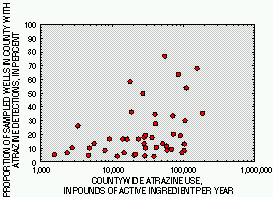
Figure 4. Proportion of sampled wells with atrazine detections in relation to countywide use. Wells were sampled as part of the National Alachlor Well-Water Survey (data fromA.J. Klein, Monsanto Company) and pesticide use estimates are from Gianessi and Puffer (1990). 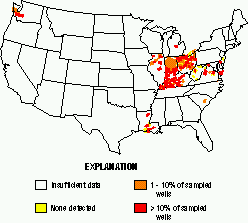
Figure 5. Frequency of triazine herbicide detection in counties with ten or more wells sampled during the Cooperative Private Well Testing Program (data from P. Richards, Heidelberg College). |

 U.S. Department of the Interior |
U.S. Geological Survey
U.S. Department of the Interior |
U.S. Geological Survey
URL: http://pubsdata.usgs.gov/pubs/fs/1995/0244/detection.html
Page Contact Information: GS Pubs Web Contact
Page Last Modified: Tuesday, 13-Nov-2018 16:22:41 EST