
 |
|
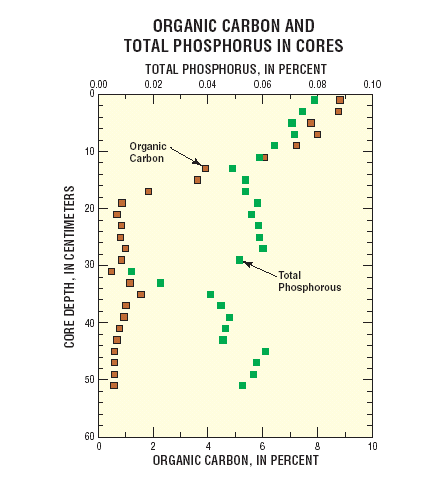
The organic carbon profile in a core collected from the center of the north basin (site 9) in 1999 exhibits a large 10-fold increase in concentration for younger sediment near the surface, as does the profile for N (not shown). These results contrast sharply with those of P, which shows only a modest 30% increase in concentration near the surface, consistent with this element’s comparatively high natural occurrence in basin soil and in river-suspended sediment. Biologically productive lakes commonly display a "feed-back mechanism"
that recycles P from highly reducing sediment back into the overlying
water, thereby enhancing the lake’s rate of
eutrophication. Is ist possible that skeletal
material from dead fish is sequestering P within sediment beneath the
Salton Sea as highly insoluble apatite (calcium phosphate) minerals, and
has thereby kept dissolved P levels nearly constant for several decades? |


Poster 14 of 16