


U.S. Geological Survey Science Strategy To Address White-Nose Syndrome and Bat Health in 2025–2029
Links
- Document: Report (3.03 MB pdf) , HTML , XML
- Related Work: Geonarrative - White-Nose Syndrome in North American bats
- Download citation as: RIS | Dublin Core
Abstract
Since its discovery in 2006, the fungal disease known as white-nose syndrome (WNS) has killed millions of bats. Of the 47 bat species native to the conterminous United States, Alaska, Hawaii, and Canada, 12 have been affected by WNS, including 3 endangered species and 1 proposed endangered species. WNS has also been detected in 40 States and 9 Canadian Provinces. U.S. Geological Survey (USGS) scientists have been critical in identifying the causal fungus for WNS (Pseudogymnoascus destructans [Pd]), characterizing the effects of WNS, and tracking the spread of Pd in many bat populations in North America.
The mission of the USGS WNS and Bat Health Science Team is to deliver integrated science in order to build resiliency into free-ranging bat populations through more effective WNS management, build capacity for bat health science, and enhance bat health information sharing across USGS science centers and cooperative research units as well as with stakeholders. The USGS can play an important role in supporting regional and national capacity building by providing resources and guidance to local, State, and Tribal management entities and by providing tools to enhance disease management. The USGS Ecosystems Mission Area’s Biological Threats and Invasive Species Research Program is the lead Federal program for free-ranging wildlife disease research and surveillance.
As of 2024, guided by the science priorities set by the WNS Steering Committee, USGS scientists are engaged in a nationwide response to WNS. This work is done in close coordination with our partners at the U.S. Fish and Wildlife Service, National Park Service, Bureau of Land Management, U.S. Forest Service of the U.S. Department of Agriculture, U.S. Department of Defense, as well as State and Tribal agencies. In addition to conducting WNS research, the USGS is mapping the spread of WNS and coordinating the North American Bat Monitoring Program (NABat) to understand how WNS and other stressors affect the status and trends of native bats across their range. The USGS is supporting the national WNS response through four science goals: (1) provide situational awareness on the health of bat populations; (2) conduct ecological studies of bats along the gradient of disease vulnerability; (3) contribute actionable science to enhance the resiliency of bat populations; and (4) implement an adaptive, holistic approach to bat health.
Introduction
Bats play essential roles in maintaining the health of ecosystems and reducing insect threats to agriculture and public health. Bats are the only mammal capable of true flight. Insectivorous bats eat large quantities of insects, including those that damage crops and forests (such as the corn earworm moth and emerald ash borer beetle) and those that carry diseases (mosquitoes) (Maine and Boyles, 2015; Münzer and others, 2016; Wray and others, 2018). U.S. Geological Survey (USGS) scientists and partners found that bats save U.S. farmers billions of dollars annually because they provide a natural alternative to chemical pesticides and indirectly promote human well-being (Boyles and others, 2011; Frank, 2024). Bats also disperse seeds and are pollinators. For example, in the southwestern United States, the lesser long-nosed bat picks up pollen while drinking nectar from cactus and agave flowers (Ober and others, 2005). Agave, which is historically used for beverage and food production, also has the potential to support biofuel production (Mielenz and others, 2015).
Since its discovery in 2006, the fungal disease known as white-nose syndrome (WNS) has been associated with mass mortality of hibernating bats and species declines (Cheng and others, 2021). Of the 47 bat species native to the conterminous United States, Alaska, Hawaii, and Canada, 12 have been affected by WNS across 40 States and 9 Canadian Provinces (White-nose Syndrome Response Team, 2024). Of these 12, 3 are endangered species: the gray bat (Myotis grisescens), the Indiana bat (Myotis sodalis), and the northern long-eared bat (Myotis septentrionalis). In addition, a proposed endangered species, the tricolored bat (Perimyotis subflavus), is also affected. USGS scientists were crucial in identifying Pseudogymnoascus destructans (Pd) as the causal fungus of WNS (Blehert and others, 2009). USGS scientists also characterized the effects of WNS on bats and tracked the spread of Pd in numerous populations of bats in North America (Hopkins and Soileau, 2018). Many of the studies by USGS scientists are listed in appendix 1. Early USGS research focused on understanding how WNS affects bats (Verant and others, 2014) and how the fungus persists in the environment (Verant and others, 2018).
As of 2024, USGS scientists are engaged in a nationwide response to WNS. These scientists work in close coordination with partners at the U.S. Fish and Wildlife Service (USFWS), National Park Service (NPS), Bureau of Land Management (BLM), U.S. Forest Service (USFS), U.S. Department of Defense, as well as State and Tribal agencies (Hopkins and Soileau, 2018). The national research direction is set by the USFWS-led WNS Steering Committee. In addition to WNS research, the USGS is mapping the spread of WNS and coordinating the North American Bat Monitoring Program (NABat; https://www.nabatmonitoring.org/) to understand how WNS and other stressors affect the status and trends of bats across their range. A map showing the distribution of WNS cases in bats in Canada and the conterminous United States is available at https://www.whitenosesyndrome.org/. NABat is an international, multiagency, coordinated monitoring plan for bats in North America that relies on standard procedures and a network of collaborators to track bat status and trends over time. USGS science on WNS and bats underpins evidence-based decisions including Administrative Procedure Act (5 U.S.C. 551–559) rulemaking processes, such as the final rule for reclassification of the northern long-eared bat as endangered (U.S. Fish and Wildlife Service, 2022) under the Endangered Species Act of 1973 (16 U.S.C. 1531 et seq.).
This document describes the U.S. Geological Survey Science Strategy To Address White-Nose Syndrome and Bat Health in 2025–2029 (which will be informally referred to as “the science strategy”), which was developed by the U.S. Geological Survey White-Nose Syndrome and Bat Health Science Team (app. 2). This science strategy is based on priorities identified by the WNS Steering Committee and WNS working groups (https://www.whitenosesyndrome.org/static-page/working-groups). While the 2011 WNS national plan (U.S. Fish and Wildlife Service, 2011) and the 2014 WNS national implementation plan (White-nose Syndrome Recovery Team, 2014) priorities are the foundational guide to our efforts, the changing dynamics of the disease have shifted research priorities and this science strategy may be updated based on revised priorities of the WNS Steering Committee.
The purpose of this science strategy is to bolster evidence-based management actions and decisions aimed at cultivating a strong U.S. bat community that persists in spite of WNS and other stressors to bat health. This approach will potentially allow for downlisting or delisting of bat species affected by WNS. The science strategy is intended to support U.S. Department of the Interior (DOI) bureaus, other Federal natural resource management agencies, States, and Tribes in their response to WNS through (1) research, monitoring, and surveillance activities, as well as (2) the development of evidence-based decision-support tools and management strategies that aim to sustain a hardy U.S. bat community. Terms related to the science strategy are defined in the “Glossary.” While this strategy will provide a foundation to guide the science undertaken by the USGS and its partners, work will be subject to the availability of funds.
Congressional Direction
Appropriations language during fiscal year 2014 (FY14) included Congressional direction for the USGS Ecosystems Mission Area (EMA) to conduct research and monitoring of WNS in bats; Congressional appropriations for FY15–FY23 continued to mention WNS (app. 3). Reports of the Senate Appropriations Committee for FY17–FY20 directed the USGS to “…continue to help lead, and implement the North American Bat Monitoring Program in association with other Federal natural resource management agencies and offices, States, and non-governmental partners” (Senate Report 114–281, quoted in app. 3 of this document).
As directed by Congress, the USGS plays an important role in supporting regional and national capacity building by providing resources and guidance to local, State, and Tribal management entities and by providing tools to enhance disease management. The mission of the USGS WNS and Bat Health Science Team is to deliver integrated science in order to build resiliency into free-ranging bat populations through more effective WNS management, build capacity for bat health science, and enhance bat health information sharing across USGS science centers and cooperative research units as well as with stakeholders. The USGS Ecosystems Mission Area’s Biological Threats and Invasive Species Research Program is the lead Federal program for native free-ranging wildlife disease research and surveillance.
Secretarial Priority
In 2019, the Secretary of the Interior signed a proclamation to establish National Bat Week at DOI (U.S. Department of the Interior, 2019). The proclamation highlighted the importance of bats, the negative effects of WNS, and the role of DOI bureaus, including the USGS, in the national response to this disease. This science strategy aligns with strategic objective 2.2 of the Department of the Interior’s Strategic Plan for FY22–FY26, which states that “species, habitats, and ecosystems are protected, sustained, and healthy” (U.S. Department of the Interior, 2022, p. 31). The implementation strategy of this objective states that “The Department will protect and sustain the natural biodiversity both domestically and internationally and combat the spread of wildlife disease” (U.S. Department of the Interior, 2022, p. 31).
USGS Science Strategy To Address White-Nose Syndrome and Bat Health in 2025–2029
The USGS is supporting the national WNS response through four science goals. This science strategy expounds upon those goals, objectives, and proposed actions, and also highlights some of the current efforts to meet them. The goals of the science strategy are to (1) provide situational awareness on the health of bat populations; (2) conduct ecological studies of bats along the gradient of disease vulnerability; (3) contribute actionable science that promotes bat resiliency; and (4) implement an adaptive, holistic approach to bat health (fig. 1). The centers and cooperative research units of the USGS are responsible for conducting these activities and are listed for each of the current efforts below.
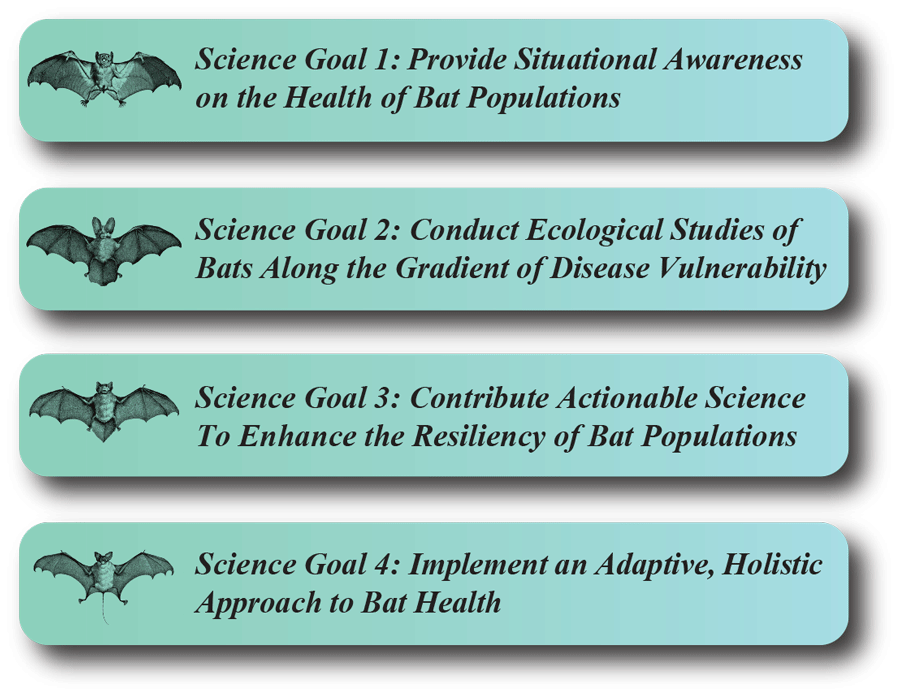
Diagram depicting the four science goals of this U.S. Geological Survey Science Strategy To Address White-Nose Syndrome and Bat Health in 2025–2029.
Science Goal 1: Provide Situational Awareness on the Health of Bat Populations
USGS scientists collect, curate, and maintain disease and bat distribution data to enhance situational awareness for managers, decision makers, and the public. A key step to understanding and mitigating the effects of WNS on U.S. bat populations is the creation and maintenance of products that summarize data on WNS and bat populations, which are collected by diverse partners throughout the Nation.
Objective 1.1: Curate data and maps of bat disease, distribution, and activity
-
Action 1.1.1: Provide WNS and bat health data visualization tools
-
Current effort: Maintaining maps that document the spread of WNS, which are available at https://www.whitenosesyndrome.org/ (Fort Collins Science Center [FORT])
-
Current effort: Maintaining Wildlife Health Information Sharing Partnership – event reporting system (WHISPers; available at https://whispers.usgs.gov/home), a curated database of wildlife mortality events across the Nation. WHISPers tracks bat mortality events, including those not attributed to WNS, for a more comprehensive picture of bat health stressors (National Wildlife Health Center [NWHC]).
-
-
Action 1.1.2: Provide data and maps on bat distribution and activity collected through NABat
-
Current effort: Maintaining the NABat Data Inventory Tool, which is available at https://sciencebase.usgs.gov/nabat/#/data/inventory (FORT)
-
Current effort: Developing data fusion or integrated species distribution models that incorporate all data sources to inform summertime status and temporal trend estimation. Model development can be extended to determine the effects of WNS on both occurrence and abundance for at-risk species. Data sources include capture records, acoustic data (USFWS regulatory clearance surveys, NABat mobile transect, and NABat stationary acoustic), and NABat summer maternity colony counts (Northern Rocky Mountain Science Center [NOROCK] and FORT).
-
-
Action 1.1.3: Link WNS surveillance data to NABat data on bat population status and trends to enhance understanding of the effects of WNS on bats
-
Current effort: Tracking bat species status and trends to understand the initial and ongoing responses to WNS and management actions via NABat (FORT)
-
Current effort: Developing a predictive model of Pd occurrence to future population dynamics (FORT and Colorado Cooperative Research Unit [CRU])
-
Current effort: Developing a framework to jointly model the spread of WNS in relation to bat relative activity. This work is a case study using acoustic NABat data and WNS surveillance data collected in Montana (NOROCK).
-
Objective 1.2: Engage with States and Tribal Nations to heighten awareness of bat health and improve the WNS response
-
Action 1.2.1: Engage with Tribal Nations
-
Action 1.2.2: Engage with State wildlife management agencies
-
Current effort: Regularly engaging with the Bat Working Group (https://www.fishwildlife.org/afwa-acts/afwa-committees/bat-working-group) and the Fish and Wildlife Health Committee (https://www.fishwildlife.org/afwa-acts/afwa-committees/fish-wildlife-health-committee) of the Association of Fish and Wildlife Agencies (EMA, FORT, NWHC)
-
Current effort: Collaborating with State agencies for bat field research, disease surveillance and monitoring, and structured decision making (all science centers represented on the USGS WNS and Bat Health Science Team)
-
Objective 1.3: Develop and use minimally invasive tools to detect Pd as an early detection surveillance tool
-
Action 1.3.1: Detect Pd in environmental samples
-
Action 1.3.2: Establish surveillance for the detection of Pd and WNS in bats
-
Current effort: Refining an adaptative sampling framework based on previous data for the early detection of Pd and spread of WNS in the western United States (NWHC)
-
Current effort: Developing a biotechnology-based method to detect Pd from bat guano and skin swabs as a surveillance strategy (Wetland and Aquatic Research Center [WARC])
-
Current effort: Establishing Pd surveillance in areas with new detections with the goal of determining how prevalence and pathogen load vary over time for bat species in the western United States. This work helps to target disease intervention and conservation efforts (NWHC).
-
Science Goal 2: Conduct Ecological Studies of Bats Along the Gradient of Disease Vulnerability
USGS scientists develop and maintain targeted monitoring programs to understand bat distribution, activity, and ecology along the gradient of areas where WNS is established to vulnerable areas where WNS is not established. Bat monitoring programs tie bat ecology and dynamics to disease gradients and other stressors to bat health from local to regional scales. Integration of acoustic monitoring (NABat as well as local efforts), roosting ecology, and other ecological studies with WNS surveillance efforts is critical to quantifying the effects of disease and other stressors on bat populations nationwide. Part of developing appropriate conservation and management strategies for bat health is understanding the ecology of persisting species and mechanisms for resistance to WNS.
Objective 2.1: Develop, test, and maintain methods and statistical tools for acoustic monitoring of bats in areas where WNS is established and areas where WNS is not established
-
Action 2.1.1: Develop appropriate methods for monitoring bat populations where WNS is established
-
Current effort: Developing and refining bat acoustic survey methods in field and controlled laboratory settings to inform USFWS on the necessary level of effort for effective acoustic monitoring and mist net monitoring for populations of the endangered Indiana bat, the endangered northern long-eared bat, the proposed endangered tricolored bat, and the under review little brown bat (Myotis lucifugus) that have been negatively affected by WNS (Virginia CRU)
-
-
Action 2.1.2: Develop statistical tools to support interagency bat monitoring efforts on the leading edge of where WNS has spread as well as in WNS-free areas
-
Current effort: Providing technical assistance for bat population monitoring efforts of DOI (BLM, NPS, USFWS) and other interagency partners within the Northwest Bat Hub (https://osucascades.edu/HERS/northwest-bat-hub) (NOROCK)
-
Current effort: Collaborating with Montana Fish, Wildlife & Parks; USFS; BLM; Montana Natural Heritage Program; and non-governmental organizations on conducting and analyzing summertime acoustic monitoring to assess the effects of WNS before and after its detection in Montana (NOROCK)
-
Current effort: Developing statistical models that reduce the cost of processing bat acoustic datasets and harness more of the information for assessing the effects of disease, wind energy development, and habitat alterations on relative activity and (or) abundance (NOROCK)
-
Objective 2.2: Conduct bat acoustic monitoring and ecological studies on the leading edge of where WNS has spread in the western United States
-
Action 2.2.1: Engage in research with cooperating agencies in the western United States to understand bat ecology in currently WNS-free areas or on the leading edge of where WNS has spread
-
Current effort: Examining seasonal roosting ecology of western bats at risk of WNS infection across habitat and elevational gradients in presumed WNS-free areas in parallel with WNS surveillance efforts (Western Ecological Research Center [WERC])
-
Current effort: Supporting NPS efforts to monitor western Washington bat populations by developing and helping to implement acoustic monitoring programs in and around Washington’s national parks to understand patterns and drivers of bat distribution and activity (Forest and Rangeland Ecosystem Science Center [FRESC])
-
Current effort: Building on northeastern acoustic monitoring research to support USFWS efforts to expand monitoring at the necessary level of effort to the northern plains and Rocky Mountains (Virginia CRU)
-
Objective 2.3: Investigate mechanisms of bat resistance to WNS in concert with studies of the ecology of persisting bat species
Objective 2.4: Identify biologically relevant populations to assess the efficacy of management action and to improve monitoring of population responses to WNS
-
Action 2.4.1: Identify biologically relevant bat populations for species susceptible to WNS
-
Current effort: Developing an analytical framework based on passive integrated transponder (PIT) tag mark-recapture studies in order to assess connectivity and local demography across local populations of little brown bats in Colorado (FORT) and cave myotis (Myotis velifer) in Texas, Oklahoma, and Kansas (FORT and NWHC)
-
Current effort: Analyzing population genetics data to assess connectivity and local demography of the northern long-eared bat along the Atlantic Ocean coast and the little brown bat throughout the northeastern United States (Virginia CRU)
-
Science Goal 3: Contribute Actionable Science To Enhance the Resiliency of Bat Populations
USGS scientists develop direct management and decision-support tools to address bat conservation in the face of WNS and other threats to bat health. A critical component of working towards a resilient U.S. bat community is the development of tools that aid in prevention, treatment, and evidence-based management decision making related to the spread of WNS and the maintenance of hardy bat populations. This goal emphasizes both development of direct management tools to mitigate the spread of WNS as well as decision-support tools to determine appropriate management strategies for differing levels of disease prevalence.
Objective 3.1: Develop and test direct management tools to address WNS or enhance bat resiliency
Objective 3.2: Develop decision-support tools to relate management decisions to bat conservation
Science Goal 4: Implement an Adaptive, Holistic Approach to Bat Health
The USGS WNS and Bat Health Science Team engages in cross-disciplinary and collaborative lines of research to advance bat health, resiliency, and conservation. Increases in collaboration and communication across scientific disciplines and organizations allow researchers to leverage capacity and resources; conduct meta-analyses and syntheses to adapt evidence-based management strategies; and improve management outcomes.
Objective 4.2: Integrate data to help understand the effects of disease on bats and the ecosystem services they provide
Objective 4.3: Contribute to actionable management outcomes that improve bat conservation efforts
-
Action 4.3.1: Develop collaborative regional or national evidence-based bat management workplans to connect and leverage the interdisciplinary efforts that overlap (for example, forest management and vaccine application) in relation to the disease status of an area (for example, the WNS-established area, presumed WNS-free area, and leading edge of where WNS has spread)
Objective 4.4: Understand the implications of co-infections (for example, coronaviruses, rabies, and WNS) for bat health
-
Action 4.4.1: Leverage NABat to conduct surveillance of pathogens in bats
-
Current effort: Assessing the prevalence of coronaviruses in little brown bats (Virginia CRU)
-
Current effort: Utilizing the NABat sampling framework to track bats and coronaviruses (https://www.usgs.gov/mission-areas/ecosystems/science/tracking-bats-and-coronaviruses) (FORT)
-
Current effort: Examining the virome and viral ecology of less-studied bats of the Western United States on the leading edge of where WNS has been detected (WERC)
-
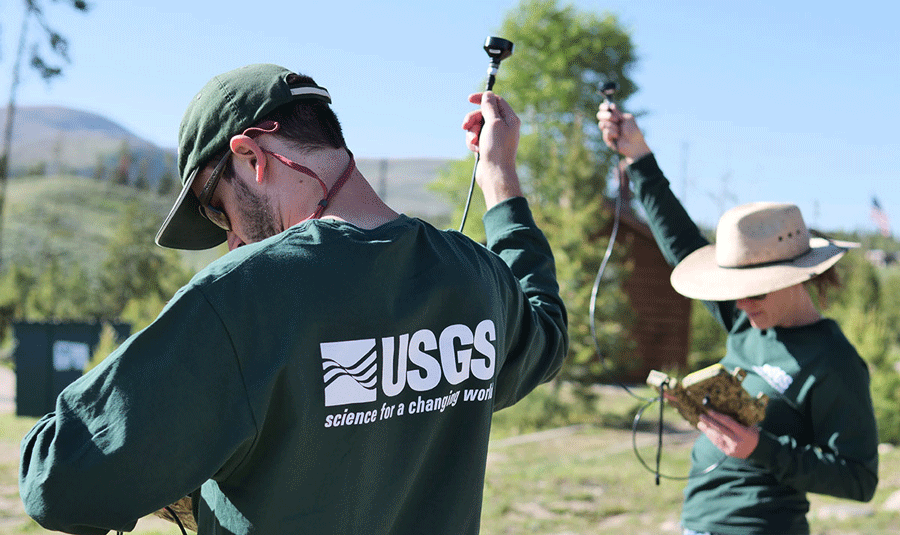
Photograph of researchers testing acoustic microphones, which record bat calls and can help identify bat species and estimate their population sizes. This information is integral to the North American Bat Monitoring Program (NABat). Photograph by Frankie Tousley, U.S. Geological Survey.
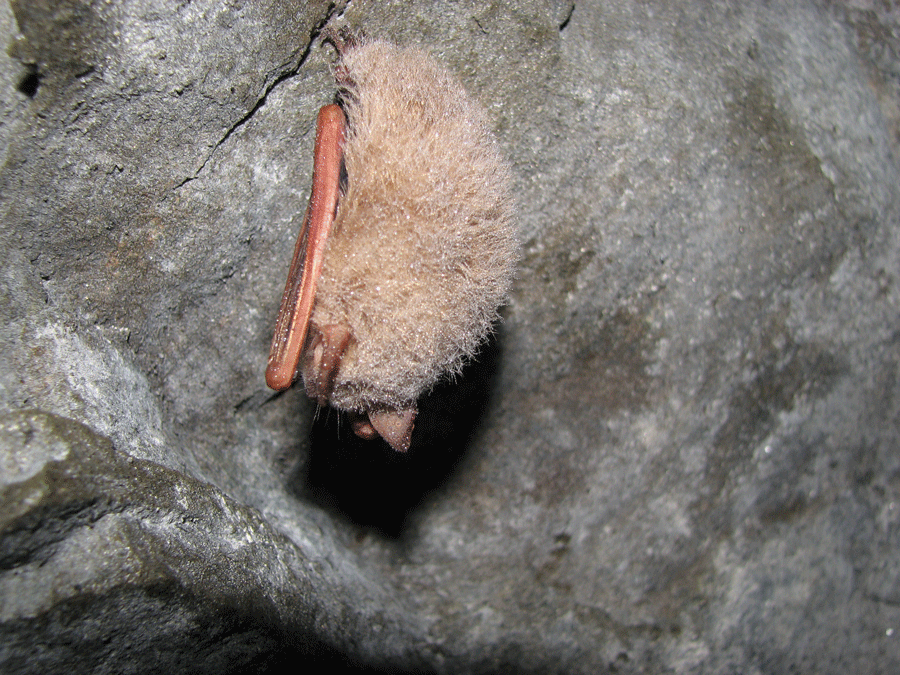
Photograph of a hibernating bat in a mine in Massachusetts. Photograph by Kimberli Miller, U.S. Geological Survey.
Acknowledgments
The science strategy in this document was prepared by members of the U.S. Geological Survey (USGS) White-Nose Syndrome and Bat Health Science Team as listed in appendix 2. We appreciate the helpful reviews by Amy Wray and Mona Khalil of the USGS.
References Cited
Blehert, D.S., Hicks, A.C., Behr, M., Meteyer, C.U., Berlowski-Zier, B.M., Buckles, E.L., Coleman, J.T.H., Darling, S.R., Gargas, A., Niver, R., Okoniewski, J.C., Rudd, R.J., and Stone, W.B., 2009, Bat white-nose syndrome—An emerging fungal pathogen?: Science, v. 323, no. 5911, p. 227, accessed February 19, 2025, at https://doi.org/10.1126/science.1163874.
Boyles, J.G., Cryan, P.M., McCracken, G.F., and Kunz, T.H., 2011, Economic importance of bats in agriculture: Science, v. 332, no. 6025, p. 41–42, accessed February 19, 2025, at https://doi.org/10.1126/science.1201366.
Cheng, T.L., Reichard, J.D., Coleman, J.T., Weller, T.J., Thogmartin, W.E., Reichert, B.E., Bennett, A.B., Broders, H.G., Campbell, J., Etchison, K., Feller, D.J., Geboy, R., Hemberger, T., Herzog, C., Hicks, A.C., Houghton, S., Humber, J., Kath, J.A., King, R.A., Loeb, S.C., Massé, A., Morris, K.M., Niederriter, H., Nordquist, G., Perry, R.W., Reynolds, R.J., Sasse, D.B., Scafini, M.R., Stark, R.C., Stihler, C.W., Thomas, S.C., Turner, G.G., Webb, S., Westrich, B.J., and Frick, W.F., 2021, The scope and severity of white‐nose syndrome on hibernating bats in North America: Conservation Biology, v. 35, no. 5, p. 1586–1597, accessed June 3, 2024, at https://doi.org/10.1111/cobi.13739.
Frank, E.G., 2024, The economic impacts of ecosystem disruptions—Costs from substituting biological pest control: Science, v. 385, no. 6713, 7 p., accessed February 19, 2025, at https://doi.org/10.1126/science.adg0344.
Hopkins, M.C., and Soileau, S.C., 2018, U.S. Geological Survey response to white-nose syndrome in bats: U.S. Geological Survey Fact Sheet 2018–3020, 4 p., accessed June 3, 2024, at https://doi.org/10.3133/fs20183020.
Maine, J.J., and Boyles, J.G., 2015, Bats initiate vital agroecological interactions in corn: Proceedings of the National Academy of Sciences, v. 112, no. 40, p. 12438–12443, accessed February 19, 2025, at https://doi.org/10.1073/pnas.1505413112.
Mielenz, J.R., Rodriguez, M., Thompson, O.A., Yang, X., and Yin, H., 2015, Development of Agave as a dedicated biomass source—Production of biofuels from whole plants: Biotechnology for Biofuels, v. 8, no. 79, 13 p., accessed March 11, 2025, at https://doi.org/10.1186/s13068-015-0261-8.
Münzer, O.M., Schaetz, B., and Kurta, A., 2016, Consumption of insect pests by the evening bat (Nycticeius humeralis) in southeastern Michigan: The Great Lakes Entomologist, v. 48, nos. 1–2, p. 36–40, accessed February 19, 2025, at https://www.researchgate.net/publication/351359596_Consumption_of_Insect_Pests_by_the_Evening_Bat_Nycticeius_humeralis_in_Southeastern_Michigan.
Ober, H.K., Steidl, R.J., and Dalton, V.M., 2005, Resource and spatial‐use patterns of an endangered vertebrate pollinator, the lesser long‐nosed bat: The Journal of Wildlife Management, v. 69, no. 4, p. 1615–1622, accessed February 19, 2025, at https://doi.org/10.2193/0022-541X(2005)69[1615:RASPOA]2.0.CO;2.
U.S. Department of the Interior, 2019, National Bat Week, October 24–31, 2019: U.S. Department of the Interior, Proclamation by the Secretary of the Interior, 2 p., accessed December 13, 2024, at https://www.doi.gov/sites/doi.gov/files/bat-week-proclamation-2019.pdf.
U.S. Department of the Interior, [2022], U.S. Department of the Interior FY 2022–2026 strategic plan: U.S. Department of the Interior report, 46 p., accessed June 3, 2024, at https://www.doi.gov/sites/doi.gov/files/u.s.-department-of-the-interior-fy-2022-2026-strategic-plan.pdf.
U.S. Fish and Wildlife Service, 2011, A national plan for assisting States, Federal agencies, and Tribes in managing white-nose syndrome in bats: U.S. Fish and Wildlife Service report, 17 p., accessed December 13, 2024, at https://whitenosesyndrome.org/response-plans/-a-national-plan-for-assisting-states-federal-agencies-and-tribes-in-managing-white-nose-syndrome-in-bats -the-national-wns-plan.
U.S. Fish and Wildlife Service, 2022, Endangered and threatened wildlife and plants—Endangered species status for northern long-eared bat: Federal Register, v. 87, no. 229, p. 73488–73504, accessed December 13, 2024, at https://www.federalregister.gov/documents/2022/11/30/2022-25998/endangered-and-threatened-wildlife-and-plants-endangered-species-status-for-northern-l ong-eared-bat.
Verant, M.L., Bohuski, E.A., Richgels, K.L.D., Olival, K.J., Epstein, J.H., and Blehert, D.S., 2018, Determinants of Pseudogymnoascus destructans within bat hibernacula—Implications for surveillance and management of white-nose syndrome: Journal of Applied Ecology, v. 55, no. 2, p. 820–829, accessed February 19, 2025, at https://doi.org/10.1111/1365-2664.13070.
Verant, M.L., Meteyer, C.U., Speakman, J.R., Cryan, P.M., Lorch, J.M., and Blehert, D.S., 2014, White-nose syndrome initiates a cascade of physiologic disturbances in the hibernating bat host: BMC Physiology, v. 14, no. 10, 10 p., accessed February 19, 2025, at https://doi.org/10.1186/s12899-014-0010-4.
[White-nose Syndrome Recovery Team], 2014, Implementation of the national plan for assisting States, Federal agencies, and Tribes in managing white-nose syndrome in bats: U.S. Fish and Wildlife Service White-nose Syndrome Recovery Team report, 133 p., accessed December 13, 2024, at https://www.whitenosesyndrome.org/response-plans/the-united-states-wns-implementation-plan.
White-nose Syndrome Response Team, 2024, [White-Nose Syndrome Response Team]: White-Nose Syndrome Response Team website, accessed December 13, 2024, at https://www.whitenosesyndrome.org/.
Wray, A.K., Jusino, M.A., Banik, M.T., Palmer, J.M., Kaarakka, H., White, J.P., Lindner, D.L., Gratton, C., and Peery, M.Z., 2018, Incidence and taxonomic richness of mosquitoes in the diets of little brown and big brown bats: Journal of Mammalogy, v. 99, no. 3, p. 668–674, accessed February 19, 2025, at https://doi.org/10.1093/jmammal/gyy044.
Glossary
- biotechnology
The use of biology to solve problems by producing new tools or methods.
- North America Bat Monitoring Program (NABat)
An international, multiagency coordinated monitoring plan for bats in North America that relies on standard procedures and a network of collaborators to track bat status.
- Pseudogymnoascus destructans (Pd)
The cold-loving fungus that causes white-nose syndrome in bats.
- resiliency
The ability to cope with and bounce back from stressful situations.
- white-nose syndrome (WNS)
A disease in bats that is caused by the fungus Pseudogymnoascus destructans.
Appendix 1. Selected Publications by U.S. Geological Survey Researchers on White-Nose Syndrome and Bat Health From 2009 to 2024
2009
Blehert, D.S., Hicks, A.C., Behr, M., Meteyer, C.U., Berlowski-Zier, B.M., Buckles, E.L., Coleman, J.T.H., Darling, S.R., Gargas, A., Niver, R., Okoniewski, J.C., Rudd, R.J., and Stone, W.B., 2009, Bat white-nose syndrome—An emerging fungal pathogen?: Science, v. 323, no. 5911, p. 227, https://doi.org/10.1126/science.1163874.
Szymanski, J.A., Runge, M.C., Parkin, M.J., and Armstrong, M., 2009, White-nose syndrome management—Report on structured decision making initiative: U.S. Fish and Wildlife Service report, 51 p., https://www.researchgate.net/publication/265263881_WHITE-NOSE_SYNDROME_MANAGEMENT_Report_on_Structured_Decision_Making_Initiative_Prepared_by.
2010
Castle, K.T., and Cryan, P.M., 2010, State of science—White-nose syndrome in bats—A primer for resource managers: Park Science, v. 27, no. 1, p. 20–25, https://irma.nps.gov/DataStore/Reference/Profile/2201589.
Cryan, P.M., Meteyer, C.U., Boyles, J.G., and Blehert, D.S., 2010, Wing pathology of white-nose syndrome in bats suggests life-threatening disruption of physiology: BMC Biology, v. 8, no. 1, article 135, 8 p., https://doi.org/10.1186/1741-7007-8-135.
2011
Boyles, J.G., Cryan, P.M., McCracken, G.F., and Kunz, T.H., 2011, Economic importance of bats in agriculture: Science, v. 332, no. 6025, p. 41–42, https://doi.org/10.1126/science.1201366.
Coleman, J., Ballmann, A., Benedict, L., Britzke, E., Castle, K., Cottrell, W., Cryan, P.M., DeLiberto, T., Elliot, A., Ewing, R., Hicks, A., Reynolds, R., Rubado, J., Slack, B., and Williams, L., 2011, A national plan for assisting States, Federal agencies, and Tribes in managing white-nose syndrome in bats: U.S. Fish and Wildlife Service publication 454, 17 p., https://digitalcommons.unl.edu/usfwspubs/454/.
Foley, J., Clifford, D., Castle, K., Cryan, P.M., and Ostfeld, R.S., 2011, Investigating and managing the rapid emergence of white-nose syndrome, a novel, fatal, infectious disease of hibernating bats: Conservation Biology, v. 25, no. 2, p. 223–231, https://doi.org/10.1111/j.1523-1739.2010.01638.x.
Ford, W.M., Britzke, E.R., Dobony, C.A., Rodrigue, J.L., and Johnson, J.B., 2011, Patterns of acoustical activity of bats prior to and following white-nose syndrome occurrence: Journal of Fish and Wildlife Management, v. 2, no. 2, p. 125–134, http://dx.doi.org/10.3996/042011-JFWM-027.
Lindner, D.L., Gargas, A., Lorch, J.M., Banik, M.T., Glaeser, J., Kunz, T.H., and Blehert, D.S., 2011, DNA-based detection of the fungal pathogen Geomyces destructans in soil from bat hibernacula: Mycologia, v. 103, no. 2, p. 241–246, https://doi.org/10.3852/10-262.
Meteyer, C.U., Valent, M., Kashmer, J., Buckles, E.L., Lorch, J.M., Blehert, D.S., Lollar, A., Berndt, D., Wheeler, E., White, C.L., and Ballmann, A.E., 2011, Recovery of little brown bats (Myotis lucifugus) from natural infection with Geomyces destructans, white-nose syndrome: Journal of Wildlife Diseases, v. 47, no. 3, p. 618–626, https://doi.org/10.7589/0090-3558-47.3.618.
2012
Blehert, D.S., 2012, Fungal disease and the developing story of bat white-nose syndrome: PLoS Pathogens, v. 8, no. 7, article e1002779, 3 p., https://doi.org/10.1371/journal.ppat.1002779.
Flory, A.R., Kumar, S., Stohlgren, T.J., and Cryan, P.M., 2012, Environmental conditions associated with bat white-nose syndrome mortality in the north-eastern United States: Journal of Applied Ecology, v. 49, no. 3, p. 680–689, https://doi.org/10.1111/j.1365-2664.2012.02129.x.
Francl, K.E., Ford, W.M., Sparks, D.W., and Brack, V., Jr., 2012, Capture and reproductive trends in summer bat communities in West Virginia—Assessing the impact of white-nose syndrome: Journal of Fish and Wildlife Management, v. 3, no. 1, p. 33–42, https://doi.org/10.3996/062011-JFWM-039.
Hayes, M.A., 2012, The Geomyces fungi—Ecology and distribution: BioScience, v. 62, no. 9, p. 819–823, https://doi.org/10.1525/bio.2012.62.9.7.
Meteyer, C.U., Barber, D., and Mandl, J.N., 2012, Pathology in euthermic bats with white nose syndrome suggests a natural manifestation of immune reconstitution inflammatory syndrome: Virulence, v. 3, no. 7, p. 583–588, https://doi.org/10.4161/viru.22330.
Meteyer, C.U., and Wibbelt, G., 2012, Geomyces destructans—White-nose syndrome in hibernating bats, in Other fungal infections, chap. 40 of Gavier-Widén, D., Duff, J.P., Meredith, A., eds., Infectious diseases of wild mammals and birds in Europe: Malden, Mass., Blackwell Publishing Ltd., p. 473–475.
Pikula, J., Bandouchova, H., Novotný, L., Meteyer, C.U., Zukal, J., Irwin, N.R., Zima, J., and Martínková, N., 2012, Histopathology confirms white-nose syndrome in bats in Europe: Journal of Wildlife Diseases, v. 48, no. 1, p. 207–211, https://doi.org/10.7589/0090-3558-48.1.207.
Reeder, D.M., Frank, C.L., Turner, G.G., Meteyer, C.U., Kurta, A., Britzke, E.R., Vodzak, M.E., Darling, S.R., Stihler, C.W., Hicks, A.C., Jacob, R., Grieneisen, L.E., Brownlee, S.A., Muller, L.K., and Blehert, D.S., 2012, Frequent arousal from hibernation linked to severity of infection and mortality in bats with white-nose syndrome: PLoS ONE, v. 7, no. 6, article e38920, 10 p., https://doi.org/10.1371/journal.pone.0038920.
Rodhouse, T.J., Ormsbee, P.C., Irvine, K.M., Vierling, L.A., Szewczak, J.M., and Vierling, K.T., 2012, Assessing the status and trend of bat populations across broad geographic regions with dynamic distribution models: Ecological Applications, v. 22, no. 4, p. 1098–1113, https://doi.org/10.1890/11-1662.1.
Rogall, G.M., and Verant, M., 2012, White-nose syndrome in bats—U.S. Geological Survey updates: U.S. Geological Survey Fact Sheet 2012–3076, 2 p., https://doi.org/10.3133/fs20123076.
Thogmartin, W.E., King, R.A., McKann, P.C., Szymanski, J.A., and Pruitt, L., 2012, Population-level impact of white-nose syndrome on the endangered Indiana bat: Journal of Mammalogy, v. 93, no. 4, p. 1086–1098, https://doi.org/10.1644/11-MAMM-A-355.1.
Valdez, E.W., 2012, Surveillance for white-nose syndrome in the bat community at El Malpais National Monument, New Mexico, 2011: U.S. Geological Survey Open-File Report 2012–1097, 37 p., https://doi.org/10.3133/ofr20121097.
Verant, M.L., Boyles, J.G., Waldrep, W., Jr., Wibbelt, G., and Blehert, D.S., 2012, Temperature-dependent growth of Geomyces destructans, the fungus that causes bat white-nose syndrome: PLoS ONE, v. 7, no. 9, article e46280, 7 p., https://doi.org/10.1371/journal.pone.0046280.
Warnecke, L., Turner, J.M., Bollinger, T.K., Lorch, J.M., Misra, V., Cryan, P.M., Wibbelt, G., Blehert, D.S., and Willis, C.K.R., 2012, Inoculation of bats with European Geomyces destructans supports the novel pathogen hypothesis for the origin of white-nose syndrome: Proceedings of the National Academy of Sciences, v. 109, no. 18, p. 6999–7003, https://doi.org/10.1073/pnas.1200374109.
2013
Cryan, P.M., Meteyer, C.U., Blehert, D.S., Lorch, J.M., Reeder, D.M., Turner, G.G., Webb, J., Behr, M., Verant, M., Russell, R.E., and Castle, K.T., 2013, Electrolyte depletion in white-nose syndrome bats: Journal of Wildlife Diseases, v. 49, no. 2, p. 398–402, https://doi.org/10.7589/2012-04-121.
Cryan, P.M., Meteyer, C.U., Boyles, J.G., and Blehert, D.S., 2013, White-nose syndrome in bats—Illuminating the darkness: BMC Biology, v. 11, article 47, 4 p., https://doi.org/10.1186/1741-7007-11-47.
Iwanowicz, D.D., Iwanowicz, L.R., Hitt, N.P., and King, T.L., 2013, Differential expression profiles of microRNA in the little brown bat (Myotis lucifugus) associated with white nose syndrome affected and unaffected individuals: U.S. Geological Survey Open-File Report 2013–1099, 11 p., https://doi.org/10.3133/ofr20131099.
Lorch, J.M., Lindner, D.L., Gargas, A., Muller, L.K., Minnis, A.M., and Blehert, D.S., 2013, A culture-based survey of fungi in soil from bat hibernacula in the eastern United States and its implications for detection of Geomyces destructans, the causal agent of bat white-nose syndrome: Mycologia, v. 105, no. 2, p. 237–252, https://doi.org/10.3852/12-207.
Lorch, J.M., Muller, L.K., Russell, R.E., O’Connor, M., Lindner, D.L., and Blehert, D.S., 2013, Distribution and environmental persistence of the causative agent of white-nose syndrome, Geomyces destructans, in bat hibernacula of the eastern United States: Applied and Environmental Microbiology, v. 79, no. 4, p. 1293–1301, https://doi.org/10.1128/AEM.02939-12.
Muller, L.K., Lorch, J.M., Lindner, D.L., O’Connor, M., Gargas, A., and Blehert, D.S., 2013, Bat white-nose syndrome—A real-time TaqMan polymerase chain reaction test targeting the intergenic spacer region of Geomyces destructans: Mycologia, v. 105, no. 2, p. 253–259, https://doi.org/10.3852/12-242.
Sleeman, J.M., 2013, Has the time come for big science in wildlife health?: EcoHealth, v. 10, p. 335–338, https://doi.org/10.1007/s10393-013-0880-0.
Thogmartin, W.E., Sanders-Reed, C.A., Szymanski, J.A., McKann, P.C., Pruitt, L., King, R.A., Runge, M.C., and Russell, R.E., 2013, White-nose syndrome is likely to extirpate the endangered Indiana bat over large parts of its range: Biological Conservation, v. 160, p. 162–172, https://doi.org/10.1016/j.biocon.2013.01.010.
Warnecke, L., Turner, J.M., Bollinger, T.K., Misra, V., Cryan, P.M., Blehert, D.S., Wibbelt, G., and Willis, C.K.R., 2013, Pathophysiology of white-nose syndrome in bats—A mechanistic model linking wing damage to mortality: Biology Letters, v. 9, no. 4, 5 p., https://doi.org/10.1098/rsbl.2013.0177.
2014
Coleman, L.S., Ford, W.M., Dobony, C.A., and Britzke, E.R., 2014, A comparison of passive and active acoustic sampling for a bat community impacted by white-nose syndrome: Journal of Fish and Wildlife Management, v. 5, no. 2, p. 217–226, https://doi.org/10.3996/082013-JFWM-057.
Coleman, L.S., Ford, W.M., Dobony, C.A., and Britzke, E.R., 2014, Comparison of radio-telemetric home-range analysis and acoustic detection for little brown bat habitat evaluation: Northeastern Naturalist, v. 21, no. 3, p. 431–445, https://doi.org/10.1656/045.021.0309.
Coleman, L.S., Ford, W.M., Dobony, C.A., and Britzke, E.R., 2014, Effect of passive acoustic sampling methodology on detecting bats after declines from white nose syndrome: Journal of Ecology and the Natural Environment, v. 6, no. 2, p. 56–64, https://doi.org/10.5897/JENE2013.0424.
Cryan, P.M., Stricker, C.A., and Wunder, M.B., 2014, Continental-scale, seasonal movements of a heterothermic migratory tree bat: Ecological Applications, v. 24, no. 4, p. 602–616, https://doi.org/10.1890/13-0752.1.
Erickson, R.A., Thogmartin, W.E., and Szymanski, J.A., 2014, BatTool—An R package with GUI for assessing the effect of white-nose syndrome and other take events on Myotis spp. of bats: Source Code for Biology and Medicine, v. 9, no. 9, 10 p., https://doi.org/10.1186/1751-0473-9-9.
Jachowski, D.S., Dobony, C.A., Coleman, L.S., Ford, W.M., Britzke, E.R., and Rodrigue, J.L., 2014, Disease and community structure—White-nose syndrome alters spatial and temporal niche partitioning in sympatric bat species: Diversity and Distributions, v. 20, no. 9, p. 1002–1015, https://doi.org/10.1111/ddi.12192.
Turner, G.G., Meteyer, C.U., Barton, H., Gumbs, J.F., Reeder, D.M., Overton, B., Bandouchova, H., Bartonička, T., Martínková, N., Pikula, J., Zukal, J., and Blehert, D.S., 2014, Nonlethal screening of bat-wing skin with the use of ultraviolet fluorescence to detect lesions indicative of white-nose syndrome: Journal of Wildlife Diseases, v. 50, no. 3, p. 566–573, https://doi.org/10.7589/2014-03-058.
Verant, M.L., Meteyer, C.U., Speakman, J.R., Cryan, P.M., Lorch, J.M., and Blehert, D.S., 2014, White-nose syndrome initiates a cascade of physiologic disturbances in the hibernating bat host: BMC Physiology, v. 14, no. 10, 10 p., https://doi.org/10.1186/s12899-014-0010-4.
2015
Lorch, J.M., Minnis, A.M., Meteyer, C.U., Redell, J.A., White, J.P., Kaarakka, H.M., Muller, L.K., Lindner, D.L., Verant, M.L., Shearn-Bochsler, V.I., and Blehert, D.S., 2015, The fungus Trichophyton redellii sp. nov. causes skin infections that resemble white-nose syndrome of hibernating bats: Journal of Wildlife Diseases, v. 51, no. 1, p. 36–47, https://doi.org/10.7589/2014-05-134.
Mascuch, S.J., Moree, W.J., Hsu, C.-C., Turner, G.G., Cheng, T.L., Blehert, D.S., Kilpatrick, A.M., Frick, W.F., Meehan, M.J., Dorrestein, P.C., and Gerwick, L., 2015, Direct detection of fungal siderophores on bats with white-nose syndrome via fluorescence microscopy-guided ambient ionization mass spectrometry: PLoS ONE, v. 10, no. 3, 12 p., https://doi.org/10.1371/journal.pone.0119668.
Powers, K.E., Reynolds, R.J., Orndorff, W., Ford, W.M., and Hobson, C.S., 2015, Post-white-nose syndrome trends in Virginia’s cave bats, 2008-2013: Journal of Ecology and the Natural Environment, v. 7, no. 4, p. 113–123, https://doi.org/10.5897/JENE2015.0507.
Russell, R.E., Thogmartin, W.E., Erickson, R.A., Szymanski, J., and Tinsley, K., 2015, Estimating the short-term recovery potential of little brown bats in the eastern United States in the face of white-nose syndrome: Ecological Modelling, v. 314, p. 111–117, https://doi.org/10.1016/j.ecolmodel.2015.07.016.
2016
Bonaccorso, F.J., Montoya-Aiona, K., Pinzari, C.A., and Todd, C., 2016, Winter distribution and use of high elevation caves as foraging sites by the endangered Hawaiian hoary bat, Lasiurus cinereus semotus: University of Hawaiʻi at Hilo, Hawaiʻi Cooperative Studies Unit Technical Report HCSU-068, 24 p., https://www.researchgate.net/publication/329033616_Winter_Distribution_and_Use_of_High_Elevation_Caves_as_Foraging_Sites_by_the_Endangered_Hawaiian_Ho ary_Bat_Lasiurus_cinereus_semotus.
Drees, K.P., Palmer, J.M., Sebra, R., Lorch, J.M., Chen, C., Wu, C.-C., Bok, J.W., Keller, N.P., Blehert, D.S., Cuomo, C.A., Lindner, D.L., and Foster, J.T., 2016, Use of multiple sequencing technologies to produce a high-quality genome of the fungus Pseudogymnoascus destructans, the causative agent of bat white-nose syndrome: Genome Announcements, v. 4, no. 3, 2 p., https://doi.org/10.1128/genomeA.00445-16.
Erickson, R.A., Thogmartin, W.E., Diffendorfer, J.E., Russell, R.E., and Szymanski, J.A., 2016, Effects of wind energy generation and white-nose syndrome on the viability of the Indiana bat: PeerJ, article e2830, 19 p., https://doi.org/10.7717/peerj.2830.
Hayman, D.T.S., Pulliam, J.R.C., Marshall, J.C., Cryan, P.M., and Webb, C.T., 2016, Environment, host, and fungal traits predict continental-scale white-nose syndrome in bats: Science Advances, v. 2, no. 1, 12 p., https://doi.org/10.1126/sciadv.1500831.
Lankau, E.W., and Moede-Rogall, G., 2016, White-nose syndrome in North American bats—U.S. Geological Survey updates: U.S. Geological Survey Fact Sheet 2016–3084, 4 p., https://doi.org/10.3133/fs20163084.
Leach, C.B., Webb, C.T., and Cross, P.C., 2016, When environmentally persistent pathogens transform good habitat into ecological traps: Royal Society Open Science, v. 3, no. 3, article 160051, 11 p., https://doi.org/10.1098/rsos.160051.
Lorch, J.M., Palmer, J.M., Lindner, D.L., Ballmann, A.E., George, K.G., Griffin, K., Knowles, S., Huckabee, J.R., Haman, K.H., Anderson, C.D., Becker, P.A., Buchanan, J.B., Foster, J.T., and Blehert, D.S., 2016, First detection of bat white-nose syndrome in western North America: mSphere, v. 1, no. 4, 5 p., https://doi.org/10.1128/mSphere.00148-16.
Powers, K.E., Reynolds, R.J., Orndorff, W., Hyzy, B.A., Hobson, C.S., and Ford, W.M., 2016, Monitoring the status of gray bats (Myotis grisescens) in Virginia, 2009–2014, and potential impacts of white-nose Syndrome: Southeastern Naturalist, v. 15, no. 1, p. 127–137, https://doi.org/10.1656/058.015.0114.
Reynolds, R.J., Powers, K.E., Orndorff, W., Ford, W.M., and Hobson, C.S., 2016, Changes in rates of capture and demographics of Myotis septentrionalis (northern long-eared bat) in western Virginia before and after onset of white-nose syndrome: Northeastern Naturalist, v. 23, no. 2, p. 195–204, https://doi.org/10.1656/045.023.0201.
Silvis, A., Perry, R.W., and Ford, W.M., 2016, Relationships of three species of bats impacted by white-nose syndrome to forest condition and management: U.S. Department of Agriculture, Forest Service, Southern Research Station, General Technical Report SRS–214, 48 p., https://www.srs.fs.usda.gov/pubs/gtr/gtr_srs214.pdf.
Verant, M.L., Bohuski, E.A., Lorch, J.M., and Blehert, D.S., 2016, Optimized methods for total nucleic acid extraction and quantification of the bat white-nose syndrome fungus, Pseudogymnoascus destructans, from swab and environmental samples: Journal of Veterinary Diagnostic Investigation, v. 28, no. 2, p. 110–118, https://doi.org/10.1177/1040638715626963.
2017
Ballmann, A.E., Torkelson, M.R., Bohuski, E.A., Russell, R.E., and Blehert, D.S., 2017, Dispersal hazards of Pseudogymnoascus destructans by bats and human activity at hibernacula in summer: Journal of Wildlife Diseases, v. 53, no. 4, p. 725–735, https://doi.org/10.7589/2016-09-206.
Blehert, D., and Lankau, E., 2017, Pseudogymnoascus destructans (white-nose syndrome fungus): CABI Compendium web page, https://doi.org/10.1079/cabicompendium.119002.
Drees, K.P., Lorch, J.M., Puechmaille, S.J., Parise, K.L., Wibbelt, G., Hoyt, J.R., Sun, K., Jargalsaikhan, A., Dalannast, M., Palmer, J.M., Lindner, D.L., Kilpatrick, A.M., Pearson, T., Keim, P.S., Blehert, D.S., and Foster, J.T., 2017, Phylogenetics of a fungal invasion—Origins and widespread dispersal of white-nose syndrome: mBio, v. 8, no. 6, 15 p., https://doi.org/10.1128/mBio.01941-17.
Hamm, P.S., Caimi, N.A., Northup, D.E., Valdez, E.W., Buecher, D.C., Dunlap, C.A., Labeda, D.P., Lueschow, S., and Porras-Alfaro, A., 2017, Western bats as a reservoir of novel Streptomyces species with antifungal activity: Applied and Environmental Microbiology, v. 83, no. 5, 10 p., https://doi.org/10.1128/AEM.03057-16.
Hayman, D.T.S., Cryan, P.M., Fricker, P.D., and Dannemiller, N.G., 2017, Long-term video surveillance and automated analyses reveal arousal patterns in groups of hibernating bats: Methods in Ecology and Evolution, v. 8, no. 12, p. 1813–1821, https://doi.org/10.1111/2041-210X.12823.
Verant, M.L., Minnis, A.M., Lindner, D.L., and Blehert, D.S., 2017, Geomyces and Pseudogymnoascus—Emergence of a primary pathogen, the causative agent of bat white-nose syndrome, chap. 28 of Dighton, J., and White, J.F., eds., The fungal community—Its organization and role in the ecosystem (4th ed.): Boca Raton, Fla., CRC Press, p. 405–415.
Winter, A.S., Hathaway, J.J.M., Kimble, J.C., Buecher, D.C., Valdez, E.W., Porras-Alfaro, A., Young, J.M., Read, K.J.H., and Northup, D.E., 2017, Skin and fur bacterial diversity and community structure on American southwestern bats—Effects of habitat, geography and bat traits: PeerJ, v. 5, article e3944, 22 p., https://doi.org/10.7717/peerj.3944.
2018
Farina, L.L., and Lankton, J.S., 2018, Chiroptera, chap. 25 of Terio, K.A., McAloose, D., and St. Leger, J., eds., Pathology of wildlife and zoo animals: Academic Press, p. 607–633, https://doi.org/10.1016/C2015-0-01586-6.
Hopkins, M.C., and Soileau, S.C., 2018, U.S. Geological Survey response to white-nose syndrome in bats: U.S. Geological Survey Fact Sheet 2018–3020, 4 p., https://doi.org/10.3133/fs20183020.
Laber, E.B., Meyer, N.J., Reich, B.J., Pacifici, K., Collazo, J.A., and Drake, J.M., 2018, Optimal treatment allocations in space and time for on-line control of an emerging infectious disease: Journal of the Royal Statistical Society, Series C—Applied Statistics, v. 67, no. 4, p. 743–789, https://doi.org/10.1111/rssc.12266.
Verant, M., Meteyer, C.U., Stading, B., and Blehert, D.S., 2018, Experimental infection of Tadarida brasiliensis with Pseudogymnoascus destructans, the fungus that causes white-nose syndrome: mSphere, v. 3, no. 4, article e00250-18, 10 p., https://doi.org/10.1128%2FmSphere.00250-18.
Verant, M.L., Bohuski, E.A., Richgels, K.L.D., Olival, K.J., Epstein, J.H., and Blehert, D.S., 2018, Determinants of Pseudogymnoascus destructans within bat hibernacula—Implications for surveillance and management of white-nose syndrome: Journal of Applied Ecology, v. 55, no. 2, p. 820–829, https://doi.org/10.1111/1365-2664.13070.
2019
Allison, T.D., Diffendorfer, J.E., Baerwald, E.F., Beston, J.A., Drake, D., Hale, A.M., Hein, C.D., Huso, M.M., Loss, S.R., Lovich, J.E., Strickland, M.D., Williams, K.A., and Winder, V.L., 2019, Impacts to wildlife of wind energy siting and operation in the United States: Issues in Ecology, no. 21, 24 p., https://www.esa.org/wp-content/uploads/2019/09/Issues-in-Ecology_Fall-2019.pdf.
Bernard, R.F., and Grant, E.H.C., 2019, Identifying common decision problem elements for the management of emerging fungal diseases of wildlife: Society & Natural Resources, v. 32, no. 9, p. 1040–1055, https://doi.org/10.1080/08941920.2019.1610820.
Hamm, P.S., Caimi, N.A., Northup, D.E., Valdez, E.W., Buecher, D.C., Dunlap, C.A., Labeda, D.P., and Porras-Alfaro, A., 2019, Streptomyces corynorhini sp. nov., isolated from Townsend’s big-eared bats (Corynorhinus townsendii): Antonie van Leeuwenhoek, v. 112, p. 1297–1305, https://doi.org/10.1007/s10482-019-01261-z.
Meteyer, C., and Verant, M., 2019, White-nose syndrome—Cutaneous invasive ascomycosis in hibernating bats, chap. 72 of Small animals, section 14 of Miller, E.R., Lamberski, N., and Calle, P.P., eds., Fowler's zoo and wild animal medicine—Current therapy—Volume 9 (1st ed.): Saunders, p. 508–513, https://doi.org/10.1016/B978-0-323-55228-8.00072-2.
Muthersbaugh, M.S., Ford, W.M., Silvis, A., and Powers, K.E., 2019, Activity patterns of cave-dwelling bat species during pre-hibernation swarming and post-hibernation emergence in the central Appalachians: Diversity, v. 11, no. 9, 24 p., https://doi.org/10.3390/d11090159.
Nocera, T., Ford, W.M., Silvis, A., and Dobony, C.A., 2019, Let’s agree to disagree—Comparing auto-acoustic identification programs for northeastern bats: Journal of Fish and Wildlife Management, v. 10, no. 2, p. 346–361, https://doi.org/10.3996/102018-JFWM-090.
Nocera, T., Ford, W.M., Silvis, A., and Dobony, C.A., 2019, Patterns of acoustical activity of bats prior to and 10 years after WNS on Fort Drum Army Installation, New York: Global Ecology and Conservation, v. 18, article e00633, 9 p., https://doi.org/10.1016/j.gecco.2019.e00633.
Rocke, T.E., Kingstad-Bakke, B., Wüthrich, M., Stading, B., Abbott, R.C., Isidoro Ayza, M., Dobson, H.E., dos Santos Dias, L., Galles, K., Lankton, J.S., Falendysz, E.A., Lorch, J.M., Fites, J.S., Lopera-Madrid, J., White, J.P., Klein, B., and Osorio, J.E., 2019, Virally-vectored vaccine candidates against white-nose syndrome induce anti-fungal immune response in little brown bats (Myotis lucifugus): Scientific Reports, v. 9, article 6788, 12 p., https://doi.org/10.1038/s41598-019-43210-w.
Rodriguez, R.M., Rodhouse, T.J., Barnett, J., Irvine, K.M., Banner, K.M., Lonneker, J., and Ormsbee, P.C., 2019, North American Bat Monitoring Program regional protocol for surveying with stationary deployments of echolocation recording devices—Narrative version 1.0, pacific northwestern US: National Park Service Natural Resource Report NPS/UCBN/NRR—2019/1975, 33 p., https://irma.nps.gov/DataStore/Reference/Profile/2265647.
Zhelyazkova, V.L., Toshkova, N.L., Dool, S.E., Bonaccorso, F.J., Pinzari, C.A., Montoya-Aiona, K., and Puechmaille, S.J., 2019, Screening and biosecurity for white-nose fungus Pseudogymnoascus destructans (Ascomycota: Pseudeurotiaceae) in Hawai‘i: Pacific Science, v. 73, no. 3, p. 357–365, https://doi.org/10.2984/73.3.4.
2020
Abbott, R.C., Saindon, L., Falendysz, E.A., Greenberg, L., Orciari, L., Satheshkumar, P.S., and Rocke, T.E., 2020, Rabies outbreak in captive big brown bats (Eptesicus fuscus) used in white-nose syndrome vaccine trial: Journal of Wildlife Diseases, v. 56, no. 1, p. 197–202, https://doi.org/10.7589/2018-10-258.
Bernard, R.F., Reichard, J.D., Coleman, J.T.H., Blackwood, J.C., Verant, M.L., Segers, J.L., Lorch, J.M., White, J.P., Moore, M.S., Russell, A.L., Katz, R.A., Lindner, D.L., Toomey, R.S., Turner, G.G., Frick, W.F., Vonhof, M.J., Willis, C.K.R., and Grant, E.H.C., 2020, Identifying research needs to inform white-nose syndrome management decisions: Conservation Biology, v. 2, no. 8, 17 p., https://doi.org/10.1111/csp2.220.
Ford, W.M., Dobony, C.A., Jachowski, D.S., Coleman, L.S., Nocera, T., and Britzke, E.R., 2020, Case study 1—Acoustic surveys at Fort Drum military installation—The value of long-term monitoring, in Case studies, chap. 6 of Fraser, E.E., Silvis, A., Brigham, R.M., and Czenze, Z.J., eds., Bat echolocation research—A handbook for planning and conducting acoustic studies (2d ed.): Austin, Tex., Bat Conservation International, p. 82–85.
Hyzy, B.A., Russell, R.E., Silvis, A., Ford, W.M., Riddle, J., and Russell, K., 2020, Investigating maternity roost selection by northern long-eared bats at three sites in Wisconsin: Endangered Species Research, v. 41, p. 55–65, https://doi.org/10.3354/esr01004.
Hyzy, B.A., Russell, R.E., Silvis, A., Ford, W.M., Riddle, J., and Russell, K., 2020, Occupancy and detectability of northern long-eared bats in the lake states region: Wildlife Society Bulletin, v. 44, no. 4, p. 732–740, https://doi.org/10.1002/wsb.1138.
Jia, B., Colling, A., Stallknecht, D.E., Blehert, D., Bingham, J., Crossley, B., Eagles, D., and Gardner, I.A., 2020, Validation of laboratory tests for infectious diseases in wild mammals—Review and recommendations: Journal of Veterinary Diagnostic Investigation, v. 32, no. 6, p. 776–792, https://doi.org/10.1177/1040638720920346.
Nocera, T., Ford, W.M., Dobony, C., and Silvis, A., 2020, Temporal and spatial changes in Myotis lucifugus acoustic activity before and after white-nose syndrome on Fort Drum army installation, New York, USA: Acta Chiropterologica, v. 22, no. 1, p. 121–134, https://doi.org/10.3161/15081109ACC2020.22.1.011.
Reichert, B., and Soileau, S.C., 2020, U.S. Geological Survey science in support of the North American Bat Monitoring Program (NABat): U.S. Geological Survey Fact Sheet 2020–3008, 2 p., https://doi.org/10.3133/fs20203008.
Swezey, C.S., and Garrity, C.P., 2020, Environmental data associated with sites infected with white-nose syndrome (WNS) before October 2011 in North America: U.S. Geological Survey Open-File Report 2020–1117, 67 p., https://doi.org/10.3133/ofr20201117.
2021
Barr, E.L., Silvis, A., Armstrong, M.P., and Ford, W.M., 2021, White-nose syndrome and environmental correlates to landscape-scale bat presence: Wildlife Society Bulletin, v. 45, no. 3, p. 410–421, https://doi.org/10.1002/wsb.1215.
Blehert, D.S., and Lorch, J.M., 2021, Laboratory maintenance and culture of Pseudogymnoascus destructans, the fungus that causes bat white-nose syndrome: Current Protocols, v. 1, no. 1, article e23, https://doi.org/10.1002/cpz1.23.
Bombaci, S.P., Russell, R.E., St. Germain, M.J., Dobony, C.A., Ford, W.M., Loeb, S.C., and Jachowski, D.S., 2021, Context dependency of disease-mediated competitive release in bat assemblages following white-nose syndrome: Ecosphere, v. 12, no. 11, article e03825, 15 p., https://doi.org/10.1002/ecs2.3825.
Cheng, T.L., Reichard, J.D., Coleman, J.T.H., Weller, T.J., Thogmartin, W.E., Reichert, B.E., Bennett, A.B., Broders, H.G., Campbell, J., Etchison, K., Feller, D.J., Geboy, R., Hemberger, T., Herzog, C., Hicks, A.C., Houghton, S., Humber, J., Kath, J.A., King, R.A., Loeb, S.C., Massé, A., Morris, K.M., Niederriter, H., Nordquist, G., Perry, R.W., Reynolds, R.J., Sasse, D.B., Scafini, M.R., Stark, R.C., Stihler, C.W., Thomas, S.C., Turner, G.G., Webb, S., Westrich, B.J., and Frick, W.F., 2021, The scope and severity of white-nose syndrome on hibernating bats in North America: Conservation Biology, v. 35, no. 5, p. 1586–1597, https://doi.org/10.1111/cobi.13739.
Deeley, S., Johnson, J.B., Ford, W.M., and Gates, J.E., 2021, White-nose syndrome-related changes to mid-Atlantic bat communities across an urban-to-rural gradient: BMC Zoology, v. 6, no. 12, 11 p., https://doi.org/10.1186/s40850-021-00079-5.
Deeley, S.M., Kalen, N.J., Freeze, S.R., Barr, E.L., and Ford, W.M., 2021, Post-white-nose syndrome passive acoustic sampling effort for determining bat species occupancy within the mid-Atlantic region: Ecological Indicators, v. 125, 9 p., https://doi.org/10.1016/j.ecolind.2021.107489.
Freeze, S.R., Shirazi, M., Abaid, N., Ford, W.M., Silvis, A., and Hakkenberg, D., 2021, Effects of environmental clutter on synthesized chiropteran echolocation signals in an anechoic chamber: Acoustics, v. 3, no. 2, p. 391–410, https://doi.org/10.3390/acoustics3020026.
Gorman, K.M., Barr, E.L., Ries, L., Nocera, T., and Ford, W.M., 2021, Bat activity patterns relative to temporal and weather effects in a temperate coastal environment: Global Ecology and Conservation, v. 30, article e01769, 13 p., https://doi.org/10.1016/j.gecco.2021.e01769.
Grider, J.F., Russell, R.E., Ballmann, A.E., and Hefley, T.J., 2021, Long-term Pseudogymnoascus destructans surveillance data reveal factors contributing to pathogen presence: Ecosphere, v. 12, no. 11, article e03808, 10 p., https://doi.org/10.1002/ecs2.3808.
Jorge, M.H., Sweeten, S.E., True, M.C., Freeze, S.R., Cherry, M.J., Garrison, E.P., Taylor, H., Gorman, K.M., and Ford, W.M., 2021, Fire, land cover, and temperature drivers of bat activity in winter: Fire Ecology, v. 17, no. 19, 14 p., https://doi.org/10.1186/s42408-021-00105-4.
Keller, S., Lorch, J.M., Berlowski-Zier, B.M., Ballmann, A., and Blehert, D.S., 2021, Analysis of archival specimens confirms white-nose syndrome in little brown bats (Myotis lucifugus) from New York, USA, in spring 2007: Journal of Wildlife Diseases, v. 57, no. 2, p. 457–460, https://doi.org/10.7589/JWD-D-20-00137.
Reichert, B.E., Bayless, M., Cheng, T.L., Coleman, J.T.H., Francis, C.M., Frick, W.F., Gotthold, B., Irvine, K.M., Lausen, C., Li, H., Loeb, S.C., Reichard, J.D., Rodhouse, T.J., Segers, J.L., Siemers, J.L., Thogmartin, W.E., and Weller, T.J., 2021, NABat—A top-down, bottom-up solution to collaborative continental-scale monitoring: Ambio, v. 50, p. 901–913, https://doi.org/10.1007/s13280-020-01411-y.
Vanderwolf, K.J., Campbell, L.J., Goldberg, T.L., Blehert, D.S., and Lorch, J.M., 2021, Skin fungal assemblages of bats vary based on susceptibility to white-nose syndrome: ISME Journal, v. 15, p. 909–920, https://doi.org/10.1038/s41396-020-00821-w.
Vanderwolf, K.J., Campbell, L.J., Taylor, D.R., Goldberg, T.L., Blehert, D.S., and Lorch, J.M., 2021, Mycobiome traits associated with disease tolerance predict many western North American bat species will be susceptible to white-nose syndrome: Microbiology Spectrum, v. 9, no. 1, article e00254-21, 11 p., https://doi.org/10.1128/Spectrum.00254-21.
2022
De La Cruz, J.L., True, M.C., Taylor, H., Brown, D.C., and Ford, W.M., 2022, Unique land cover classification to assess day-roost habitat selection of northern long-eared bats on the coastal plain of North Carolina, USA: Forests, v. 13, no. 5, article 792, 12 p., https://doi.org/10.3390/f13050792.
Deeley, S., Ford, W.M., Kalen, N.J., Freeze, S.R., St. Germain, M., Muthersbaugh, M., Barr, E., Kniowski, A., Silvis, A., and De La Cruz, J., 2022, Mid-Atlantic big brown and eastern red bats—Relationships between acoustic activity and reproductive phenology: Diversity, v. 14, no. 5, article 319, 10 p., https://doi.org/10.3390/d14050319.
Diggins, C.A., and Ford, W.M., 2022, Seasonal activity patterns of bats in high-elevation conifer sky islands: Acta Chiropterologica, v. 24, no. 1, p. 91–101, https://doi.org/10.3161/15081109ACC2022.24.1.007.
Frick, W.F., Johnson, E., Cheng, T.L., Lankton, J.S., Warne, R., Dallas, J., Parise, K.L., Foster, J.T., Boyles, J.G., and McGuire, L.P., 2022, Experimental inoculation trial to determine the effects of temperature and humidity on white-nose syndrome in hibernating bats: Scientific Reports, v. 12, article 971, 13 p., https://doi.org/10.1038/s41598-022-04965-x.
Gorman, K.M., Barr, E.L., Nocera, T., and Ford, W.M., 2022, Characteristics of day-roosts used by northern long-eared bats (Myotis septentrionalis) in coastal New York: Northeastern Naturalist, v. 29, no. 2, p. 153–170, https://doi.org/10.1656/045.029.0201.
Gorman, K.M., Deeley, S.M., Barr, E.L., Freeze, S.R., Kalen, N., Muthersbaugh, M.S., and Ford, W.M., 2022, Broad-scale geographic and temporal assessment of northern long-eared bat (Myotis septentrionalis) maternity colony-landscape association: Endangered Species Research, v. 47, p. 119–130, https://doi.org/10.3354/esr01170.
Grider, J., Thogmartin, W.E., Grant, E.H.C., Bernard, R.F., and Russell, R.E., 2022, Early treatment of white-nose syndrome is necessary to stop population decline: Journal of Applied Ecology, v. 59, no. 10, p. 2531–2541, https://doi.org/10.1111/1365-2664.14254.
Kalen, N.J., Muthersbaugh, M.S., Johnson, J.B., Silvis, A., and Ford, W.M., 2022, Northern long-eared bats in the central Appalachians following white-nose syndrome—Failed maternity colonies?: Journal of the Southeastern Association of Fish and Wildlife Agencies, v. 9, p. 159–167, https://www.researchgate.net/publication/361514265_Northern_Long-eared_Bats_in_the_Central_Appalachians_Following_White-nose_Syndrome_Failed_Maternity _Colonies.
Meteyer, C.U., Dutheil, J.Y., Keel, M.K., Boyles, J.G., and Stukenbrock, E.H., 2022, Plant pathogens provide clues to the potential origin of bat white-nose syndrome Pseudogymnoascus destructans: Virulence, v. 13, no. 1, p. 1020–1031, https://doi.org/10.1080/21505594.2022.2082139.
2023
Alger, K., and White Nose Syndrome National Response Team Diagnostic Working Group, 2023, White-Nose Syndrome Diagnostic Laboratory Network handbook: U.S. Geological Survey Techniques and Methods, book 15, chap. E1, 50 p., https://doi.org/10.3133/tm15E1.
De La Cruz, J.L., Ford, W.M., Jones, S., Johnson, J.B., and Silvis, A., 2023, Distribution of northern long-eared bat summer habitat on the Monongahela National Forest, West Virginia: Journal of the Southeastern Association of Fish and Wildlife Agencies, v. 10, p. 114–124, https://seafwa.org/journal/2023/distribution-northern-long-eared-bat-summer-habitat-monongahela-national-forest-west.
Gorman, K.M., Barr, E.L., Nocera, T., and Ford, W.M., 2023, Network analysis of a northern long-eared bat (Myotis septentrionalis) maternity colony in a suburban forest patch: Journal of Urban Ecology, v. 9, no. 1, http://dx.doi.org/10.1093/jue/juad005.
Grant, E.H.C., Mummah, R.O., Mosher, B.A., Evans, J., and DiRenzo, G.V., 2023, Inferring pathogen presence when sample misclassification and partial observation occur: Methods in Ecology and Evolution, v. 14, no. 5, p. 1299–1311, https://doi.org/10.1111/2041-210X.14102.
Hicks, A.C., Darling, S.R., Flewelling, J.E., von Linden, R., Meteyer, C.U., Redell, D.N., White, J.P., Redell, J., Smith, R., Blehert, D.S., Rayman-Metcalf, N.L., Hoyt, J.R., Okoniewski, J.C., and Langwig, K.E., 2023, Environmental transmission of Pseudogymnoascus destructans to hibernating little brown bats: Scientific Reports, v. 13, no. 1, article 4615, 7 p., https://doi.org/10.1038/s41598-023-31515-w.
Kailing, M.J., Hoyt, J.R., White, J.P., Kaarakka, H.M., Redell, J.A., Leon, A.E., Rocke, T.E., DePue, J.E., Scullon, W.H., Parise, K.L., Foster, J.T., Kilpatrick, A.M., and Langwig, K.E., 2023, Sex-biased infections scale to population impacts for an emerging wildlife disease: Proceedings of the Royal Society B, Biological Sciences, v. 290, no. 1995, 10 p., https://doi.org/10.1098/rspb.2023.0040.
Oh, G., Aravamuthan, S., Ma, T.F., Mandujano Reyes, J.F., Ballmann, A., Hefley, T., McGahan, I., Russell, R., Walsh, D.P., and Zhu, J., 2023, Model-based surveillance system design under practical constraints with application to white-nose syndrome: Environmental and Ecological Statistics, v. 30, no. 4, p. 649–667, https://doi.org/10.1007/s10651-023-00578-3.
2024
Grimshaw, J.R., Donner, D., Perry, R., Ford, W.M., Silvis, A., Garcia, C.J., Stevens, R.D., and Ray, D.A., 2024, Disentangling genetic diversity of Myotis septentrionalis—Population structure, demographic history, and effective population size: Journal of Mammalogy, article gyae056, 11 p., https://doi.org/10.1093/jmammal/gyae056.
Pérez, A.A., Tobin, A., Stechly, J.V., Ferrante, J.A., and Hunter, M.E., 2024, A minimally invasive, field-applicable CRISPR/Cas biosensor to aid in the detection of Pseudogymnoascus destructans, the causative fungal agent of white-nose syndrome in bats: Molecular Ecology Resources, v. 24, no. 2, article e13902, 14 p., https://doi.org/10.1111/1755-0998.13902.
Stratton, C., Irvine, K.M., Banner, K.M., Almberg, E.S., Bachen, D., and Smucker, K., 2024, Joint spatial modeling bridges the gap between disparate disease surveillance and population monitoring efforts informing conservation of at-risk bat species: Journal of Agricultural, Biological and Environmental Statistics, 26 p., https://doi.org/10.1007/s13253-023-00593-8.
Appendix 2. Members of the U.S. Geological Survey White-Nose Syndrome and Bat Health Science Team
-
M. Camille Hopkins, Project Manager (USGS Headquarters, Ecosystems Mission Area)
-
Anne Ballmann (National Wildlife Health Center)
-
David Blehert (National Wildlife Health Center)
-
Paul Cryan (Fort Collins Science Center)
-
Mark Ford (Virginia Cooperative Fish and Wildlife Research Unit)
-
Evan Grant (Eastern Ecological Science Center)
-
Jeff Hall (National Wildlife Health Center)
-
Brian Halstead (Western Ecological Research Center)
-
Kathryn Irvine (Northern Rocky Mountain Science Center)
-
Ariel Leon (National Wildlife Health Center)
-
Jeff Lorch (National Wildlife Health Center)
-
Rebecca McCaffery (Forest and Rangeland Ecosystem Science Center)
-
Brian Reichert (Fort Collins Science Center)
-
Gabriel Reyes (Western Ecological Research Center)
-
Katherine Richgels (National Wildlife Health Center)
-
Tonie Rocke (National Wildlife Health Center)
-
Bethany Straw (Fort Collins Science Center)
-
Wayne Thogmartin (Upper Midwest Environmental Sciences Center)
-
Ernest Valdez (Fort Collins Science Center)
-
Daniel Walsh (Montana Cooperative Wildlife Research Unit)
-
David Wiens (Forest and Rangeland Ecosystem Science Center)
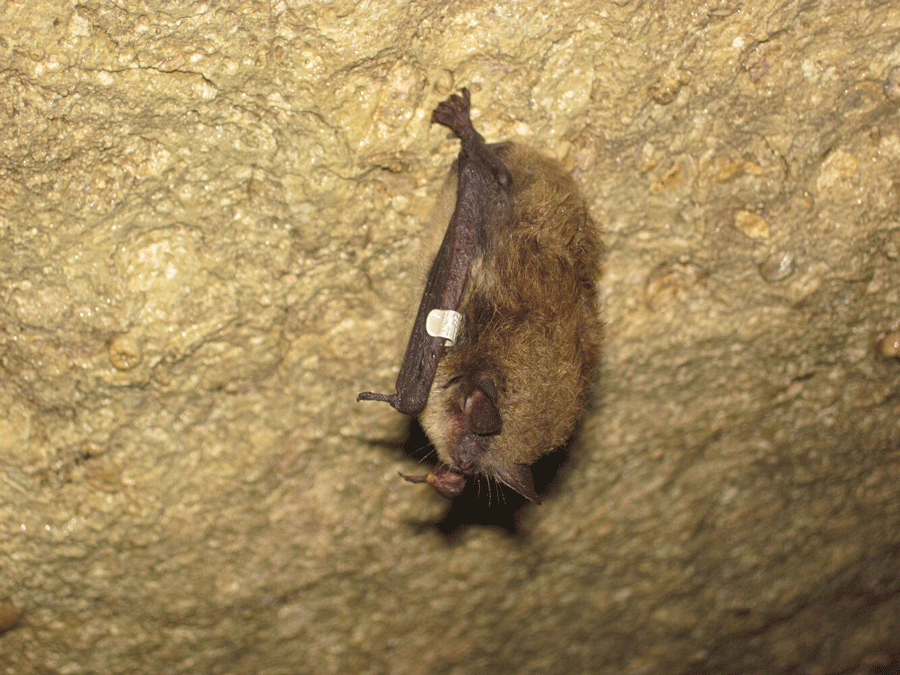
Photograph of a healthy and banded little brown bat (Myotis lucifugus) hanging in a cave. Photograph by Paul Cryan, U.S. Geological Survey.
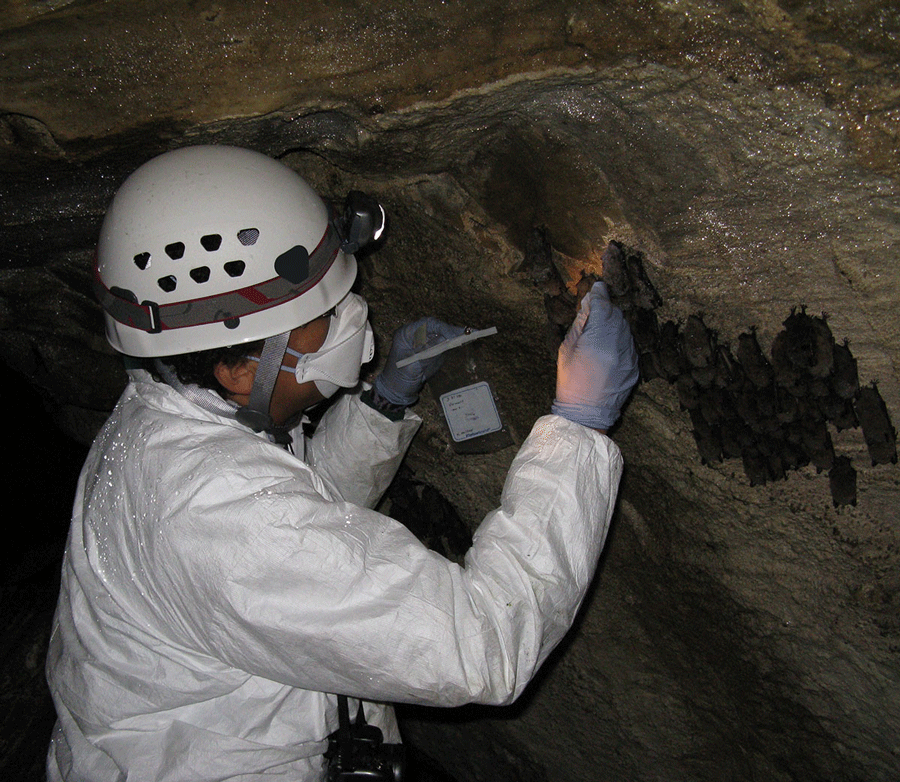
Photograph of a researcher collecting samples from a bat colony in a Vermont cave where white-nose syndrome is known to be present. Photograph modified from Kimberli Miller, U.S. Geological Survey.
Appendix 3. Congressional Language Mandating U.S. Geological Survey Studies of White-Nose Syndrome for Fiscal Years 2014–2023
Table 3.1.
List of House and Senate reports along with final appropriations legislation mentioning white-nose syndrome in bats for fiscal years 2014–2023.[Terms: FY, fiscal year; WNS, white-nose syndrome]
| Type of report | Quotation from Congressional report | Uniform resource locator (URL) |
|---|---|---|
| House report 117–400, p. 41 | Funding for research on Coral Disease, White Nose Syndrome, and Greater Everglades Invasive species is maintained at the enacted level. | https://www.congress.gov/congressional-report/117th-congress/house-report/400/1 |
| Consolidated Appropriations Act 2023, Public Law 117–328 | … funding is continued at the enacted level for white-nose syndrome (WNS) research and the direction found in Senate Report 116-123 is continued for WNS research. | https://www.govinfo.gov/content/pkg/CPRT-117HPRT50348/html/CPRT-117HPRT50348.htm |
| House report 117–83, p. 41 | Funding for research on Coral Disease, White Nose Syndrome, and Greater Everglades Invasive species is maintained at the enacted level … | https://www.congress.gov/committee-report/117th-congress/house-report/83/1 |
| Consolidated Appropriations Act 2022, Public Law 117–103, p. 1436 | Funding is continued at the enacted level for white-nose syndrome (WNS) research and the direction found in Senate Report 116–123 is continued for WNS research. | https://www.govinfo.gov/content/pkg/CPRT-117HPRT47048/pdf/CPRT-117HPRT47048.pdf |
| House report 116–448, p. 44 | Funding for research on Coral Disease, White Nose Syndrome, and Greater Everglades Invasive species is maintained at the enacted level. | https://www.congress.gov/116/crpt/hrpt448/CRPT-116hrpt448.pdf |
| Consolidated Appropriations Act 2021, Public Law 116–68, p. 50–51 | Of the funds provided for the new Biological Threats and Invasive Species Research program, the Committee recommends maintaining funding at the fiscal year 2020 enacted level of $3,748,000 for White-nose syndrome [WNS] research. The Survey shall utilize best practices developed in response to WNS and apply such response to other new and emerging high-risk wildlife diseases. | https://www.appropriations.senate.gov/imo/media/doc/INTRept.pdf |
| Senate report 116–123, p. 45 | Funding for white nose syndrome is increased by $500,000 to assist the Survey in leading and implementing the North American Bat Monitoring Program in association with other Federal natural resource management agencies and offices, States, and non-governmental partners. | https://www.congress.gov/congressional-report/116th-congress/senate-report/123/1?outputFormat=pdf |
| Further Consolidated Appropriations Act 2020, p. 24–25 | The agreement provides … $3,748,000 for White Nose Syndrome research … | https://docs.house.gov/billsthisweek/20191216/BILLS-116HR1865SA-JES-DIVISION-D.pdf |
| Senate report 115–276, p. 38 | Within the wildlife program, $250,000 is included above the enacted level of $2,998,000 to continue White Nose Syndrome studies; funds appropriated shall continue to help lead and implement the North American Bat Monitoring Program in association with other Federal natural resource management agencies and offices, States, and nongovernmental partners. | https://www.congress.gov/congressional-report/115th-congress/senate-report/276/1?q=%7B%22search%22%3A%22senate+report+115-276%22%7D&s=5&r=1 |
| Consolidated Appropriations Act 2019, report 116–9, p. 725 | The agreement maintains the Senate funding level and direction on white nose syndrome … | https://www.congress.gov/116/crpt/hrpt9/CRPT-116hrpt9.pdf |
| Consolidated Appropriations Act 2018, p. H2609 and p. H2616 | p. H2609, White-Nose Syndrome.—The four Federal land management agencies and the U.S. Geological
Survey are expected to continue to prioritize research on, and efforts to address,
white-nose syndrome in bats and to work with other Federal, State, and non-governmental
partners to implement the North American Bat Monitoring Program. p. H2616, The agreement also includes an increase of $500,000 from within available funds to address white-nose syndrome in bats. |
https://www.congress.gov/crec/2018/03/22/CREC-2018-03-22-bk2.pdf |
| Consolidated Appropriations Act 2017, p. 1109 | Ecosystems.—The bill … includes an increase of $250,000 to address white-nose syndrome in bats … | https://www.govinfo.gov/content/pkg/CPRT-115HPRT25289/pdf/CPRT-115HPRT25289.pdf |
| House report 114–170, p. 33 | White-Nose Syndrome in bats.—The Committee provides requested funds to support efforts to understand and respond to white-nose syndrome. | https://www.govinfo.gov/content/pkg/CRPT-114hrpt170/pdf/CRPT-114hrpt170.pdf |
| Senate report 114–70, p. 30 | Within the wildlife program an additional $500,000 is provided to continue White Nose Syndrome studies. | https://www.congress.gov/114/crpt/srpt70/CRPT-114srpt70.pdf |
| Consolidated Appropriations Act 2016, p. H10216 | Ecosystems.—The bill … includes an increase of $500,000 to address white-nose syndrome in bats … | https://www.congress.gov/crec/2015/12/17/CREC-2015-12-17-bk3.pdf |
| Consolidated and Further Continuing Appropriations Act 2015, p. H9764 | Ecosystems.—Within the Ecosystems activity, $1,005,000 is provided to address white-nose syndrome in bats … | https://www.congress.gov/113/crec/2014/12/11/CREC-2014-12-11-bk2.pdf |
| Consolidated Appropriations Act 2014, p. H974 | Ecosystems.—Within the Ecosystems activity, an additional $505,000 is provided to address white-nose syndrome in bats … | https://www.congress.gov/113/crec/2014/01/15/160/9/CREC-2014-01-15-bk2.pdf |
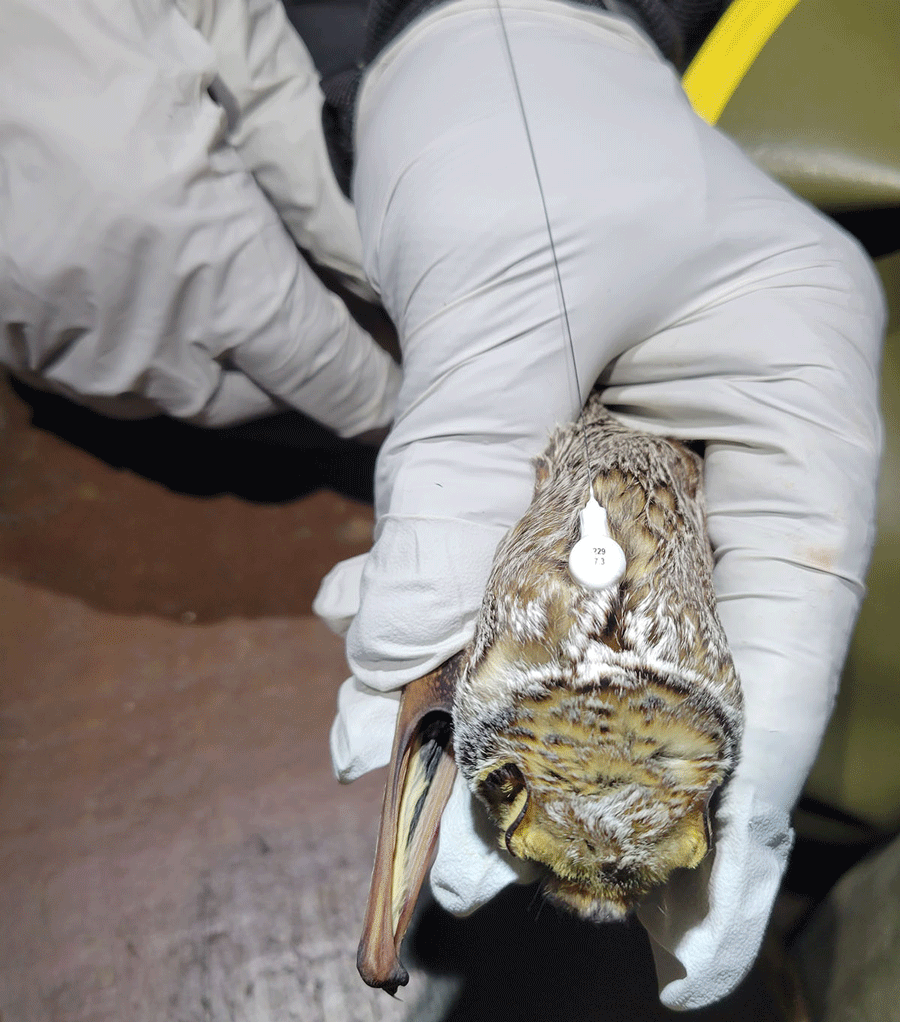
Photograph of a high-frequency radio-telemetry tracking tag on a migratory hoary bat (Lasiurus cinereus). These tags help researchers understand how this species moves along the Pacific Ocean coast. Photograph by U.S. Geological Survey.
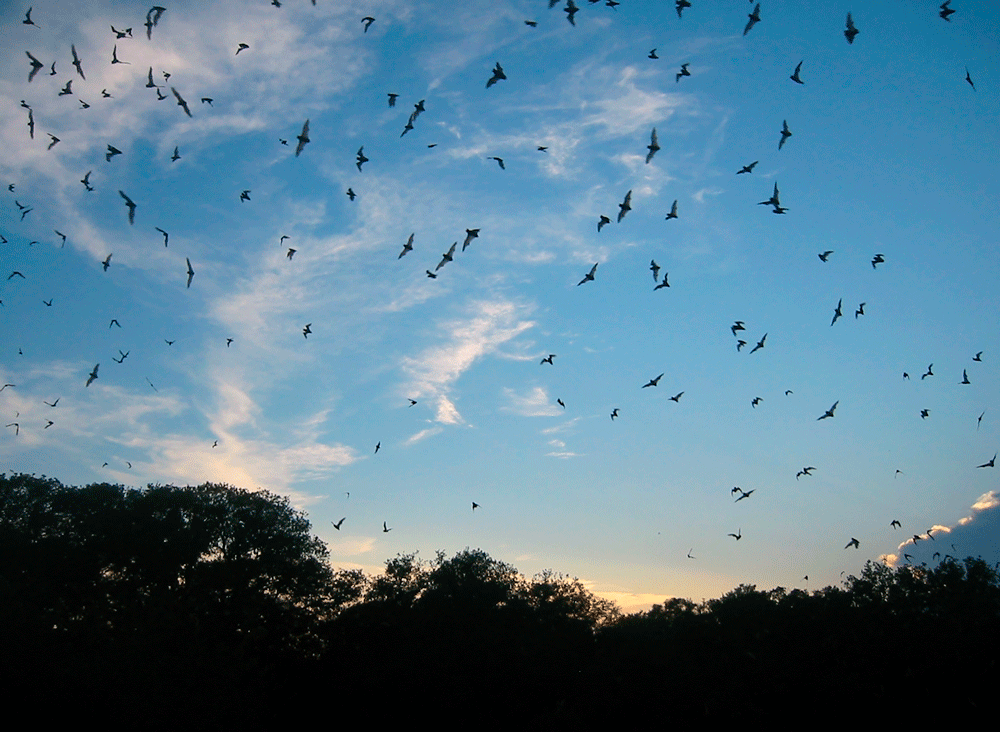
Photograph of migratory Brazilian free-tailed bats (Tadarida brasiliensis), which provide a natural pest-control service to wheat, alfalfa, and cotton farmers by eating flying insects. Photograph by Paul Cryan, U.S. Geological Survey.
Abbreviations
BLM
Bureau of Land Management
CRU
cooperative research unit
DOI
U.S. Department of the Interior
EESC
Eastern Ecological Science Center
EMA
Ecosystems Mission Area (USGS)
FORT
Fort Collins Science Center
FRESC
Forest and Rangeland Ecosystem Science Center
FY
fiscal year
NABat
North American Bat Monitoring Program
NOROCK
Northern Rocky Mountain Science Center
NPS
National Park Service
NWHC
National Wildlife Health Center
Pd
Pseudogymnoascus destructans
PIT
passive integrated transponder
USFS
U.S. Forest Service
USFWS
U.S. Fish and Wildlife Service
USGS
U.S. Geological Survey
WARC
Wetland and Aquatic Research Center
WERC
Western Ecological Research Center
WHISPers
Wildlife Health Information Sharing Partnership – event reporting system
WNS
white-nose syndrome
For additional information, contact:
Associate Director, Ecosystems Mission Area
U.S. Geological Survey
12201 Sunrise Valley Drive
Mail Stop 300
Reston, VA 20192
Publishing support provided by the
Reston Publishing Service Center
Disclaimers
Any use of trade, firm, or product names is for descriptive purposes only and does not imply endorsement by the U.S. Government.
Although this information product, for the most part, is in the public domain, it also may contain copyrighted materials as noted in the text. Permission to reproduce copyrighted items must be secured from the copyright owner.
Suggested Citation
Hopkins, M.C., George, A.E., and McCaffery, R., 2025, U.S. Geological Survey science strategy to address white-nose syndrome and bat health in 2025–2029: U.S. Geological Survey Circular 1560, 23 p., https://doi.org/10.3133/cir1560.
ISSN: 2330-5703 (online)
| Publication type | Report |
|---|---|
| Publication Subtype | USGS Numbered Series |
| Title | U.S. Geological Survey science strategy to address white-nose syndrome and bat health in 2025–2029 |
| Series title | Circular |
| Series number | 1560 |
| DOI | 10.3133/cir1560 |
| Publication Date | August 25, 2025 |
| Year Published | 2025 |
| Language | English |
| Publisher | U.S. Geological Survey |
| Publisher location | Reston, VA |
| Contributing office(s) | Columbia Environmental Research Center, Forest and Rangeland Ecosys Science Center, Office of the AD Ecosystems |
| Description | iv, 23 p. |
| Online Only (Y/N) | Y |
| Additional Online Files (Y/N) | N |