


U.S. Geological Survey Science to Support Wildlife Disease Management
Links
- Document: Report (3.20 MB pdf) , HTML , XML
- Download citation as: RIS | Dublin Core
Wildlife Disease Outbreak Investigations
The USGS Ecosystems Mission Area’s Biological Threats and Invasive Species Research Program supports cause-of-death investigations of aquatic and terrestrial wildlife disease outbreaks involving Federal trust species, which includes “migratory birds, threatened species, endangered species, interjurisdictional fish, marine mammals, and other species of concern” (16 U.S.C. 3772(1)), and those outbreaks occurring on Department of the Interior (DOI) managed lands. These diagnostic investigations often lead to research studies to further understand the epidemiology of disease outbreaks and provide tools for disease prevention, detection, and management. Wildlife disease outbreak investigations conducted by USGS scientists support other DOI bureaus (for example, the U.S. Fish and Wildlife Service [USFWS] and National Park Service), as well as State and Tribal natural resource and conservation agencies.
The USGS National Wildlife Health Center (NWHC), the only Federal high-containment facility dedicated to wildlife disease surveillance and research, is registered with the U.S. Centers for Disease Prevention and Control (CDC) Federal Select Agent Program and serves as an affiliate member within USDA’s National Animal Health Laboratory Network. For more than 40 years, NWHC diagnostic laboratories have worked collaboratively with Federal, State, and Tribal agencies to investigate wildlife morbidity and mortality events across the Nation. Together, the NWHC and Canadian Wildlife Health Cooperative serve as the World Organisation for Animal Health (WOAH)’s Collaborating Centre for Research, Diagnosis and Surveillance of Wildlife Pathogens. NWHC is also a United Nations Food and Agricultural Organization Reference Centre for Wildlife Health and Wildlife Disease Diagnostics.

A USGS scientist uses UV light on a big brown bat (Eptesicus fuscus) as a screening technique to look for evidence of Pseudogymnoascus destructans, the fungus that causes white-nose syndrome.
Supporting U.S. Fish and Wildlife Service Decision-Making
USGS research and risk assessments on the impact of wildlife diseases support the Endangered Species Act of 1973, as amended, in terms of listing decisions and rulings by the USFWS. For example, USGS amphibian disease science was used by the USFWS to support their Lacey Act of 1900, as amended, interim ruling (USFWS, 2016), which listed 201 salamanders as injurious. In other words, importing these species may harm native wildlife by disease transmission. This ruling aims to protect the health of native amphibians by preventing the introduction of the invasive, deadly fungal pathogen Batrachochytrium salamandrivorans (Bsal).
Data from the USGS-coordinated multi-national, multi-agency North American Bat Monitoring Program (NABat; https://sciencebase.usgs.gov/nabat/#/results) was harnessed to understand the scope and severity of white-nose syndrome, a fungal disease that erodes the bare skin of hibernating bats, resulting in abnormal early rousing from hibernation, depletion of their winter fat stores, and death. The research team found that three species undergoing USFWS species status assessments (northern long-eared bat [Myotis septentrionalis], little brown bat [Myotis lucifugus], and tricolored bat [Perimyotis subflavus]) had population declines of more than 90 percent (Cheng and others, 2021).
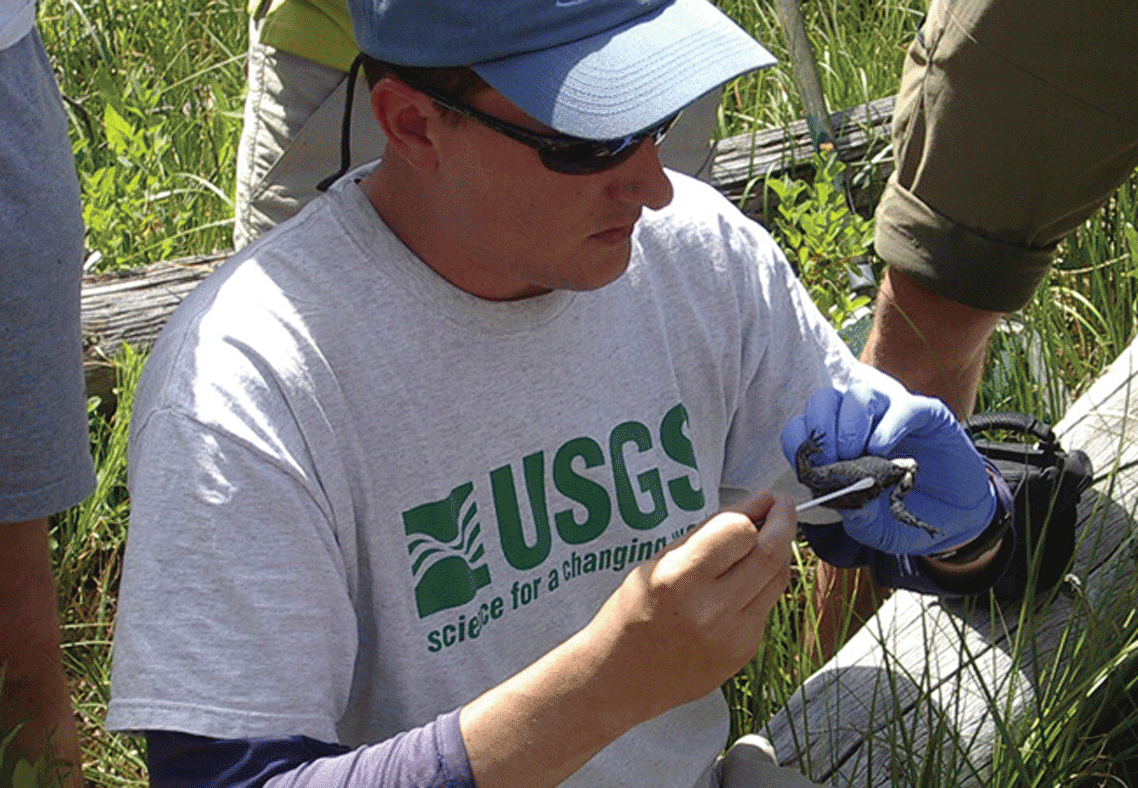
A USGS scientist demonstrates swabbing the skin of a boreal toad (Anaxyrus boreas boreas) to detect amphibian chytrid fungi.
SYLVATIC PLAGUE
Sylvatic plague, a non-native flea-borne disease caused by the bacterium Yersinia pestis, can lead to mortality in humans, pet cats and dogs, and wildlife. In 2015, several human cases were linked with exposures at Yosemite National Park, California. Endangered black-footed ferrets (Mustela nigripes) and their prey (for example, prairie dogs [Cynomys spp.]) can also succumb to this disease. As a result, USGS scientists are researching the ecology of plague and investigating mitigation strategies to decrease populations of plague-carrying fleas in prairie dog burrows. The USGS and partners developed an edible plague vaccine for prairie dogs and after identifying flea resistance to the long-standing tool of deltamethrin dust to kill fleas, the USGS is investigating other options to reduce fleas (for example, fipronil pellets). The plague vaccine served as a foundation for development of other vaccines: bat white-nose syndrome; rabies in bats; and the cause of COVID-19, severe acute respiratory syndrome-related coronavirus 2 (SARS-CoV-2), to protect black-footed ferrets.
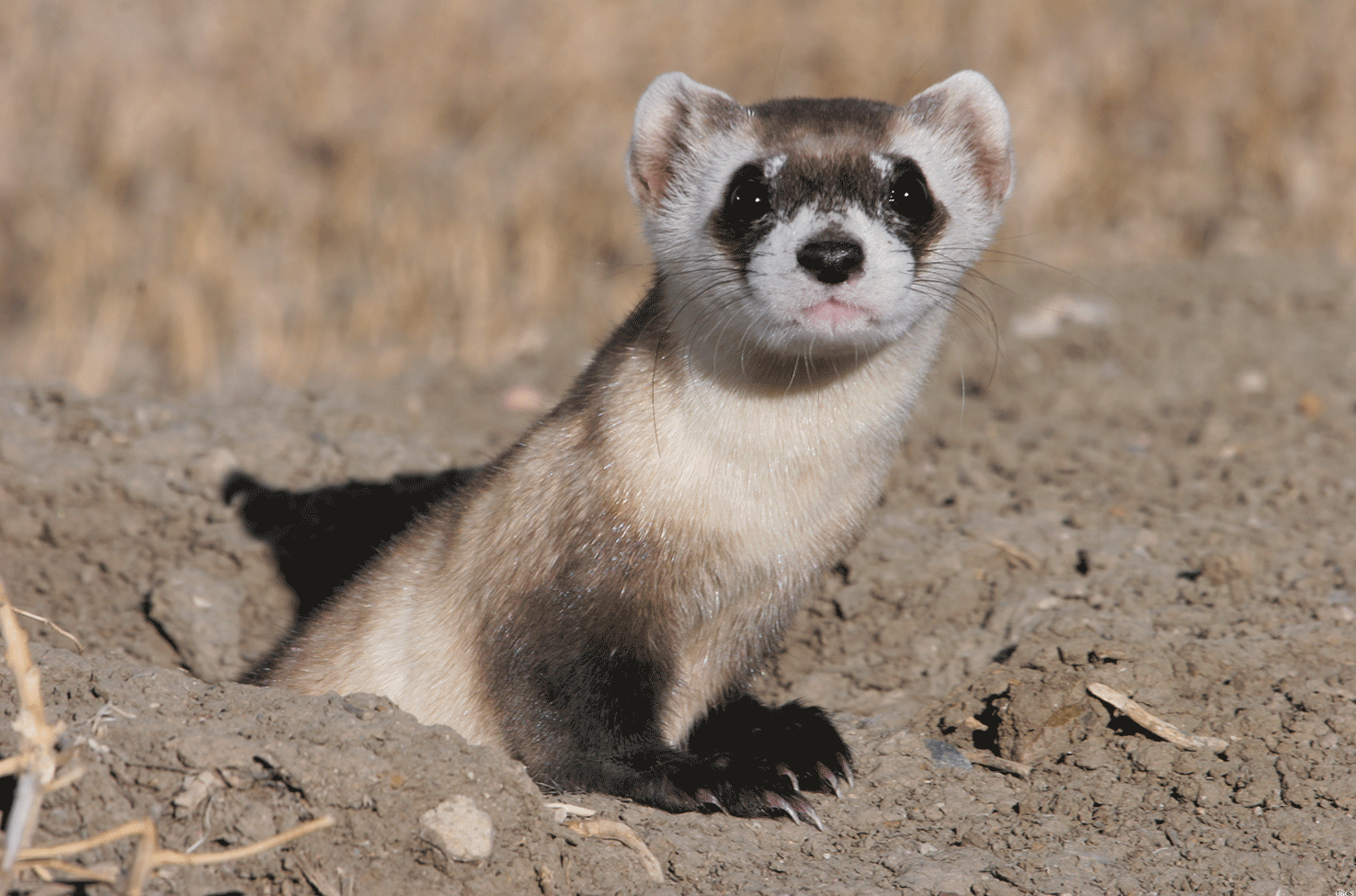
The USGS has developed an oral vaccine to protect the endangered black-footed ferret (Mustela nigripes) from plague.
Supporting National Response to Disease Outbreaks
As outlined in the Federal Emergency Management Agency’s National Response Framework Emergency Support Function #11 (ESF-11), the USGS is the lead Federal agency tasked with responding to disease events involving free-ranging fish and wildlife—including zoonotic disease outbreaks—during emergencies (https://www.fema.gov/sites/default/files/2020-07/fema_ESF_11_Ag-Natural-Resources.pdf). Through ESF-11, the USGS collaborates with the U.S. Department of Agriculture, other DOI bureaus, and the U.S. Department of Health and Human Services for an integrated response to diseases shared between wildlife, domesticated animals, or people. Following a presidential national emergency declaration (White House, 2020), the USGS will assist by providing the following: wildlife emergency response teams; geospatial assessment and mapping tools; assistance in the identification of new emerging and resurging zoonotic diseases; diagnostic laboratory support (up to and including biological safety level 3 biocontainment precautions for working with microbes that can cause serious or fatal disease after inhalation); assistance with the prevention, control, and eradication of any disease involving wildlife; and carcass disposal facilities, as appropriate. USGS has supported the national response to highly pathogenic avian influenza and SARS-CoV-2.
SALMONID PROLIFERATIVE KIDNEY DISEASE
A 2016 outbreak of proliferative kidney disease (PKD) in the upper Yellowstone River in Montana resulted in the death of thousands of mountain whitefish (Prosopium williamsoni), an unprecedented multiweek river closure, and approximately half a million dollars in lost business revenue for Park County, Montana, alone. This unexpected disease outbreak, as well as smaller outbreaks in 2017 and 2020, highlighted the lack of understanding of the ecology of the parasite (Tetracapsuloides bryosalmonae) that causes PKD. In response, USGS scientists developed laboratory and environmental DNA detection tools that are being used by USFWS and State partners to detect and respond to this pathogen. Utilizing a novel robotic environmental sample processor developed by the Monterey Bay Aquarium Research Institute, in addition to traditional methods, the USGS is investigating the dynamics of PKD in Montana, Wyoming, Idaho, and California.
Tracking Specific Wildlife Diseases
The USGS conducts and supports field and laboratory surveillance for endemic, emerging, and resurging diseases of aquatic and terrestrial wildlife. The USGS maintains the Wildlife Health Information Sharing Partnership—event reporting system (WHISPers; https://whispers.usgs.gov/home), which raises awareness of wildlife disease events and provides a collaboration platform for Federal, State, and Tribal wildlife health professionals. USGS wildlife disease investigation capabilities have also been used to support surveillance and research on diseases that affect the agricultural economy (National Security Memorandum-16, https://www.whitehouse.gov/briefing-room/statements-releases/2022/11/10/fact-sheet-biden-harris-administration-releases-national-security-memorandum-t o-strengthen-the-security-and-resilience-of-u-s-food-and-agriculture/), such as livestock pathogens shared with wildlife (Miller and others, 2013). The USGS collaborates directly with the Department of Homeland Security’s National Biosurveillance Integration Center to assure wildlife disease information is available to the national biosurveillance infrastructure.
The USGS has collaborated with the U.S. Department of Agriculture (USDA) on surveillance and research of diseases shared between wildlife and domesticated animals (avian influenza, infectious salmon anemia, chronic wasting disease, and rabbit hemorrhagic disease). The USGS and USDA detected the first cases of the highly pathogenic avian influenza (HPAI) in wild birds ahead of the 2015 U.S. poultry outbreaks (Ip and others, 2015). The USGS continues to collaborate with USDA and other organizations through the Interagency Steering Committee for Avian Influenza Surveillance in Wild Migratory Birds. Together, a proactive 2021 webinar series was conducted because of concern that the global HPAI outbreak might impact North America (Hopkins and others, 2022). USGS avian ecology research led to the first 2022 live wild bird HPAI detection (Prosser and others, 2022). USGS scientists and their collaborators determined that avian influenza viruses can persist in Alaska and Minnesota wetlands for up to 7 months (Ramey and others, 2020). USGS is developing risk models to better understand the interface between wild birds and domestic poultry (https://www.pwrc.usgs.gov/ai).
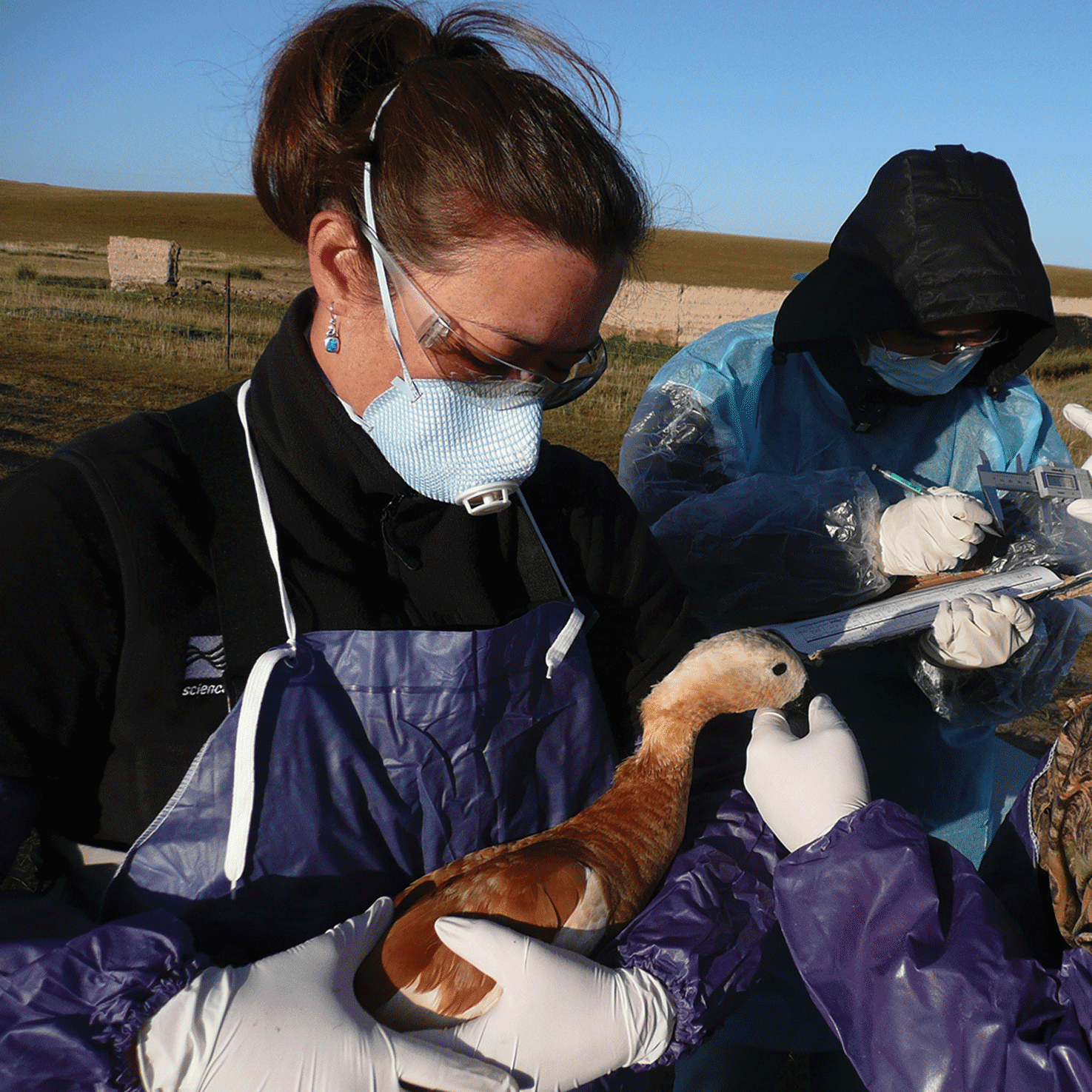
USGS scientist Dr. Diann J. Prosser examining a ruddy shelduck (Tadorna ferruginea) in China. She studied movements of this migratory species that was infected in the 2005 Qinghai Lake HPAI outbreak. Photograph by John Y. Takekawa, U.S. Geological Survey.
ELK DISEASES
Because harsh winters with deep snow in the greater Yellowstone ecosystem (Montana, Wyoming, and Idaho) lead to little natural forage, which is exacerbated by the disruption of historical migration routes (for example, by fences and traffic), management of elk populations often includes supplemental feeding with pellets or hay. The congregation of elk at winter feeding grounds likely increases the risk of the spread of diseases, such as chronic wasting disease (CWD) and brucellosis, resulting in declines in survival and population growth. In light of CWD, USGS scientists are working with the USFWS National Elk Refuge and US Forest Service to evaluate management alternatives for Wyoming elk feedgrounds. USGS scientists are also investigating migratory movements of elk using Global Positioning System collar data to understand how connectivity between subpopulations influences the risk of disease spread.
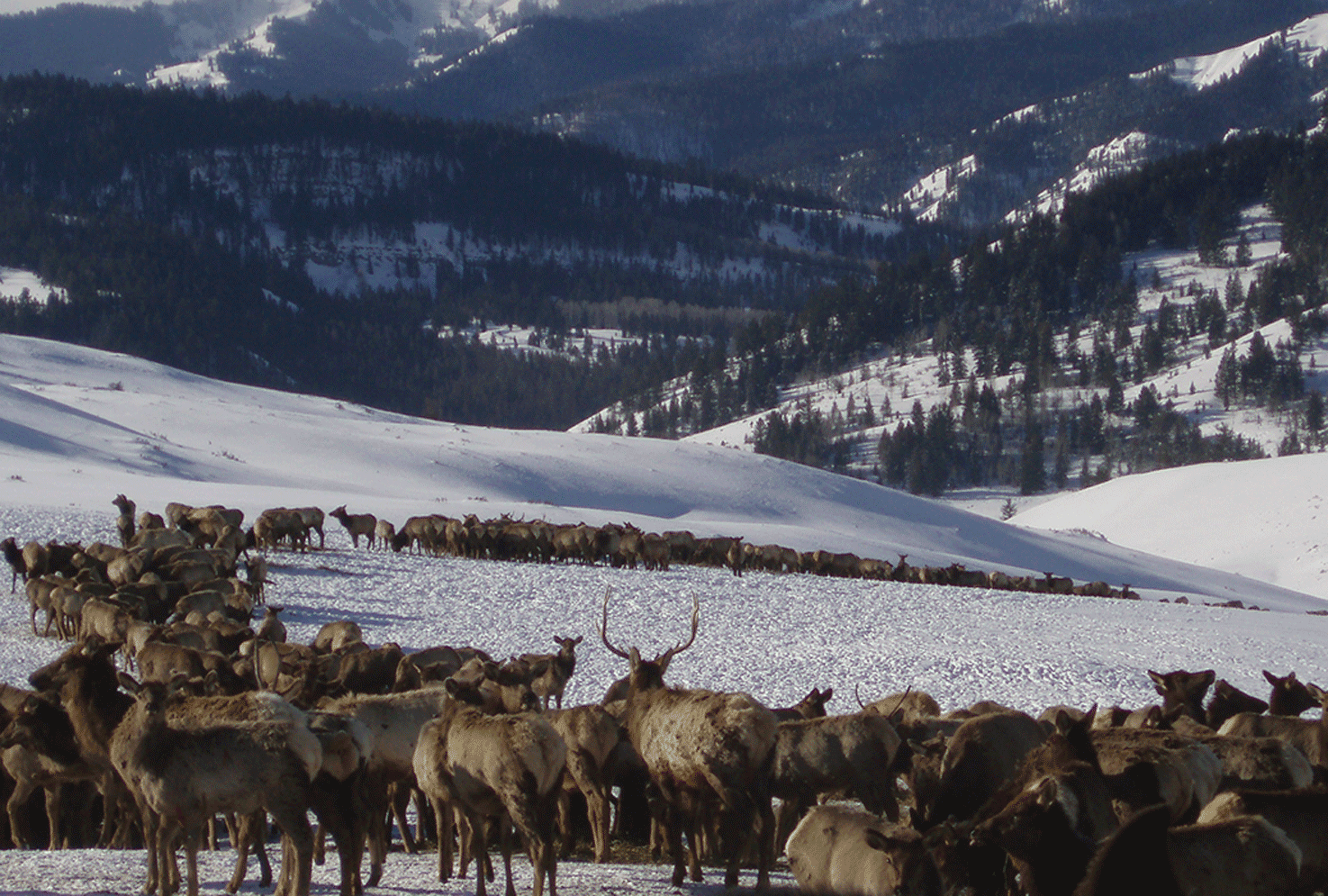
A herd of elk (Cervus elaphus) gather on a feedground during winter in the western United States.
AVIAN MALARIA IN HAWAI’I
The USGS is investigating environmental factors, including climate change, that affect the emergence and distribution of wildlife diseases. USGS scientists have conducted research on avian malaria, caused by a now established invasive parasite (Plasmodium relictum) spread by invasive mosquitoes, that has resulted in significant declines in Hawaiian forest birds. The USGS developed an online, real-time avian malaria warning system climate adaptation tool (http://avianmalaria.watch/) that allows natural resource managers to incorporate climate into their current decision making for targeted deployment of mosquito control methods.
Wildlife Disease Research Capabilities
The USGS invests approximately $15 million annually on aquatic and terrestrial wildlife disease research. This investment primarily supports disease operations at the USGS NWHC, as well as surveillance and research conducted by disease ecologists and veterinarians embedded at other USGS Science Centers and USGS Cooperative Research Units (USGS scientists based at land-grant universities) across the Nation. In addition to field and laboratory research, USGS mathematical modeling, biostatistics, decision science, human dimensions, and economic research provide scientific information to natural resource managers.
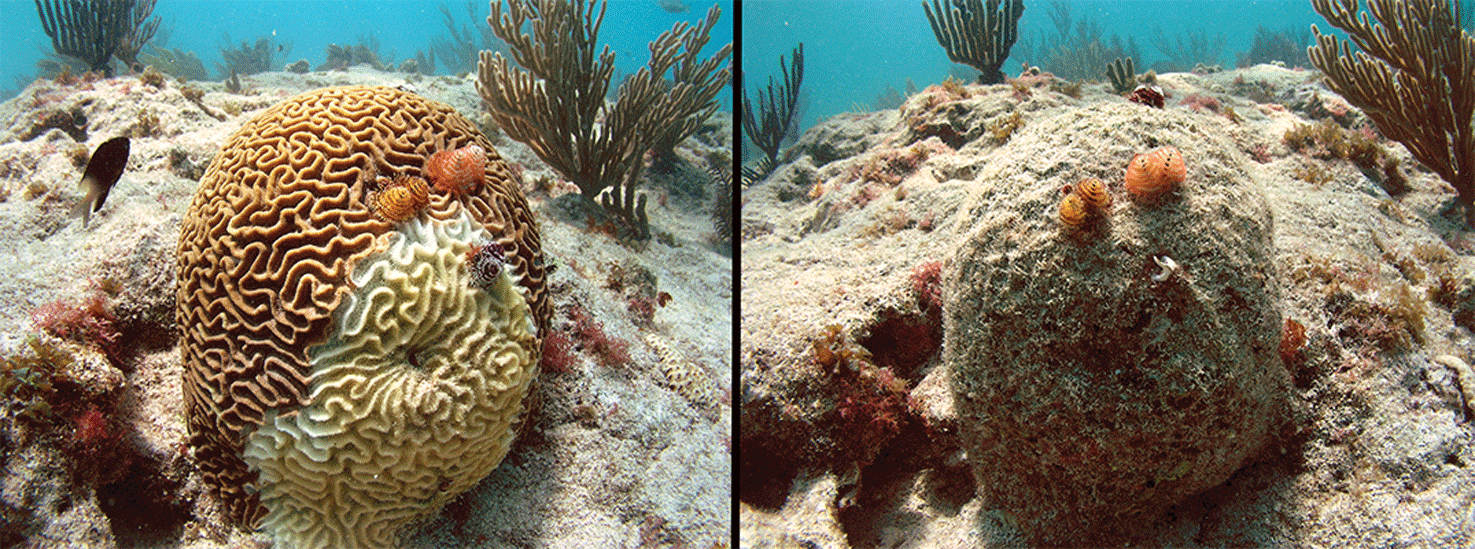
Two photographs of the same coral colony of symmetrical brain coral, Pseudodiploria strigosa, that was infected by Stony Coral Tissue Loss Disease in April 2015 (left photo) and completely dead by April 2016 (right photo). The USGS supports the National Oceanic and Atmospheric Administration in the outbreak investigation and research response to this disease. Photographs by Ilsa B. Kuffner, U.S. Geological Survey.
References Cited
Cheng, T.L., Reichard, J.D., Coleman, J.T., Weller, T.J., Thogmartin, W.E., Reichert, B.E., Bennett, A.B., Broders, H.G., Campbell, J., Etchison, K., and Feller, D.J., 2021, The scope and severity of white‐nose syndrome on hibernating bats in North America: Conservation Biology, v. 35, no. 5, p. 1586‒1597, accessed October 26, 2022, at https://doi.org/10.1111/cobi.13739.
Hopkins, M.C., Mason, J.R., Haddock, G., and Ramey, A.M., 2022, Proceedings of the Highly Pathogenic Avian Influenza and Wild Birds Webinar Series, August 2–5, 2021: U.S. Geological Survey Open-File Report 2022–1066, 27 p., https://doi.org/10.3133/ofr20221066.
Ip, H.S., Torchetti, M.K., Crespo, R., Kohrs, P., DeBruyn, P., Mansfield, K.G., Baszler, T., Badcoe, L., Bodenstein, B., Shearn-Bochsler, V., Killian, M.L., Pedersen, J.C., Hines, N., Gidlewski, T., Deliberto, T.J., and Sleeman, J.M., 2015, Novel Eurasian highly pathogenic influenza A H5 viruses in wild birds, Washington, USA, 2014: Emerging Infectious Diseases, v. 21, no. 5, p. 886‒890, accessed February 13, 2023, at http://dx.doi.org/10.3201/eid2105.142020.
Jones, K.E., Patel, N.G., Levy, M.A., Storeygard, A., Balk, D., Gittleman, J.L., and Daszak, P., 2008, Global trends in emerging infectious diseases: Nature, v. 451, p. 990‒993, accessed October 26, 2022, at https://doi.org/10.1038/nature06536.
Miller, R.S., Farnsworth, M.L., and Malmberg, J.L., 2013, Diseases at the livestock-wildlife interface–Status, challenges, and opportunities in the United States: Preventive Veterinary Medicine, v. 110, no. 2, p. 119–132, accessed October 26, 2022, at https://doi.org/10.1016/j.prevetmed.2012.11.021.
Prosser, D.J., Schley, H.L., Simmons, N., Sullivan, J.D., Homyack, J., Weegman, M., Olsen, G.H., Berlin, A.M., Poulson, R.L., Stallknecht, D.E., and Williams, C.K., 2022, A lesser scaup (Aythya affinis) naturally infected with Eurasian 2.3. 4.4 highly pathogenic H5N1 avian influenza virus: Movement ecology and host factors: Transboundary and Emerging Diseases, v. 69, no. 5, p. 2653–2660, accessed February 13, 2023, at https://doi.org/10.1111/tbed.14614.
Ramey, A.M., Reeves, A.B., Drexler, J.Z., Ackerman, J.T., De La Cruz, S., Lang, A.S., Leyson, C., Link, P., Prosser, D.J., Robertson, G.J., and Wight, J., 2020, Influenza A viruses remain infectious for more than seven months in northern wetlands of North America: Proceedings of the Royal Society B, v. 287, no. 1934, 10 p., accessed February 13, 2023, at https://doi.org/10.1098/rspb.2020.1680.
U.S. Fish and Wildlife Service, 2016, Injurious wildlife species– listing salamanders due to risk of salamander chytrid fungus: Interim Rule. 81 FR: 1534 (January 13, 2016), accessed August 24, 2022, at https://www.regulations.gov/document/FWS-HQ-FAC-2015-0005-0001.
White House, 2020, Proclamation on declaring a national emergency concerning the novel coronavirus disease (COVID-19) outbreak: White House web page, accessed March 13, 2023, at https://trumpwhitehouse.archives.gov/presidential-actions/proclamation-declaring-national-emergency-concerning-novel-coronavirus-disease-covid-19-outb reak/.
For more information, contact:
Associate Director, Ecosystems Mission Area
U.S. Geological Survey
12201 Sunrise Valley Drive
Mail Stop 300
Reston, VA 20192
Disclaimers
Any use of trade, firm, or product names is for descriptive purposes only and does not imply endorsement by the U.S. Government.
Although this information product, for the most part, is in the public domain, it also may contain copyrighted materials as noted in the text. Permission to reproduce copyrighted items must be secured from the copyright owner.
Suggested Citation
Hopkins, M.C., and Soileau, S.C., 2023, U.S. Geological Survey science to support wildlife disease management: U.S. Geological Survey Fact Sheet 2023–3008, 4 p., https://doi.org/10.3133/fs20233008.
ISSN: 2327-6932 (online)
ISSN: 2327-6916 (print)
| Publication type | Report |
|---|---|
| Publication Subtype | USGS Numbered Series |
| Title | U.S. Geological Survey science to support wildlife disease management |
| Series title | Fact Sheet |
| Series number | 2023-3008 |
| DOI | 10.3133/fs20233008 |
| Publication Date | April 28, 2023 |
| Year Published | 2023 |
| Language | English |
| Publisher | U.S. Geological Survey |
| Publisher location | Reston, VA |
| Contributing office(s) | Office of the AD Ecosystems |
| Description | 4 p. |
| Online Only (Y/N) | N |
| Additional Online Files (Y/N) | N |