


Diagnostic Success—A Quick Guide to Quality Carcass Submissions for Diagnostic Services
Links
- Document: Report (1.6 MB pdf) , HTML , XML
- Download citation as: RIS | Dublin Core
Abstract
The U.S. Geological Survey National Wildlife Health Center (NWHC) provides diagnostic services to determine causes of wildlife morbidity and mortality events to State, Federal, and Tribal partners. To accomplish this, we rely on the timely collection and evaluation of submitted carcasses and the epidemiologic information relayed from personnel in the field. Our current submission criteria can be found here: https://www.usgs.gov/centers/nwhc/science/diagnostic-case-submission-guidelines. If the majority of carcasses found in the field are unsuitable for submission, then sick animals (birds, mammals, reptiles) that have been euthanized are acceptable specimens. Depending on the agency or affiliated institution, there may be additional requirements for submission (White and Dusek, 2015). When applicable, always consult the organization’s wildlife health or veterinary staff.
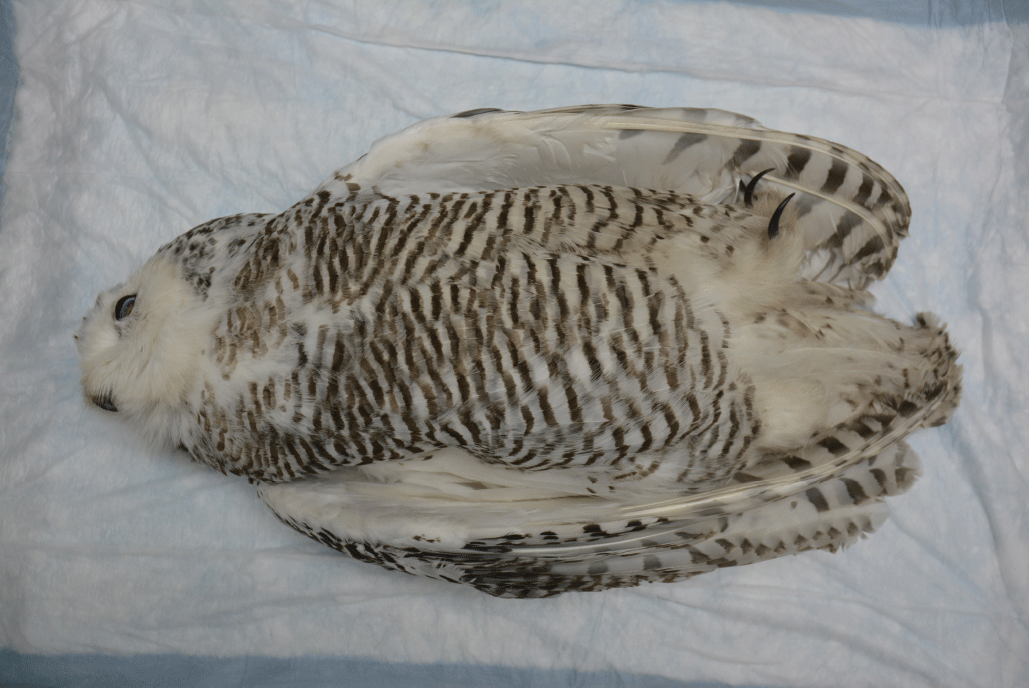
Photograph showing an example of a carcass in good postmortem condition. Photograph provided by National Wildlife Health Center staff.
To provide the best diagnostic outcome, it is critical that a carcass be intact and received in fair to excellent postmortem condition (table 1). For example, to determine cause of expiration, it is necessary to have a fresh, intact carcass with all internal organs for gross examination and ancillary testing (histology, virology, microbiology, and so on; White and Dusek, 2015). Unacceptable carcasses exhibit the following: open body cavities caused by scavenging or decomposition; missing or sunken eyes that are not clear; insect or maggot damage; a foul odor; signs of mumification or waterlog; skin or fur that is sloughing off, and for birds, feathers that are easily pulled out. When encountering a deceased specimen in the field, or receiving specimens from the public, carefully inspect the carcasses prior to shipping (and freezing), which is necessary to ensure specimens are at a minimum in fair to good postmortem condition. When contacting the NWHC about submission, we will ask for a description of the postmortem condition, so it is helpful to supply photographs of each specimen. When the cause of expiration cannot be determined at diagnostic evaluation, ruling out what did not cause expiration can also provide valuable information. If there are limited or no suitable carcasses of diagnostic value available during the initial response, repetitive site visits and collection of carcasses may need to be considered.
Table 1.
A range of carcass conditions based on various characteristics. Carcasses ranging from Excellent to Fair are more likely to provide valued diagnostic outcomes.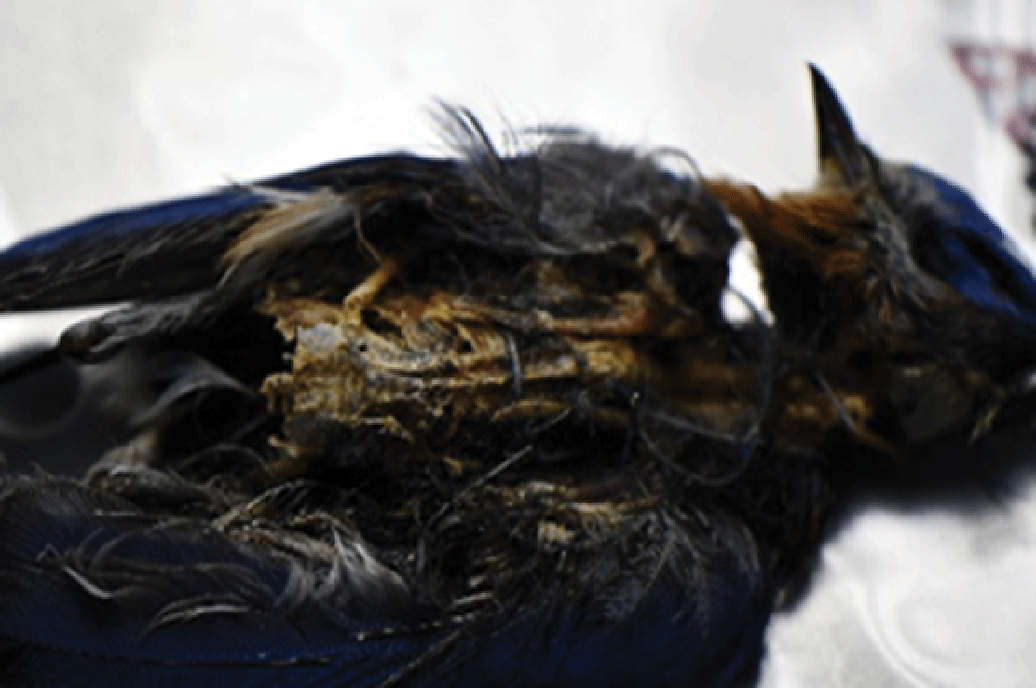
Photograph showing an example of a carcass in an unsuitable postmortem condition Photograph provided by National Wildlife Health Center staff.
Collected carcasses should be immediately chilled. If carcasses cannot be shipped within 48 hours of field collection, then immediate freezing is necessary to prevent further degradation until the specimens can be shipped to the NWHC. Freezing does not interfere with most tests for pathogen detection, but it does interfere with cellular level examination (histopathology); therefore, ship as soon as possible, avoid multiple freeze-thaw cycles, and keep specimens frozen, including during shipment.
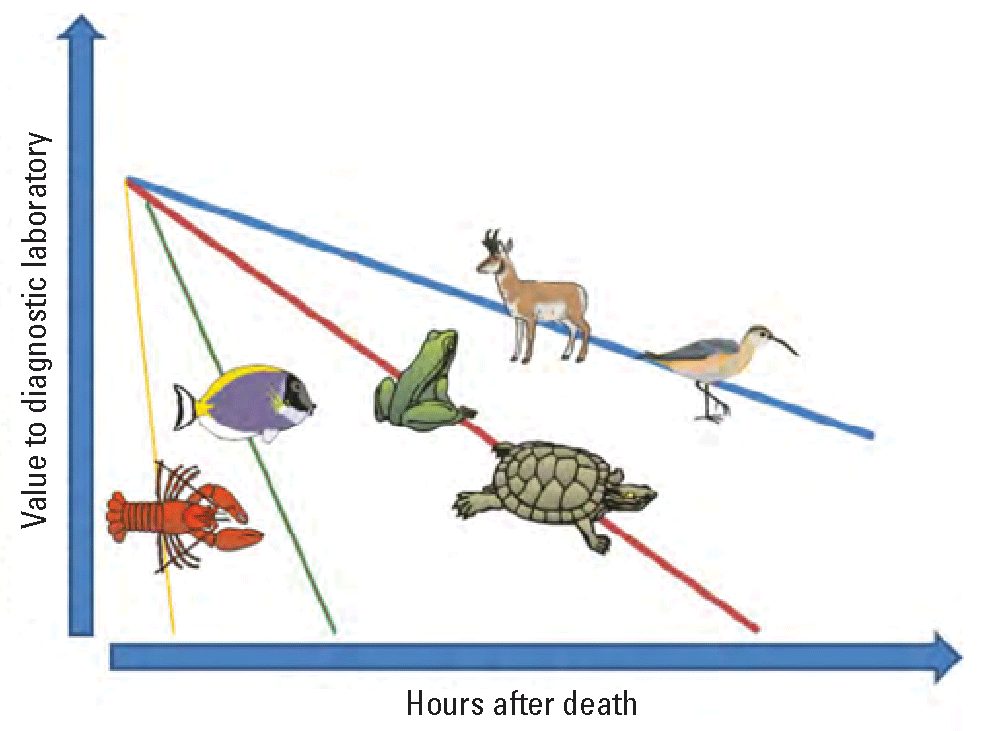
Illustration showing that the value of a specimen to a diagnostic laboratory degrades the longer the carcass sits out in the field (Work, 2015).
Because amphibians and turtles decompose quickly, the best diagnostic specimens are sick animals that have been euthanized; however, submission will require prior coordination. Depending on the agency or affiliated institution there may be additional requirements. More information about protocol for amphibian submissions can be found here: https://www.usgs.gov/media/files/collection-preservation-packaging-and-shipping-amphibians.
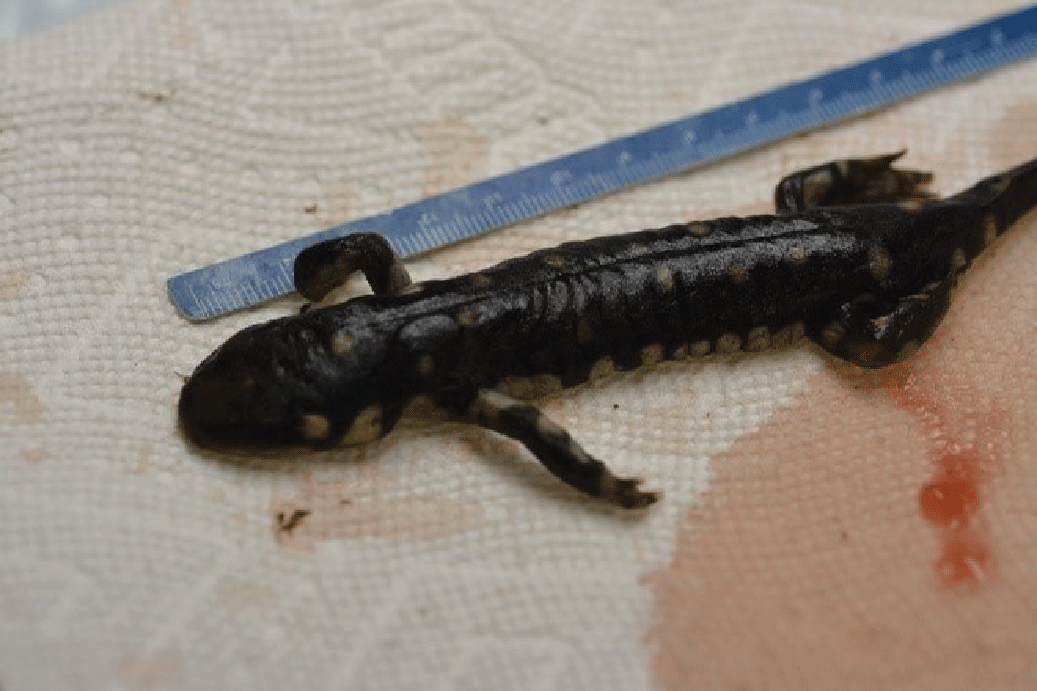
Photograph showing an example of an amphibian carcass in good postmortem condition. Photograph provided by National Wildlife Health Center staff.
References Cited
White, C.L., and Dusek, R.J., 2015, Wildlife specimen collection, preservation, and shipment, in Franson, J.C., Friend, M., Gibbs, S.E.J., and Wild, M.A., eds., Field manual of wildlife diseases: U.S. Geological Survey Techniques and Methods, book 15, chap. C4, 23 p., accessed November 5, 2024, at https://doi.org/10.3133/tm15C4.
Work, T.M., 2015, Mortality investigation, in Franson, J.C., Friend, M., Gibbs, S.E.J., and Wild, M.A., eds., Field manual of wildlife diseases: U.S. Geological Survey Techniques and Methods, book 15, chap. B3, 5 p., accessed November 5, 2024, at https://doi.org/10.3133/tm15B3.
For more information about this publication, contact:
Director, USGS National Wildlife Health Center
6006 Schroeder Road Madison, WI 53711 608–270–2400
For additional information, visit: https://www.usgs.gov/centers/nwhc
Publishing support provided by the Rolla and Baltimore Publishing Service Centers
Disclaimers
Any use of trade, firm, or product names is for descriptive purposes only and does not imply endorsement by the U.S. Government.
Although this information product, for the most part, is in the public domain, it also may contain copyrighted materials as noted in the text. Permission to reproduce copyrighted items must be secured from the copyright owner.
Suggested Citation
Bodenstein, B.L., and Weidenkopf, S.J., 2025, Diagnostic success—A quick guide to quality carcass submissions for diagnostic services: U.S. Geological Survey Fact Sheet 2025–3024, 2 p., https://doi.org/10.3133/fs20253024.
ISSN: 2327-6932 (online)
| Publication type | Report |
|---|---|
| Publication Subtype | USGS Numbered Series |
| Title | Diagnostic success—A quick guide to quality carcass submissions for diagnostic services |
| Series title | Fact Sheet |
| Series number | 2025-3024 |
| DOI | 10.3133/fs20253024 |
| Publication Date | May 19, 2025 |
| Year Published | 2025 |
| Language | English |
| Publisher | U.S. Geological Survey |
| Publisher location | Reston, VA |
| Contributing office(s) | National Wildlife Health Center |
| Description | 2 p. |
| Online Only (Y/N) | Y |
| Additional Online Files (Y/N) | N |