


Critical Minerals in Mine Waste
Links
- Document: Report (3.59 MB pdf) , HTML , XML
- NGMDB Index Page: National Geologic Map Database Index Page (html)
- Download citation as: RIS | Dublin Core
Introduction
Critical minerals are commodities with vulnerable supply chains that play a vital role in supporting the United States’ economy, national defense and security, emerging technologies, and energy independence. The prosperity of our Nation depends on generating a resilient supply of domestic critical minerals; mine waste may be an untapped source of these commodities. Mine waste from centuries of legacy mining persist on the landscape and may contain critical minerals and other valuable commodities previously deemed uneconomic to recover. At modern mines, the financial viability of recovering byproduct critical minerals, which are not the primary target, may be marginal and can ultimately destine them to mine waste. Further, mine waste can be a liability for the mining company or, at legacy mines, the taxpayer because of its effect on the landscape. The U.S. Geological Survey (USGS) has several initiatives to evaluate critical mineral resources in various types of waste. This factsheet highlights studies of mine waste carried out by USGS scientists at the Geology, Energy & Minerals Science Center in collaboration with other science centers funded through the USGS Mineral Resources Program. Recovery of critical minerals from mine waste can aid in remediation efforts and increase domestic supply of vital mineral resources.
Critical minerals at legacy mine sites
Mine waste at legacy sites can be harmful to the environment and human health, and there may be co-benefits for critical mineral recovery during remediation. The USGS is collaborating with other Federal agencies to explore how resources can be recovered from waste materials at abandoned mine sites identified by Federal land management and regulatory agencies. At abandoned mine sites, the USGS is documenting the unique geochemical signatures of various types of mine waste through detailed chemical and mineralogical characterization, which provides insight into its potential value. Additionally, studies indicate that weathering can result in a change of an element’s original mineral form into a new mineral that may require a novel strategy for recovery. For example, at the Tar Creek Superfund Site in Oklahoma, weathering has resulted in the redistribution of germanium and zinc from the original host of sphalerite into a new mineral, hemimorphite (fig. 1; White and others, 2022). Zinc is primarily used to prevent metal corrosion, and germanium is used in defense technology and communications.
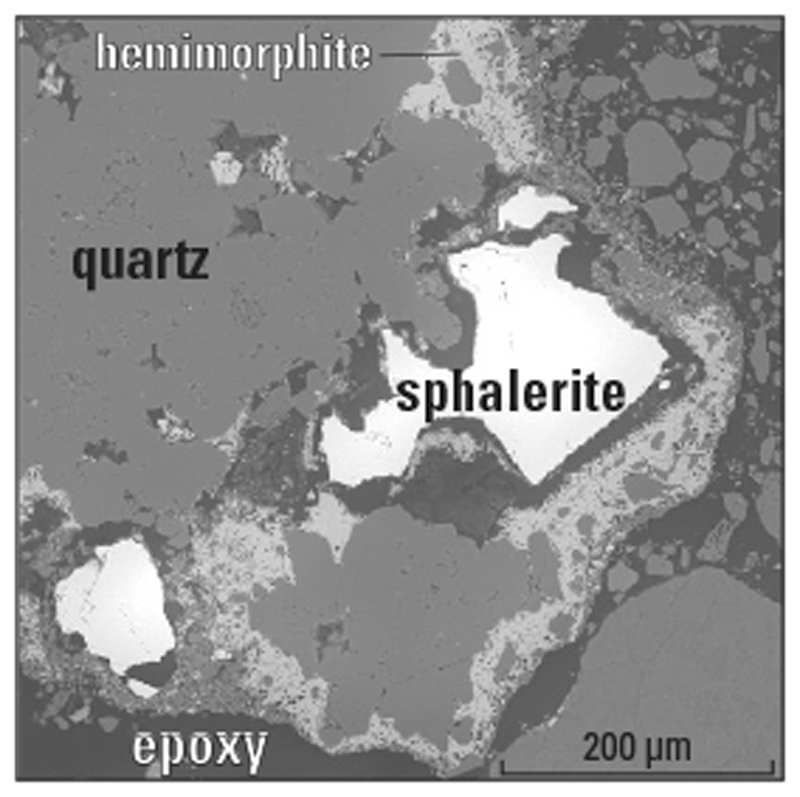
Scanning electron microscope (SEM) image of weathered mine waste from Tar Creek Superfund Site, Oklahoma. Both sphalerite and hemimorphite host zinc and germanium.
Optimizing critical mineral recovery at modern mines
The mining, ore processing, and manufacturing of end-product commodities are complex, multi-step processes that vary by mine and commodity. Recovery is optimized for the primary commodities, often leading to the loss of less abundant critical minerals to waste. The USGS is collaborating with the Nation’s mining industry to better understand how critical minerals travel through various mine circuits to identify potential opportunities for recovery. A study at the Bingham Canyon mine in Utah has found that a significant amount of tellurium in the form of small mineral grains ends up in the tailings waste (fig. 2; Piatak and others, 2024; Seal and others 2024); tellurium is used in electronics and steel. These types of studies may identify additional critical mineral resources in waste at modern mines to support increasing domestic supplies.
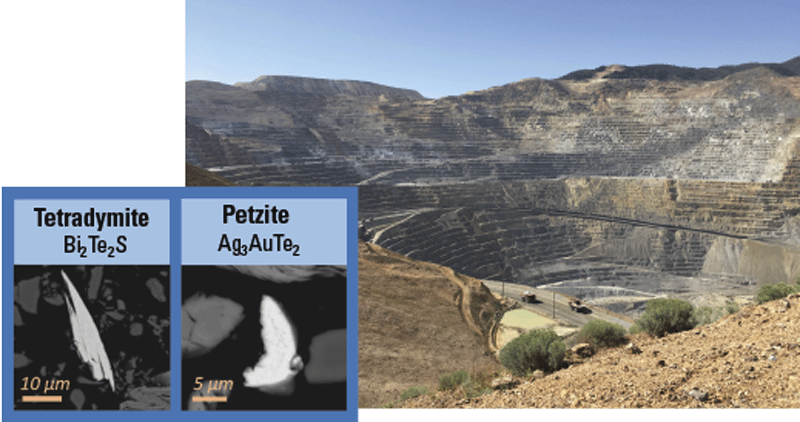
Tellurium is hosted in a variety of minerals in tailings (left) generated by the Bingham Canyon mine in Utah (right), which recovers copper, molybdenum, and gold and byproducts including tellurium. Photograph by Bob Seal, U.S. Geological Survey.
Critical minerals in mine waste activities include the following:
• Determining the critical mineral endowment of tailings as a function of mineral deposit type
• Evaluating how weathering at legacy mine sites influences critical mineral content, recoverability, and potential environmental impacts
• Determining how critical minerals travel through modern mine circuits to identify opportunities for recovery
• Developing state-of-the-art analytical capabilities to conduct mine waste characterization studies that inform recovery while simultaneously aiding in remediation efforts
• Identifying, mapping, and characterizing critical minerals in the Nation’s mine waste through the Earth Mapping Resources Initiative and in collaboration with State geological surveys and other Federal agencies
Mineralogical and geochemical characterization
To evaluate the resource potential of mine waste, determination of both critical mineral content and extractability is required. Detailed mineralogical studies shed light on the quantity of extractable critical minerals and effective recovery approaches. The USGS is at the forefront of this important research because of its state-of-the-art analytical capabilities and procedures (for example, Hayes and others, 2023). Analytical capabilities were recently expanded to include an automated mineralogy analyzer, which is a semi-automated microscope that measures the interaction of electrons with the surface of rocks to generate quantitative mineralogical data. Figure 3 shows a false-color mineral map of slag, a type of mine waste, collected using an automated mineralogy analyzer; investigations reveal that minerals in the waste can host critical and valuable commodities, including copper, bismuth, and antimony providing insights into recovery (Taylor and others, 2024).
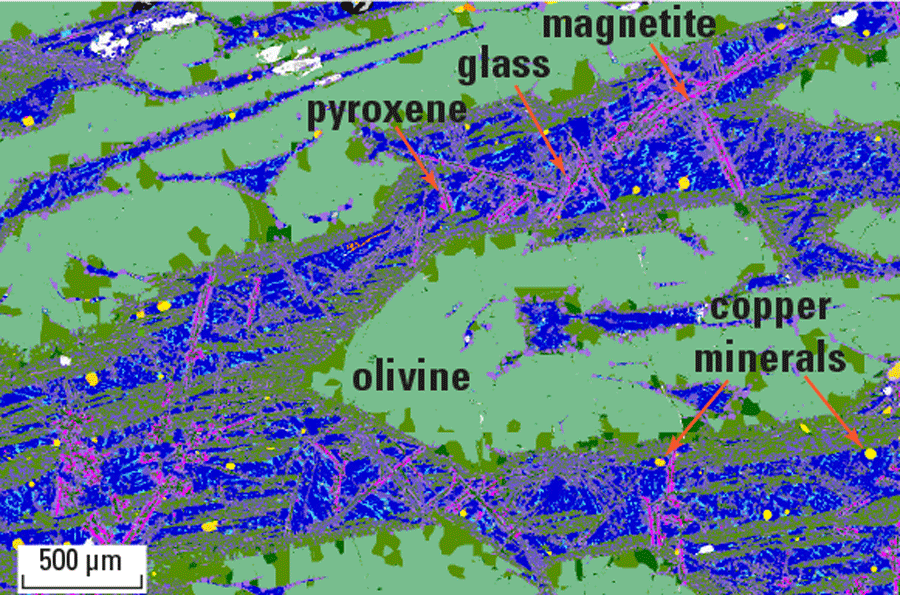
A false-color mineral map of slag from the Bingham Canyon mine, Utah, illustrating the complex mineralogy and textures at the grain scale. The image was generated using an automated mineralogy analyzer.
Mapping critical minerals at the national scale
The Earth Mapping Resources Initiative (Earth MRI) is a collaborative effort of the USGS and State geological surveys to collect data on the Nation’s mineral resources and includes mapping the surface and subsurface in areas from which critical minerals could potentially be recovered (https://www.usgs.gov/special-topics/earth-mri).
Through Earth MRI, the USGS inventories and characterizes the Nation’s mine wastes to understand where and how much valuable material is contained and provide insights into the economic feasibility of recovery. Many States are currently participating in the mine waste characterization component of Earth MRI (fig. 4). Mine wastes from a wide variety of deposit types are sampled, including an iron ore deposit at the Pea Ridge mine in Missouri (fig. 5). Waste from past iron ore mining is being evaluated for its enrichment in rare-earth elements, a set of critical minerals used in advanced electronics and military equipment.
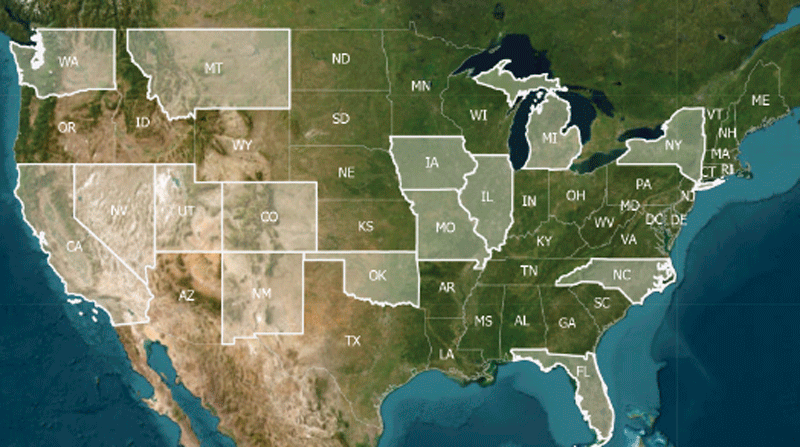
Highlighted states have funding through Earth Mapping Resources Initiative as of fiscal year 2025 to evaluate the critical mineral endowment of mine waste. Additional States submit proposals each year.
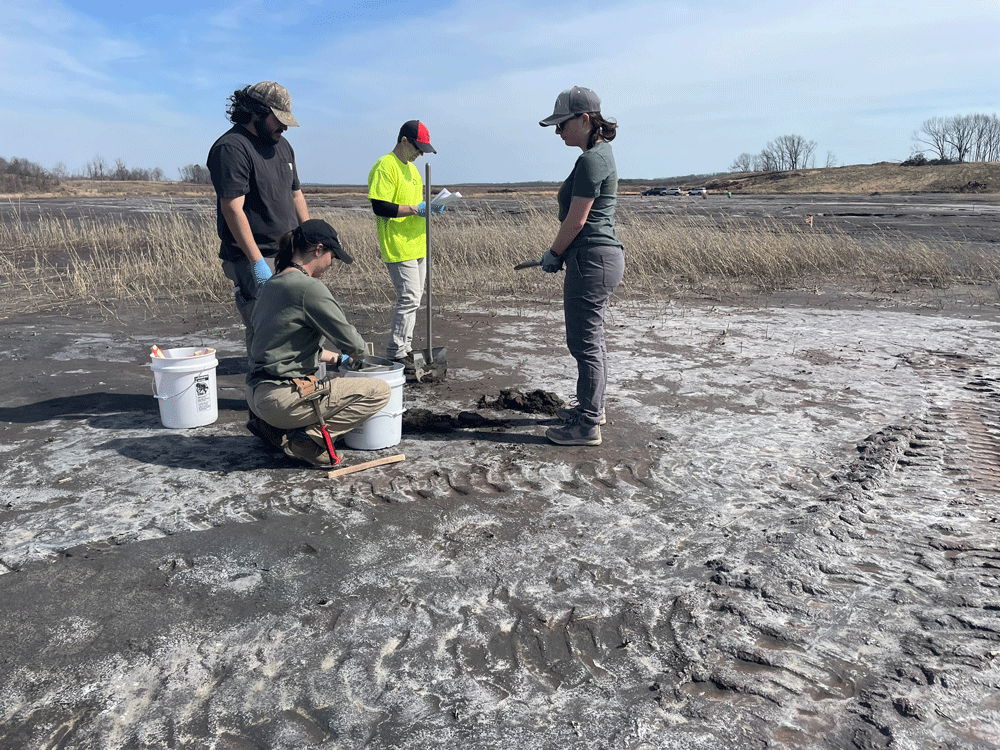
The Missouri State Geological Survey, funded through the Earth Mapping Resources Initiative, is shown sampling mine waste at the Pea Ridge mine, Missouri. Photograph by Nadine Piatak, U.S. Geological Survey.
References Cited
Hayes, S.M., McAleer, R.J., Piatak, N.M., White, S.J.O., and Seal, R.R., II, 2023, A novel non-destructive workflow for examining germanium and co-substituents in ZnS: Frontiers in Earth Sciences, v. 11, 20 p., accessed April 21, 2025, at https://doi.org/10.3389/feart.2023.939700.
Piatak, N.M., White, S.J.O., Seal, R.R., II, Hayes, S.M., Taylor, A.T., McAleer, R.J., Hoppe, D., and Green, C.J., 2024, Mineralogical controls on the distribution of critical minerals in mining value and waste streams [Presentation]: 4th Annual National Workshop—Resilient Supply of Critical Minerals, Rolla, Mo., August 7–8, 2024. [Summary available in the Proceedings of the 4th Annual National Workshop—Resilient Supply of Critical Minerals, p. 30–31, at https://bpb-us-e2.wpmucdn.com/sites.mst.edu/dist/3/535/files/2024/07/2024-Proceedings-of-the-4th-Annual-National-Workshop-Resilient-Supply-of-Critical-Minerals.pdf.]
Seal, R.R., II, Piatak, N.M., Bird, T., and Wellman, D., 2024, Critical mineral deportment at the Copperton Mill, Utah (USA), in Proceedings for the 13th International Conference on Acid Rock Drainage, Halifax, Canada, September 16–20, 2024, p. 820–828, accessed April 21, 2025, at https://www.inap.com.au/wp-content/uploads/2024_ICARD_Proceedings.pdf.
Taylor, A.T., Piatak, N.M., Seal, R.R., II, McAleer, R.J., and Bird, T., 2024, Critical mineral deportment in slag from the Kennecott Cu smelter and implications for secondary recovery [abs.]: Goldschmidt Conference, Chicago, Illinois, August 18–23, 2024, [unpaged], accessed April 21, 2025, at https://doi.org/10.46427/gold2024.24391.
White, S.J.O., Piatak, N.M., McAleer, R.J., Hayes, S.M., Seal, R.R., II, Schaider, L.A., and Shine, J.P., 2022, Germanium redistribution during weathering of Zn mine wastes—Implications for environmental mobility and recovery of a critical mineral: Applied Geochemistry, v. 143, 12 p., accessed April 21, 2025, at https://doi.org/10.1016/j.apgeochem.2022.105341.
For further information contact:
Geology, Energy & Minerals Science Center
U.S. Geological Survey
12201 Sunrise Valley Drive
Reston, VA 20192
Disclaimers
Any use of trade, firm, or product names is for descriptive purposes only and does not imply endorsement by the U.S. Government.
Although this information product, for the most part, is in the public domain, it also may contain copyrighted materials as noted in the text. Permission to reproduce copyrighted items must be secured from the copyright owner.
Suggested Citation
Piatak, N., White, S.J., Hayes, S., and Seal, R.R., II, 2025, Critical minerals in mine waste: U.S. Geological Survey Fact Sheet 2025–3026, 2 p., https://doi.org/10.3133/fs20253026.
ISSN: 2327-6932 (online)
| Publication type | Report |
|---|---|
| Publication Subtype | USGS Numbered Series |
| Title | Critical minerals in mine waste |
| Series title | Fact Sheet |
| Series number | 2025-3026 |
| DOI | 10.3133/fs20253026 |
| Publication Date | May 30, 2025 |
| Year Published | 2025 |
| Language | English |
| Publisher | U.S. Geological Survey |
| Publisher location | Reston, VA |
| Contributing office(s) | Geology, Energy & Minerals Science Center |
| Description | 2 p. |
| Online Only (Y/N) | Y |
| Additional Online Files (Y/N) | N |