


Assessment of Dragonfly and Damselfly (Odonata) Occupancy and Habitat Suitability at −12 Mile Slough, Glen Canyon National Recreation Area, Arizona
Links
- Document: Report (7.28 MB pdf) , HTML , XML
- Data Release: USGS Data Release - Aquatic Invertebrate and Habitat Assessment in Glen Canyon and Associated Backwaters, September 2024
- Download citation as: RIS | Dublin Core
Abstract
Management practices that enhance habitat complexity in dam tailwaters often aim to increase biodiversity and improve ecosystem health. However, in other instances, management practices may simplify habitat features to help minimize the establishment of invasive species. These tradeoffs are complex, particularly in the face of drought and warming water temperatures. In Glen Canyon National Recreation Area, a backwater known as −12 Mile Slough (henceforth the Slough), located 5-kilometers downstream from Glen Canyon Dam, is being considered for removal to reduce breeding habitat for warmwater nonnative fishes.
In this report, the habitat suitability for and occupancy of dragonflies and damselflies (Odonata) at the Slough are assessed. U.S. Geological Survey staff conducted three site visits to the Colorado River in Glen Canyon, the Slough, and another backwater (“Frogwater”) on September 11–13, and 26, 2024. The physical habitat of the sampling sites was characterized by recording water temperatures, specific conductance, dissolved oxygen, turbidity, flow, depth, and benthic substratum size distribution. We sampled aquatic macroinvertebrates and riparian macroinvertebrates using benthic and aerial collection methods, respectively. We describe three distinct benthic aquatic invertebrate communities in and around the Slough, two of which contained Odonata. We found no Odonata larvae in the mainstem, at Frogwater, or in the Lower Slough. Using historic specimen data from the Museum of Northern Arizona, we report 8 species of damselflies from one family (Coenagrionidae) and 8 species of dragonflies from three families (Aeshnidae, Gomphidae, and Libellulidae) in Glen Canyon between 1985 and 2024. We discuss the habitat requirements of Odonata larvae known to occur in the Slough, as well as their cultural and recreational values. We conclude that channelization of the Slough to cool water temperatures may reduce larval Odonata habitat locally but is unlikely to affect their diversity and abundance on a regional scale.
Introduction
The construction of Glen Canyon Dam in 1963 greatly altered discharge seasonality, sediment transport, water quality (particularly temperature and turbidity [water clarity]), and biology of the Colorado River ecosystem (Grams and others, 2007). Before dam construction, the Colorado River through Glen Canyon was a highly variable turbid desert river, comparable to modern-day Cataract Canyon upstream from Lake Powell (Carothers and Brown, 1991; Metcalfe and others, 2023; Yackulic and others, 2024). The tailwater downstream of Glen Canyon Dam now runs cold and clear into Glen and Grand Canyon, as the dam is retaining sediment upstream in Lake Powell. Flows and water temperatures, which previously changed seasonally—high in spring and low in winter—are now primarily determined by hydroelectric operations at Glen Canyon Dam and reservoir levels (Palmquist and others, 2024; Yackulic and others, 2024). As a result, the once-dynamic river channel has incised and become armored, and the river now exhibits stable and seasonal water temperatures relative to pre-dam conditions (Grams and others, 2007).
Five kilometers downstream from Glen Canyon Dam, a large cobble bar forms a post-dam backwater habitat approximately 600 meter (m) in length and 40 m wide known as the −12 Mile Slough (henceforth the Slough; fig. 1). Historical photographs of the Slough from 1889 confirm the presence of a persistent geomorphological sandbar feature in Glen Canyon for at least 74 years before the construction of Glen Canyon Dam (National Park Service, 2024). Recent drought, leading to lower water levels in Lake Powell reservoir, and warmer release water temperatures have resulted in the entrainment of nonnative, warmwater, invasive fishes through the dam penstocks, with survival of larval and young nonnative fishes in the Colorado River in Glen and Grand Canyons (Eppehimer and others, 2024). The Slough has been identified as a spawning habitat for nonnative fish species that were introduced to the Colorado River Basin within the last century, such as Lepomis cyanellus (Rafinesque, 1819, green sunfish), Cyprinus carpio (Linnaeus, 1758, common carp), Micropterus dolomieu (Lacepède, 1802, smallmouth bass), and Sander vitreus (Mitchill, 1818, walleye; Goldfarb, 2023a; Goldfarb, 2023b; National Park Service, 2024). The predicted risk of continued invasion, expansion, and long-term establishment of populations of these fish species, particularly smallmouth bass, in Glen and Grand Canyons is high (Eppehimer and others, 2024). Among several engineering solutions under consideration to eliminate or minimize the breeding habitat and population establishment of these nonnative species, is a proposed plan to eliminate or greatly reduce the capacity of the Slough to support these species by cooling water temperatures through increased water velocities (Sixta and others, 2023).
Habitat heterogeneity in tailwaters plays a crucial role in supporting diverse aquatic assemblages (Loke and Chisholm, 2022). While cooling water temperatures can be effective in reducing warmwater fish populations (Olden and Naiman, 2010), it can also affect other organisms that thrive in warm, lentic waters, such as amphibians, reptiles, and invertebrates. Concerns about holistic ecological effects of removing rare, novel habitats from the Glen Canyon tailwaters were raised by tribal stakeholders during the 2024 Glen Canyon Dam Adaptive Management Work Group meeting in Phoenix, Arizona, and in relation to the Warmwater Nonnative Fish Management Plan/Environmental Assessment (National Park Service, 2024).
In this report, we (1) inventory dragonflies and damselflies (Odonata) present in Glen Canyon using recent collections (September 2024) paired with historic records collected by Dr. L. Stevens (Springs Stewardship Institute), (2) assess the Slough as a habitat for Odonata, and (3) characterize the physical parameters of the Slough as they were in September 2024. Odonata are of particular interest because of their ecological roles as predators in both larval and adult stages, as a prey base for fishes, and owing to their cultural importance in the region (Samways, 2008; Abbott and others, 2022; National Park Service, 2024).
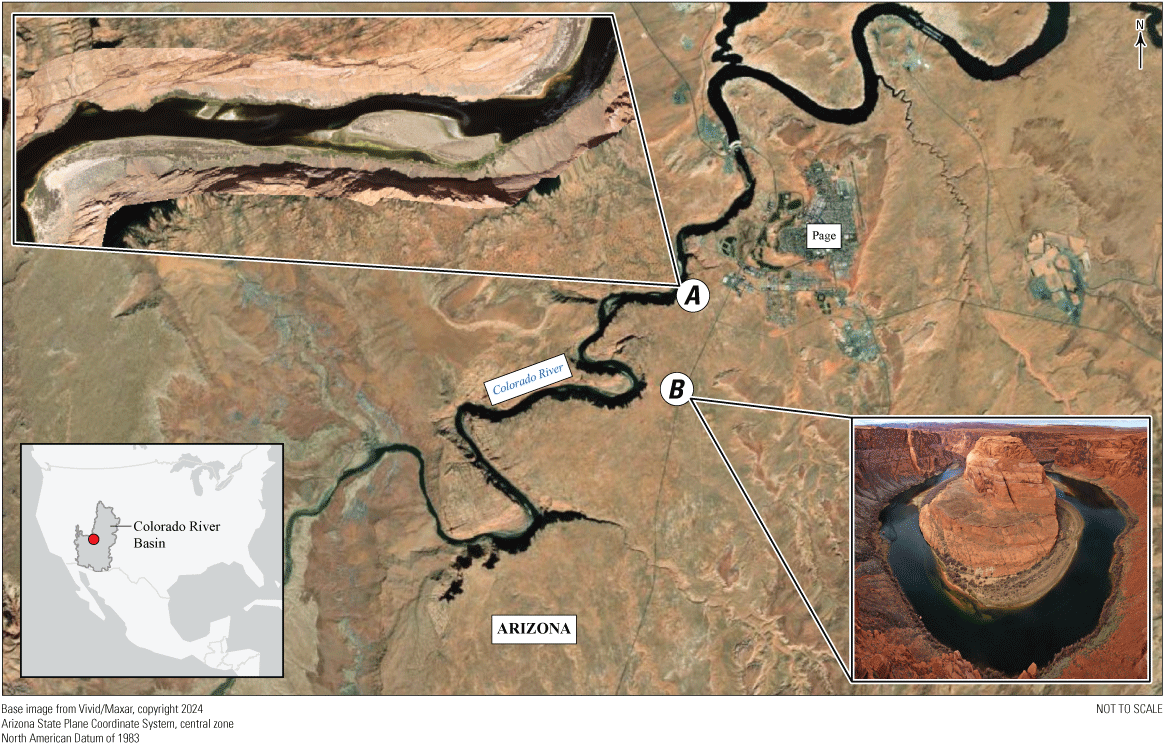
The Slough A, in Glen Canyon National Recreation Area, Arizona is a 600-meter-long backwater located 3,000 meters downstream from B, Glen Canyon Dam. This reach of the Colorado River is near the town of Page, Arizona and borders the Navajo Nation on the east side of the river (river left). Upper left inset: image from U.S. Geological Survey digital data, 2021 and Lower right inset: photograph of Horseshoe Bend courtesy of Alexander Wood, Alex Wood Photography.
Background
The Colorado River immediately downstream from Glen Canyon Dam has a depauperate assemblage of aquatic invertebrates that is characterized by non-insect taxa, including the nonnative Potamopyrgus antipodarum (J. E. Gray, 1853, New Zealand mud snail), Gammarus lacustris (G. O. Sars, 1863, scud), flatworms (Planaridae), sludge worms (Naididae), earthworms (Lumbricidae), and bladder snails (Physidae; Carothers and Brown, 1991; Cross and others, 2011). The two most common aquatic insect taxa in the mainstem Colorado River in Glen Canyon are generalist taxa, including non-biting midges (Chironomidae) and black flies (Simuliidae). Taxa that are sensitive to habitat disturbance, water quality, and temperature variability, such as mayflies (Ephemeroptera), stoneflies (Plecoptera), and caddisflies (Trichoptera) have been considered functionally absent from the tailwater for over a decade (Kennedy and others, 2016; Abernethy and others, 2021).
Globally, Odonata are well-known and easily observed taxa that are considered important indicators of biodiverse habitats (Samways, 2008). Specific to the Colorado Plateau, Odonata have been featured in art and origin stories by several indigenous cultures that consider the Colorado River as a traditional cultural property (Capinera, 1993; Rodanas, 1995; Morris, 1997). For example, the Paiute Indian Tribe of Utah and the Pueblo of Zuni both consider dragonflies sacred and culturally significant (National Park Service, 2024). Numerous adult Odonata can be observed in Glen and Grand Canyons. Their aquatic larval habitats include springs, pools, tributaries, impounded waters, and river backwaters, such as the Slough (Stevens and Bailowitz, 2009; Stevens and others, 2023). Larval Odanata are considered rare or absent in the mainstem river (Stevens and others, 1997; Cross and others, 2011). We conducted these surveys to evaluate Odonata habitat in the Slough relative to the mainstem Colorado River and other backwater habitats in Glen Canyon.
Methods
We conducted site visits to Glen Canyon and the Slough on September 11–13, 26, 2024. Sampling was conducted at three sites within the Slough (Upper, Mid, and Lower Slough), at a smaller backwater downstream from “Prop Bar,” known as “Frogwater,” and in the mainstem Colorado River, 5 kilometers downstream from Glen Canyon Dam (River Mile −12; fig. 2A). We characterized the physical habitat of the sampling sites by recording water temperature, specific conductance, dissolved oxygen, turbidity, flow, depth, and benthic substrates (Metcalfe and Ford, 2025). We sampled aquatic macroinvertebrates and riparian macroinvertebrates using benthic and aerial collection methods (Metcalfe and Ford, 2025).
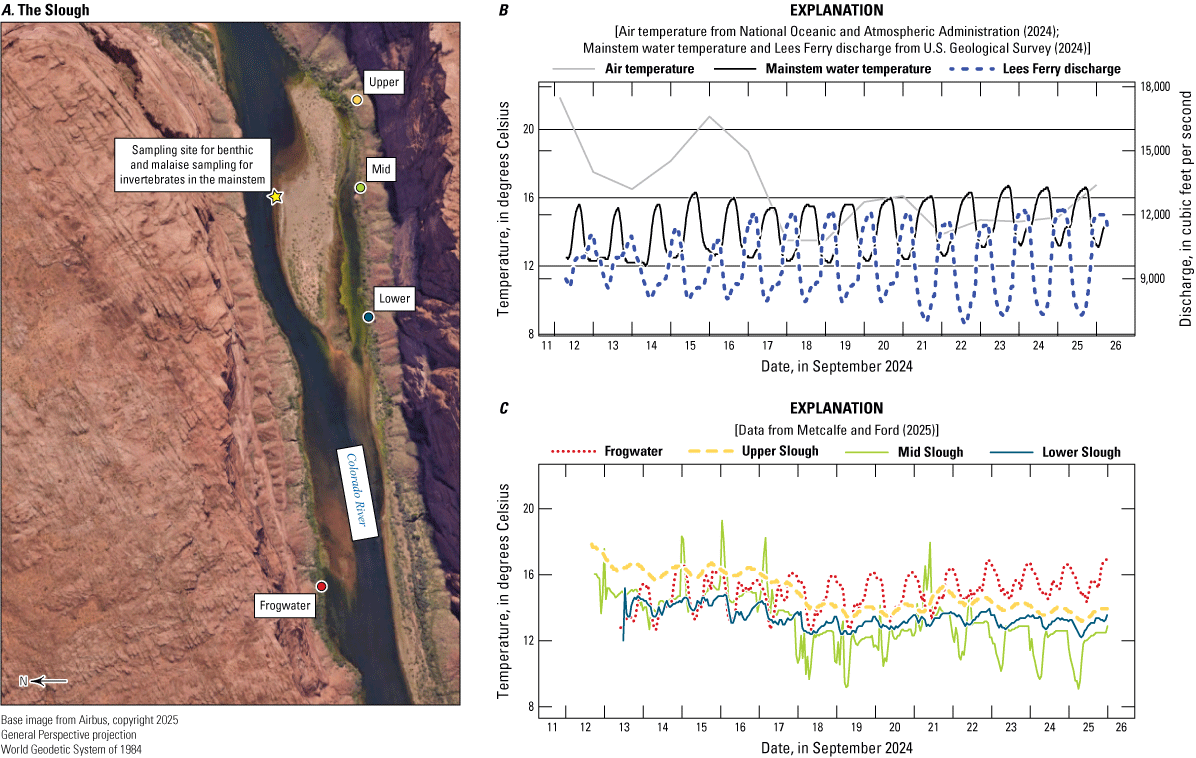
Map showing the A, three sampling sites of physical and biological data within the Upper, Mid, and Lower Slough and at Frogwater, approximately 5 kilometers downstream from Glen Canyon Dam on the Colorado River. Graph showing the B, water temperature, in degrees Celsius, and discharge, in cubic feet per second, in the mainstem were retrieved from the U.S. Geological Survey streamflow gage 09380000 Colorado River at Lees Ferry, Arizona and daily air temperature data are from the National Oceanic and Atmospheric Administration’s National Weather Service for the Page Municipal Airport (station 72371). Air temperature is plotted as the daily minimum. Notably, flow releases from Glen Canyon Dam in September 2024 were during a managed “cool mix flow” designed to reduce water temperature in the river. Graph showing the C, water temperature in backwaters were logged using HOBO Pendant data logger.
We recorded water temperature at three sites within the Slough and at Frogwater using HOBO Pendants (UA–001–64 64K Data Logger, Onset Computer Corporation, Bourne, Massachusetts) that were deployed on September 12–13, 2024, and retrieved on September 26, 2024. Water temperature and discharge data from the mainstem river were retrieved from the U.S. Geological Survey (USGS) streamgage 09380000 Colorado River at Lees Ferry, Arizona (U.S. Geological Survey, 2024). Daily air temperatures data (mean, maximum, and minimum) for September 2024 were downloaded from the National Oceanic and Atmospheric Administration’s National Weather Service web page (National Oceanic and Atmospheric Administration, 2024) for the Page Municipal Airport (station 72371).
We recorded specific conductance and dissolved oxygen at the three sites in the Slough and at Frogwater on September 26, 2024, using a YSI multiparameter water-quality sonde (6920 V2–2, Xylem Analytics, Yellow Springs, Ohio). Depth and velocity were measured at the four backwater habitat sites using a Marsh-McBirney 2000 Flo-Mate Flow Meter paired with a USGS top-setting wading rod on September 12–13, 2024. Depth and velocity were measured at 3–4 points along a cross-section between banks at the Upper and Mid Slough and at Frogwater. Flow and depth measurements for the mainstem are reported from the USGS streamgage 09380000 Colorado River at Lees Ferry, Arizona, and flow and depth measurements at the Lower Slough are reported from data collected by the Arizona Water Science Center and downloaded from the National Water Information System (U.S. Geological Survey, 2024). To characterize benthic substrata, we collected 100 measurements in the Upper and Mid Slough, Frogwater, and the mainstem Colorado River using Wolman Pebble Count and size class analyses (Wolman, 1954). Silt particles less than (<) 2 millimeter (mm) in size were included with the 2–4 mm particle size category.
Aquatic macroinvertebrates were sampled from three sampling sites in the Slough, at Frogwater, and one in the mainstem Colorado River at River Mile –12 using a 500-micrometer D-net (BioQuip Products, Rancho Dominguez, California). Due to low discharge at these sampling sites, D-netting was conducted qualitatively, targeting as many microhabitats as possible within each site (vegetated bank habitat, deep water, and cobble habitat) with the objective of detecting all present taxa. The data were paired with non-random selection and observation of potential Odonata habitats such as manual examination of large loose cobbles. The D-netting effort in the four backwater habitats was approximately 1 hour per site. D-netting effort in the mainstem sampling location was 15 minutes, with sampling effort defined by 5 minutes each of flow-assisted scrubbing of three patches of 0.03 square meter (1 square foot) of benthic habitat (Hauer and Lamberti, 2017). Discharge was approximately 283 cubic meters per second (10,000 cubic feet per second) during sampling in the mainstem (U.S. Geological Survey, 2024).
In addition, we sampled the riparian macroinvertebrates (such as terrestrial adult phases of aquatic insects) by deploying two passive intercept traps (“Malaise traps”; fig. 3) and by aerial netting (Hauer and Lamberti, 2017). Malaise traps (BioQuip Products Malaise Trap, Townes Style) were deployed at Upper and Mid Slough for 24 hours and 30 minutes, from 12:30 p.m. on September 12 to 1:00 p.m. on September 13. These traps are 1.7 m long, 1.2 m tall, and have a medial dividing mesh wall that directs flying insects upwards into a mesh apex that exits to a plastic sampling container filled with ethanol (fig. 3). Aerial netting was carried out whenever adult dragonflies and damselflies were observed at sampling sites.
All benthic and malaise invertebrate specimens collected in September 2024 were identified to family, genus, or species level and are stored in 98 percent ethanol at Grand Canyon Monitoring and Research Center in Flagstaff, Arizona. In addition to our sampling efforts in 2024, we present here3 a species list of Odonata detected in Glen Canyon between 1985 and 2016 and documented in a database by Springs Stewardship Institute. Those specimens are stored in acetate envelopes at the Museum of Northern Arizona’s Easton Collection Center in Flagstaff, Arizona.
At the time of publication, data were not publicly available from Museum of Northern Arizona.
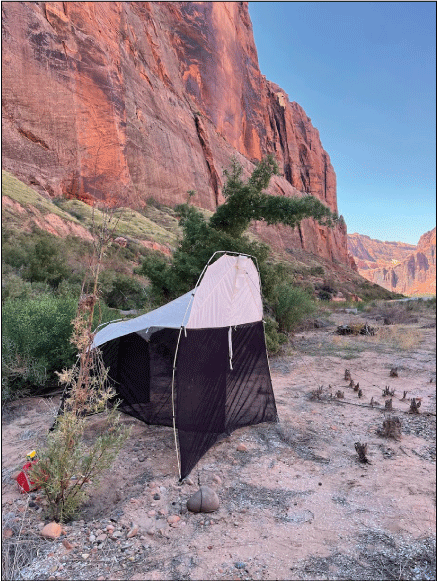
Photograph of a malaise trap deployment at the Upper Slough. These traps are 1.7 meters in length, 1.2 meters tall, and have a medial dividing mesh wall that directs flying insects upwards into a mesh apex that exits to a plastic sampling container filled with ethanol. Photograph by Anya Metcalfe, U.S. Geological Survey.
Results
We observed three distinct benthic aquatic invertebrate assemblages in the Slough during our September 2024 site visits (table 1; Metcalfe and Ford, 2025). In approximately 3 hours of D-netting efforts (1 hr per site), we found 1 clubtail dragonfly larva (Anisoptera—Gomphidae, most likely Progomphus borealis, which has been previously detected just downstream from the Paria River confluence) in the Upper Slough, and 38 bluet damselfly larvae (Zygoptera—Coenagrionidae—Enallagma sp.) in the Mid Slough. We found no larval Odonata in the Lower Slough, Frogwater, or in the mainstem. Conversely, we found New Zealand mud snails and scuds only in the mainstem, Frogwater, and the Lower Slough, but not in the Upper or Mid Slough (table 1). Quagga mussels and aquatic earthworms were present in the mainstem and Frogwater but were absent from the Slough. Non-biting midges and flatworms (Tricladida—Planariidae) were present at all sampling sites.
No adult Odonata were captured in our Malaise trap sampling efforts (table 2; Metcalfe and Ford, 2025). Malaise catch diversity was dominated by terrestrial taxa, representing 5 insect orders in the Mid Slough (Diptera, Coleoptera, Hemiptera, Hymenoptera, and Lepidoptera) and 7 insect orders in the Upper Slough (Blattodea, Diptera, Coleoptera, Hemiptera, Hymenoptera, Lepidoptera, and Thysanoptera; table 2; Metcalfe and Ford, 2025). We additionally captured two terrestrial spider species in the Malaise trap deployed in the Upper Slough. Adult riparian macroinvertebrates taxa with aquatic larval forms in both Malaise deployments were dominated by flies (Diptera) and Trichoptera. Non-biting midges and biting midges (Ceratopogonidae), both families of Diptera with aquatic larvae, were present at both Malaise sampling locations. Simuliidae were only captured at the Upper Slough. Micro-caddisflies (Hydroptilidae) were captured at both locations. Non-biting midges accounted for 72 percent of the Malaise trap catch at the Upper Slough (n=134) and 81 percent at the Mid Slough (n=465).
Adult dragonflies and damselflies were observed at all four study areas during the site visits. Using aerial nets, we captured male and female adult Enallagma spp. at Frogwater and the Slough and Sympetrum pallipes (Hagen, 1874, striped meadowbrook) at Frogwater. We observed oviposition (egg-laying) behavior by Enallagma spp. and what was likely striped meadowbrook in the Slough and at Frogwater on September 13, 2024. In combination with a review of adult specimens collected from Glen Canyon from the Easton Collection Center at the Museum of Northern Arizona4 , we report here eight species of damselflies and eight species of dragonflies among four families (Aeshnidae, Coenagrionidae, Gomphidae, and Libellulidae; table 3, fig. 4; Metcalfe and Ford, 2025) detected in the Glen Canyon reach from 1985 to 2024.
At the time of publication, data were not publicly available from Museum of Northern Arizona.
We measured a mean depth of 73 centimeters (cm) at the Upper Slough based on three measurements (50, 86, and 84 cm) and a negligible water velocity of 0.03 feet per second (ft/s) based on three measurements (0.03, 0.04, and 0.03 ft/s; table 4). Mean discharge from the Upper Slough to Mid Slough in September 2024 was 0.5 liter per second based on volumetric discharge measurements executed at the weir that connects these two habitats (U.S. Geological Survey, 2024). We measured a mean depth of 33 cm at the Mid Slough based on three measurements (51, 6, and 42 cm), and mean water velocity was 0.02 ft/s based on three measurements (0, 0.03, and 0.03 ft/s). Mean depth at Frogwater was 91 cm based on four measurements (112, 114, 71, and 65 cm), and mean water velocity was 0.02 ft/s based on four measurements (0.05, 0, 0, and 0.01 ft/s). We estimated a mean depth of 152 cm in the Lower Slough, but this varied with changes in Colorado River stage due to fluctuations in discharge from Glen Canyon Dam. The Lower Slough was too deep for us to make water velocity measurements; flow was visibly stagnant and has been described as little to no flow in other reports (National Park Service, 2024; U.S. Geological Survey, 2024).
Water temperatures in the Slough between September 12 and 26, 2024 ranged from 9.1 to 19.3 degrees Celsius (°C) (table 4). Mainstem water temperature ranged from 12.0 to 16.9°C, with higher water temperature occurring during low discharge releases and with water temperature cooling with high discharges (fig. 2B). Water temperature in Frogwater ranged from 12.2 to 17.0°C and tracked mainstem water temperature fluctuations. Both the coldest minimum and warmest maximum temperatures were measured in the Mid Slough, co-occurring with the shallowest depth (table 4). High and low water temperatures in the Mid Slough correlated with daily high and low air temperature (fig. 2B). Water temperature at the spring-fed Upper Slough showed the least variability, ranging from 12.7 to 17.9°C.
Specific conductance was lowest at the Upper Slough (264 microsiemens per centimeter [µS/cm]), whereas the Mid and Lower Slough had specific conductance values of 681 and 765 µS/cm, respectively, which was similar to that in the mainstem (792 µS/cm; table 4). Dissolved oxygen was lowest in the Upper and Mid Slough (9.3 and 9.5 milligrams per liter [mg/L], respectively) and highest in the Lower Slough (11.1 mg/L). We measured higher dissolved oxygen at Frogwater (11.1 mg/L) than in the mainstem (9.7 mg/L). Flow velocity from the Lower Slough to the river was 0.5 liter per second (7.7 gallon per minute) during a separate USGS site visit in September 2024 (U.S. Geological Survey, 2024; National Park Service, 2024).
Benthic substrata varied throughout the Slough. The most common substrata at the Upper Slough were silt, sand, and fine gravel <4 mm in size (25 percent of substrata), but there were also many scattered large cobbles and boulders (fig. 5A). The surfaces of boulders and cobbles had minimal algal growth, and cobbles were easily dislodged from the benthos (were not cemented). Mid Slough benthic substrata were dominated (75 percent) by fine substrata <4 mm in size (fig. 5B). Larger cobbles were easily dislodged from the benthos and had moderate algal growth on their surfaces. We did not conduct a pebble count in the Lower Slough due to the water depth and the thick mats of algae (dominated by Chara vulgaris [Linnaeus, green algae] and Didymosphenia geminata [(Lyngb.) M. Schmidt, diatoms]) covering benthic substrata. We observed that the Lower Slough had similar substrata to the Mid Slough, with dominance by substrata <4 mm in size.
Both Frogwater and the mainstem had benthic substrata that were dominated by small cobbles 65–90 mm in size (80 percent, figures 5C and 5D). At both sites, these cobbles were cemented to the channel floor and were challenging to lift manually. Release of cobbles from the mainstem channel floor and at Frogwater often revealed anoxic silt and a sulfurous odor (McDaniel and others, 2021). We observed low variability of algal growth (primarily Cladophora [Kutzing, 1843, green plants]) on benthic substrata at Frogwater and in the mainstem in relation to depth and velocity.
Table 1.
Counts of benthic aquatic invertebrate assemblages collected from the Slough, Frogwater, and the mainstem Colorado River in Glen Canyon National Recreation Area on September 12–13, 2024.[These efforts represent one hour of sampling effort for each backwater habitat and 15 min in the mainstem. NA, not available]
Table 2.
Counts of aerial invertebrate assemblages collected from the Slough in Glen Canyon National Recreation Area on September 12 and 13, 2024 using Malaise traps.[NA, not available]
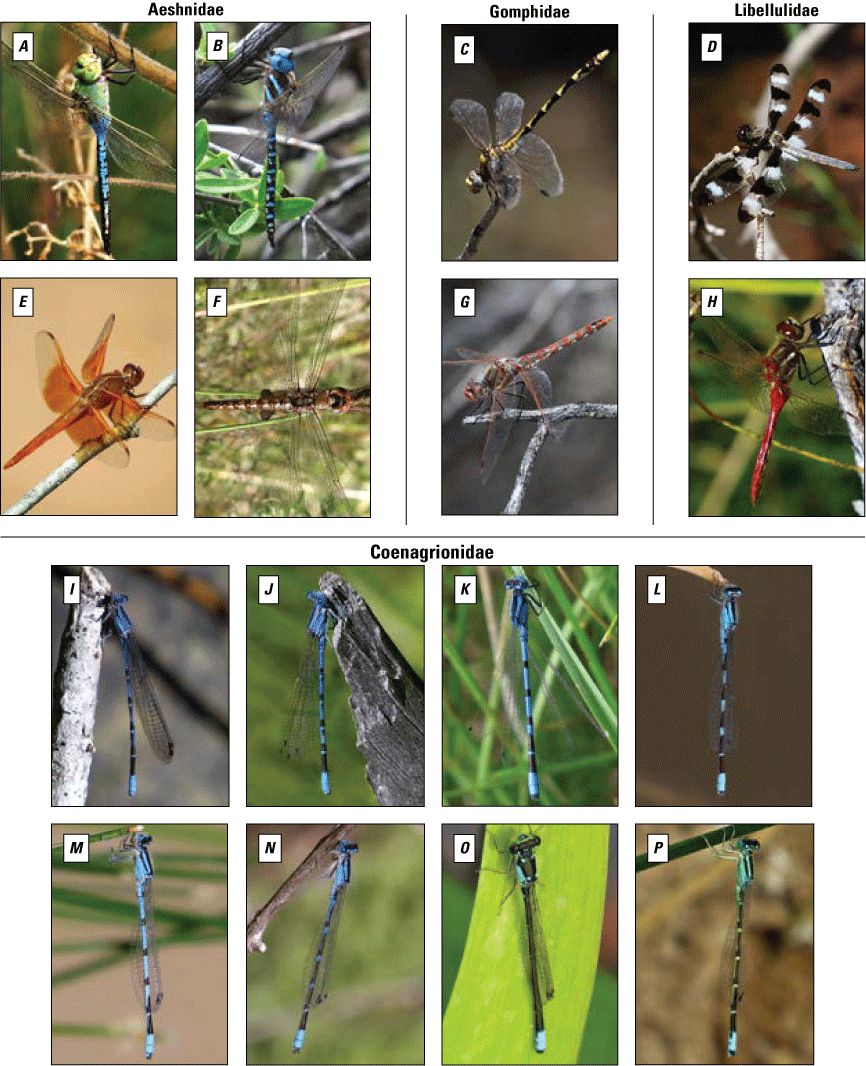
Photographic plate showing Odonata species collected in Glen Canyon National Recreation Area between 1985 and 2024. Species are: A, Anax junius B, Rhionaeschna multicolor, C, Progomphus borealis, D, Libellula pulchella, E, Libellula saturata, F, Pantala hymenaea, G, Sympetrum corruptum, H, Sympetrum pallipes, I, Argia plana, J, Argia vivida, K, Enallagma boreale, L, Enallagma carunculatum, M, Enallagma civile, N, Enallagma praevarum, O, Ischnura damula, P, Ischnura demorsa. Photographs from Stevens and others (2023), used with permission.
Table 3.
Odonata detected from the Colorado River corridor in Glen Canyon National Recreation Area downstream from Glen Canyon Dam.[Taxonomic identities verified by R.A. Bailowitz, L.E. Stevens, or M.A. Ford. Dates are shown as month/day/year. DD, decimal degrees; LES, L.E. Stevens; MAF, M.A. Ford; ANM, A.N. Metcalfe; SY, S. Young; FG, F. Guerero; JLC, J.L. Chavez; LFM, Leopard Frog Marsh at Colorado River Mile −9L; NA, not available]
Table 4.
Physical characteristics of sampling sites for Glen Canyon Slough and Colorado River, Glen Canyon National Recreation Area, September 2024.[°C, degree Celsius; cm, centimeter; ft3/s, cubic feet per second; µS/cm, microsiemens per centimeter at 25 degrees Celsius; mg/L, milligram per liter; SC, specific conductance; DO, dissolved oxygen; SC, specific conductance; —, data not available. Temperature data were collected using HOBO data loggers (manufactured by Onset, a subsidiary of LI-COR Environmental)]
Mainstem measurements averaged between September 12–27, 2024 from U.S. Geological Survey streamflow gage 09380000 Colorado River at Lees Ferry and flow for the mainstem is reported as discharge (cubic feet per second).
We estimated an average depth of 152 centimeters and a flow of 0 feet per second for Lower Slough, although this varied with stage changes in the dam-regulated Colorado River (National Park Service, 2024).
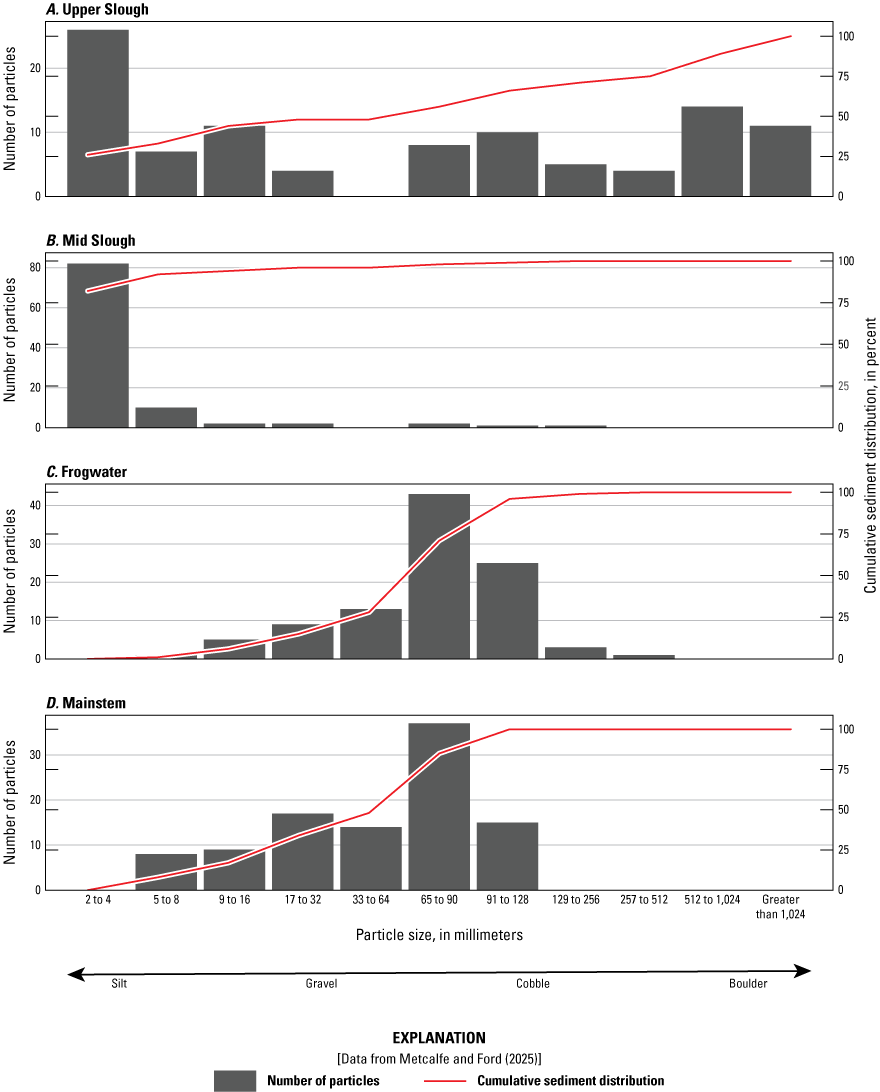
Total counts of each particle size, in millimeters, measured using Wolman Pebble Count at A, Upper Slough, B, Mid Slough, C, Frogwater, and D, in the mainstem Colorado River. Red lines indicate cumulative sediment distribution percent for each site. Data were collected by U.S. Geological Survey (Metcalfe and Ford, 2025) using Wolman Pebble Count (Wolman, 1954).
Discussion
Odonata Ecology and Biodiversity
All of the Odonata species in the Glen Canyon reach or detected at the Slough are widespread, common, generalist species that occur in lentic, slow-lotic, spring, pond, and riverine wetland habitats across the Southwest United States (Stevens and others, 2023). The species detected at the Slough and in the Glen Canyon reach are migratory or capable of widespread movement and rapid colonization of novel freshwater habitats (Bailowitz and others, 2015; Bogan and others, 2020). None are considered threatened or endangered by the U.S. Fish and Wildlife Service or under the International Union for Conservation of Nature (IUCN) Red List (Stevens and others, 2023; IUCN, 2024). However, Odonata are globally regarded as trophically important organisms that consume adult mosquitoes and other small flying insects (Stevens and others, 2023). Consequently, Odonata are the focus of multiple efforts targeting the preservation and restoration of biodiversity and freshwater habitats (Samways, 2008). Endemism and conservation concerns for Odonata in North America are concentrated in the Southeast, the North Central region, the southwestern coastal region of California, and northern Mexico (Abbott and others, 2022).
Odonata require persistent freshwater habitats to complete their life cycles and serve as important predators in both their larval and adult life stages (Stevens and others, 2023). Most Odonata in the arid southwestern United States depend on lotic freshwater habitats and have wide ranges, as most lentic habitats in the region are ephemeral (Abbott and others, 2022). The conversion of natural wetland habitat, for example through reservoir construction or reduced flow dynamics in rivers downstream from impoundments, can affect distribution and habitat connectivity to some extent. However, many Odonata are resilient to habitat changes, and are often the first invertebrates to reappear in freshwater habitat restoration projects, or when novel habitats develop. For example, Bogan and others (2020) reported the arrival of seven Odonata species within 24 hours of the first release of high-quality (quaternary-treated) effluent water into the Santa Cruz River in Tucson, Arizona, following a century of disrupted flow and no difference between treatment and reference sites within the first three months. Furthermore, Odonata biodiversity is strongly affected by the species-habitat area relationship (Stevens and Bailowitz, 2009). Therefore, while novel freshwater habitats can serve as important refugia for freshwater plants and animals in other arid or heavily regulated systems, habitats similar to the Slough are often quickly colonized by Odonata (Davis and others, 2013; Maynou and others, 2017).
Our site survey revealed that the Slough is a habitat that supports abundant larval Odonata, and we observed high densities of adult Enallagma (damselflies) in mid to late summer in 2023 and 2024, as well as oviposition (egg-laying) behavior by adult damselflies and dragonflies in September 2024. Damselflies tend to be more sensitive to microsite habitat than many dragonfly species that wander or migrate widely (Oliveira-Junior and Juen, 2019). For example, Enallagma species are low-flying species that are typically associated with lentic wetland habitats, such as those at the Slough. In contrast, Anax junius (Drury, 1773, green darners) is widely known as highly mobile, migrant aeshnid dragonflies that can travel 650–680 kilometers in two of their three generations per year (Hallworth and others, 2018).
Between these extremes are clubtail dragonflies (Gomphidae). Their larvae are ambush predators that burrow into fine sediments, such as those in the upper Slough (where we collected one Gomphid larva), and emerge abruptly to capture their prey (soft-bodied aquatic macroinvertebrates and larval fishes up to their own body size). Dragonflies have specialized modified mouthparts known as a “prehensile labium mask” that extend to rapidly capture, pierce, and prepare prey for consumption (Büsse and others, 2021). In our surveys of benthic substrata, we found that fine sediments were more readily available in the Slough than in the mainstem Colorado River or in Frogwater (fig. 5), and that sediments in the mainstem were more cemented and therefore provided less refugial space for Gomphids and other burrowing aquatic macroinvertebrates. Without fine sediment in which to take cover and hunt for prey, Gomphid larvae are more vulnerable to starvation and predation in mainstem and backwater habitats like Frogwater than in the Slough. While some Slough-like habitats with fine sediment for these Odonata exist in the Glen Canyon (for example, Hidden Slough at Colorado River Mile −6.5R), the loss of this habitat may result in a lower abundance of these taxa in the Glen Canyon and the Grand Canyon ecoregions.
Odonata are generally adapted to warmwater temperatures, with thermal optima of 21–31°C for larval growth, thermal minima of 8–12°C, and thermal maxima of up to 44°C (Suhling and others, 2015). The mean water temperatures that we report for the Slough (13.2–14.9°C) are therefore still considered below the threshold of ideal water temperatures for Odonata. Notably, we sampled water temperatures during an experimental cool mix flow designed to artificially lower water temperatures (Yackulic and others, 2024). It is likely that water temperature maximums in the Slough in its present state sometimes reach the thermal optima for Odonata larvae. Channelization of the Slough is designed to cool water temperatures and may therefore further reduce the availability of warmwater habitat for Odonata larvae (National Park Service, 2024).
Predation is an additional consideration to the variation in aquatic macroinvertebrate communities in backwater and mainstem habitats. The fish assemblages in the mainstem and Frogwater are dominated by Oncorhynchus mykiss (Walbaum, 1792, rainbow trout) and Catostomus latipinnis (Baird and Girard, 1853, flannelmouth sucker). The Slough, in contrast, has no rainbow trout or flannelmouth suckers due to the installation of a block net in 2022 (Glen Canyon Dam Adaptive Management Program, 2024). The Upper Slough, which is spring-fed and isolated from the Mid Slough, has high densities of green sunfish (National Park Service, 2024). The abundant Enallagma in the Mid Slough may have at least partially been a product of recent predator removal (refer to “Implications of Slough Management” section). Similarly, the absence of Enallagma from the Upper Slough might be an indicator that they are desirable prey for the abundant green sunfish found there. All of these fishes include insects as a significant portion of their diet, but their foraging strategies and feeding preferences vary by species and life stage (Townsend and Winfield, 1985).
Cultural Significance of Glen Canyon Odonata
Dragonflies and damselflies have been documented as culturally significant and sacred animals by many indigenous peoples in the southwestern United States. For example, the Paiute Indian Tribe of Utah and the Pueblo of Zuni consider that an abundance of dragonflies indicates “good waters” and other benefits to their peoples (National Park Service, 2024). In Diné (Navajo) stories that have been passed down intergenerationally, dragonflies are described as water guardians and messengers that can lead one to water (Morris, 1997). Interestingly, stories from another regional Tribe regards Odonata in a negative context and shares stories that teach “when a dragonfly looks at you, it is trying to tear you away from your culture” (Stevens and others, 2023). The reduction or loss of abundance and diversity of Odonata in the Slough may affect tribal communities in cultural contexts that are challenging to quantify (Olson, 2013). Traditional ecological knowledge and values can be assets to federal management decision-making but are not consistently integrated in decision frameworks (Dongoske, 2020; Maldonado and others, 2016).
Odonata may also be important for recreational activities in Glen Canyon in relation to fishing, birdwatching, paddling, hiking, and canyoneering. Fly-fishing as a recreational activity is inherently tied to fish prey. Anglers use different lures that imitate various fish prey (referred to as “flies”) and different techniques that mimic prey behavior. The limited invertebrate assemblage in the Glen Canyon reach has led to reduced variety in effective fishing lures (Foster, 2005). Odonates provide novel options for fishing lures in Glen Canyon. For example, in the past year, commercial fly-fishing guide Dave Trimble observed adult damselflies at the Slough and in response began using flies that imitate them. He reported that using damselfly lures provided for high success catching rainbow trout near the Slough (Dave Trimble, Lees Ferry on The Fly, oral comm., 2024).
Other recreational visitors in Glen Canyon may benefit from the high abundance and diversity of Odonata in the Slough area. Birdwatching, for example, has increased in popularity in the reach as a recreational activity and a source of ecotourism over the last several decades (Janeczko and others, 2021). Odonata are important prey items for some birds, and observing bird predation on Odonata specifically is a valued wildlife-watching experience (Kennedy, 1950). The observation of Odonata by themselves, independent of their trophic interactions, is in itself a wildlife viewing activity throughout the world (Lemelin, 2007). For example, a survey of recreational visitors to a pond in London, United Kingdom, revealed that 90 percent of respondents indicated that observing dragonflies was interesting (Ngiam and others, 2017).
Implications of Slough Channelization
The interaction of increasing water temperatures, invasive species colonization, and resource management decisions have already led to complex variation in baseline ecological processes among reaches of the post-dam Glen and Grand Canyons aquatic food web (Stevens and others, 1997; Palmquist and others, 2024; Scholl and others, 2024). The Slough has little to no water flow and has been documented to be as much as 17°C warmer than the mainstem channel (8–17°C; Sixta and others, 2023). Warmer growing season temperatures in the Slough have made it a major breeding and rearing habitat for nonnative warmwater fish species such as smallmouth bass, green sunfish, and common carp, that thrive in lentic conditions. To protect the native fishes in Glen and Grand Canyons, the Slough is being considered for channelization to cool water temperatures (National Park Service, 2024).
Since July 1, 2022, when two juvenile smallmouth bass were first observed in the Slough, the National Park Service has coordinated several rapid response management actions (Eppehimer and others, 2024). The Lower Slough was treated with rotenone on September 17–19, 2022 (Glen Canyon Dam Adaptive Management Program, 2024). Rotenone is a chemical treatment commonly and effectively used in fish removal projects (Rytwinski and others, 2019). Odonata are considered rotenone-tolerant and have been reported to increase in abundance when fishes are removed from their habitat using rotenone, due to the decrease in predation (Kjærstad, 2022). In addition to the rotenone, several management actions were taken at the Slough between 2022 and 2024 with the goal of reducing smallmouth bass. These actions included pumping water out of the Upper Slough into the mainstem, temporarily deploying a block net that separated the Upper and Mid Sloughs for fishes, deploying a block net that currently separates the Lower Slough from any fishes in the mainstem, many electrical fishing removal efforts (Glen Canyon Dam Adaptive Management Program, 2024; National Park Service, 2024), and the implementation of cool mix flows that began July 9, 2024 (Yackulic and others, 2024). These management actions, as well as frequent disturbance of the benthos during various fish capture and removal efforts all presented unique disturbances to the invertebrate fauna of the Slough, which may have been detrimental. However, the exclusion of fishes from the Slough at times may also have decreased predation on larval Odonata. Invertebrates were not sampled in the Slough before or during smallmouth bass management actions.
Channelization of the Slough may reduce fluvial habitat complexity along the river corridor in Glen Canyon and can likely reduce the abundance and diversity of Odonata at the Slough. However, all Odonata species detected in the Glen Canyon reach are widespread in distribution, and none are considered as sensitive species in the region (Stevens and Bailowitz, 2009). Therefore, while a highly localized population decrease is likely if the Slough is channelized, it is unlikely to exert any detectable reach-level or regional threat to Odonata diversity, distribution, or population viability.
Summary
In Glen Canyon National Recreation Area, a backwater or the −12 Mile Slough (henceforth the Slough) provides a productive habitat for dragonfly and damselfly larvae, which is relatively rare in Glen and Grand Canyons. Habitat characteristics that benefit Odonata in the Slough, as compared to the mainstem and other backwater habitats, include its abundance of fine sediments (burrowing habitat for Gomphid larvae), low or negligible water velocity or lentic habitats, and warmwater temperatures. None of the Odonates known to Glen Canyon are listed as threatened or endangered species by International Union for Conservation of Nature (IUCN). However, dragonflies and damselflies can have ecological, cultural, and recreational values for various communities.
The proposed management action of channelizing the Slough to prevent the establishment of warmwater nonnative fishes in Glen Canyon will cool the Slough water temperature, increase water velocity, and result in its benthic substrata more closely resembling those of the mainstem. Channelization is designed to limit the threat posed by the colonization of nonnative fishes on the remaining native fish populations in Glen and Grand Canyons (National Park Service, 2024). Channelization is likely to locally reduce the availability of larval Odonata habitat and decrease their diversity and abundance at the Slough, but the effort is not likely to substantially alter Odonata diversity and abundance throughout the Glen Canyon reach or in the Grand Canyon region.
References Cited
Abbott, J.C., Bota-Sierra, C.A., Guralnick, R., Kalkman, V., González-Soriano, E., Novelo-Gutiérrez, R., Bybee, S., Ware, J., and Belitz, M.W., 2022, Diversity of nearctic dragonflies and damselflies (Odonata): Diversity, v. 14, no. 7, article 575, 18 p., accessed December 25, 2024, at https://doi.org/10.3390/d14070575.
Abernethy, E.F., Muehlbauer, J.D., Kennedy, T.A., Tonkin, J.D., Van Driesche, R., and Lytle, D.A., 2021, Hydropeaking intensity and dam proximity limit aquatic invertebrate diversity in the Colorado River Basin: Ecosphere, v. 12, no. 6, e03559, accessed December 25, 2024, at https://doi.org/10.1002/ecs2.3559.
Bogan, M.T., Eppehimer, D., Hamdhani, H., and Hollien, K., 2020, If you build it, they will come—Rapid colonization by dragonflies in a new effluent-dependent river reach: PeerJ, v. 8, e9856, accessed December 25, 2024, at https://doi.org/10.7717/peerj.9856.
Büsse, S., Tröger, H.-L., and Gorb, S.N., 2021, The toolkit of a hunter—Functional morphology of larval mouthparts in a dragonfly: Journal of Zoology (London, England), v. 315, no. 4, p. 247–260, accessed December 25, 2024, at https://doi.org/10.1111/jzo.12923.
Capinera, J.L., 1993, Insects in art and religion—The American southwest: American Entomologist (Lanham, Md.), v. 39, no. 4, p. 221–230, accessed December 25, 2024, at https://doi.org/10.1093/ae/39.4.221.
Cross, W.F., Baxter, C.V., Donner, K.C., Rosi-Marshall, E.J., Kennedy, T.A., Hall, R.O., Wellard Kelly, H.A., and Rogers, R.S., 2011, Ecosystem ecology meets adaptive management—Food web response to a controlled flood on the Colorado River, Glen Canyon: Ecological Applications, v. 21, no. 6, p. 2016–2033, accessed December 25, 2024, at https://doi.org/10.1890/10-1719.1.
Davis, J., Pavlova, A., Thompson, R., and Sunnucks, P., 2013, Evolutionary refugia and ecological refuges—Key concepts for conserving Australian arid zone freshwater biodiversity under climate change: Global Change Biology, v. 19, no. 7, p. 1970–1984, accessed December 25, 2024, at https://doi.org/10.1111/gcb.12203.
Dongoske, K.E., 2020, Making mitigation meaningful to descendant communities—An example from Zuni: Advances in Archaeological Practice, accessed May 6, 2025, at https://doi.org/10.1017/aap.2020.15.
Eppehimer, D.E., Yackulic, C.B., Bruckerhoff, L.A., Wang, J., Young, K.L., Bestgen, K.R., Mihalevich, B.A., and Schmidt, J.C., 2024, Declining reservoir elevations following a two-decade drought increase water temperatures and non-native fish passage facilitating a downstream invasion: BioRxiv, preprint posted on January 25, 2024, 32 p., accessed January 10, 2025, at https://doi.org/10.1101/2024.01.23.576966.
Glen Canyon Dam Adaptive Management Program, 2024, Smallmouth bass page: Glen Canyon Dam Adaptive Management Program Wiki, accessed February 11, 2025, at https://gcdamp.com/index.php/Smallmouth_Bass_Page.
Goldfarb, B., 2023a, Staving off a bass invasion: High Country News, accessed February 11, 2025, at https://www.hcn.org/issues/55-10/fish-staving-off-a-bass-invasion.
Goldfarb, B., 2023b, The fight against the smallmouth bass invasion of the Grand Canyon: WIRED, accessed February 11, 2025, at https://www.wired.com/story/the-fight-against-the-smallmouth-bass-invasion-of-the-grand-canyon/.
Grams, P.E., Schmidt, J.C., and Topping, D.J., 2007, The rate and pattern of bed incision and bank adjustment on the Colorado River in Glen Canyon downstream from Glen Canyon Dam, 1956–2000: Geological Society of America Bulletin, v. 119, no. 5–6, p. 556–575, accessed December 25, 2024, at https://doi.org/10.1130/B25969.1.
Hallworth, M.T., Marra, P.P., McFarland, K.P., Zahendra, S., and Studds, C.E., 2018, Tracking dragons—Stable isotopes reveal the annual cycle of a long-distance migratory insect: Biology Letters, v. 14, no. 12, article 20180741, 5 p., accessed December 25, 2024, at https://doi.org/10.1098/rsbl.2018.0741.
IUCN, 2024, The IUCN red list of threatened species: IUCN Red List, accessed February 11, 2025, at https://www.iucnredlist.org.
Janeczko, E., Łukowski, A., Bielinis, E., Woźnicka, M., Janeczko, K., and Korcz, N., 2021, “Not just a hobby, but a lifestyle”—Characteristics, preferences and self-perception of individuals with different levels of involvement in birdwatching: PLoS One, v. 16, no. 7, article e0255359, accessed December 25, 2024, at https://doi.org/10.1371/journal.pone.0255359.
Kennedy, C.H., 1950, The relation of American dragonfly-eating birds to their prey: Ecological Monographs, v. 20, no. 2, p. 103–142, accessed May 6, 2025, at https://doi.org/10.2307/1943547.
Kennedy, T.A., Muehlbauer, J.D., Yackulic, C.B., Lytle, D.A., Miller, S.W., Dibble, K.L., Kortenhoeven, E.W., Metcalfe, A.N., and Baxter, C.V., 2016, Flow management for hydropower extirpates aquatic insects, undermining river food webs: Bioscience, v. 66, no. 7, p. 561–575, accessed December 25, 2024, at https://doi.org/10.1093/biosci/biw059.
Lemelin, R.H., 2007, Finding beauty in the Dragon—The role of dragonflies in recreation and tourism: Journal of Ecotourism, v. 6, no. 2, p. 139–145, accessed December 25, 2024, at https://doi.org/10.2167/joe161.0.
Loke, L.H., and Chisholm, R.A., 2022, Measuring habitat complexity and spatial heterogeneity in ecology: Ecology Letters, v. 25, no. 10, p. 2269–2288, accessed December 25, 2024, at https://doi.org/10.1111/ele.14084.
Maldonado, J., Bennett, T.M.B., Chief, K., Cochran, P., Cozzetto, K., Gough, B., Redsteer, M.H., Lynn, K., Maynard, N., and Voggesser, G., 2016, Engagement with indigenous peoples and honoring traditional knowledge systems: Climatic Change, v. 135, no. 1, p. 111–126, accessed December 25, 2024, at https://doi.org/10.1007/s10584-015-1535-7.
Maynou, X., Martín, R., and Aranda, D., 2017, The role of small secondary biotopes in a highly fragmented landscape as habitat and connectivity providers for dragonflies (Insecta—Odonata): Journal of Insect Conservation, v. 21, no. 3, p. 517–530, accessed December 25, 2024, at https://doi.org/10.1007/s10841-017-9992-0.
McDaniel, C.H., Stevens, L.E., Holway, J.H., and Ellsworth, C., 2021, Distribution and impacts of benthic and hyporheic anoxia on the Colorado River ecosystem downstream from Glen Canyon Dam, Arizona, USA: Annals of Ecology and Environmental Science, v. 5, no. 1, p. 1–17, accessed February 11, 2025, at https://sryahwapublications.com/annals-of-ecology-and-environmental-science/pdf/v5-i1/1.pdf.
Metcalfe, A.N., and Ford, M.A., 2025, Aquatic invertebrate and habitat assessment in Glen Canyon and associated backwaters, September 2024: U.S. Geological Survey data release, https://doi.org/10.5066/P1EJXMAO.
Metcalfe, A.N., Muehlbauer, J.D., Ford, M.A., and Kennedy, T.A., 2023, Colorado River Basin, chap. 11 of Delong, M.D., Jardine, T.D., Benke, A.C., Cushing, C.E., eds., Rivers of North America (2d ed.): Elsevier, p. 462–509, accessed December 25, 2024, at https://doi.org/10.1016/B978-0-12-818847-7.00001-X.
National Oceanic and Atmospheric Administration, 2024, Time series viewer page, Page Municipal Airport: National Oceanic and Atmospheric Administration web page, accessed November 2024, at https://www.weather.gov/wrh/timeseries?site=KPGA.
National Park Service, 2024, Warmwater nonnative fish management at the -12-mile slough: National Park Service web page, accessed May 6, 2025, at https://planning.nps.gov/projectHome.cfm?projectID=123839.
Ngiam, R.W.J., Lim, W.L., and Matilda Collins, C., 2017, A balancing act in urban social-ecology—Human appreciation, ponds and dragonflies: Urban Ecosystems, v. 20, no. 4, p. 743–758, accessed December 25, 2024, at https://doi.org/10.1007/s11252-016-0635-0.
Olden, J.D., and Naiman, R.J., 2010, Incorporating thermal regimes into environmental flows assessments—Modifying dam operations to restore freshwater ecosystem integrity: Freshwater Biology, v. 55, no. 1, p. 86–107, accessed December 25, 2024, at https://doi.org/10.1111/j.1365-2427.2009.02179.x.
Oliveira-Junior, J.M.B., and Juen, L., 2019, The zygoptera/anisoptera ratio (Insecta— Odonata)—A new tool for habitat alterations assessment in Amazonian streams: Neotropical Entomology, v. 48, no. 4, p. 552–560, accessed December 25, 2024, at https://doi.org/10.1007/s13744-019-00672-x.
Olson, E.A., 2013, Anthropology and traditional ecological knowledge—A summary of quantitative approaches to traditional knowledge, market participation, and conservation: Culture, Agriculture, Food and Environment, v. 35, no. 2, p. 140–151, accessed May 6, 2025, at https://doi.org/10.1111/cuag.12017.
Palmquist, E.C., Deemer, B.R., Metcalfe, A.N., Kennedy, T.A., Bair, L.S., Fairley, H.C., Grams, P.E., Sankey, J.B., and Yackulic, C.B., 2024, eZ flow metrics—Using z-scores to estimate deviations from natural flow in the Colorado River below Glen Canyon Dam: River Research and Applications, v. 41, no. 2, accessed December 25, 2024, at https://doi.org/10.1002/rra.4360.
Rytwinski, T., Taylor, J.J., Donaldson, L.A., Britton, J.R., Browne, D.R., Gresswell, R.E., Lintermans, M., Prior, K.A., Pellatt, M.G., Vis, C., and Cooke, S.J., 2019, The effectiveness of non-native fish removal techniques in freshwater ecosystems—A systematic review: Environmental Reviews, v. 27, no. 1, p. 71–94, accessed December 25, 2024, at https://doi.org/10.1139/er-2018-0049.
Samways, M.J., 2008, Dragonflies as focal organisms in contemporary conservation biology, chap. 8 of Cordoba-Aguilar, A., Dragonflies & damselflies—Model organisms for ecological and evolutionary research, p. 97–108, accessed December 25, 2024, at https://doi.org/10.1093/acprof:oso/9780199230693.003.0008.
Scholl, E.A., Hanus, K.R., Gardner, T.W., and Kennedy, T.A., 2024, Multiple stressors mediate the effects of warming on leaf decomposition in a large regulated river: Ecosphere, v. 15, no. 3, e4804, accessed December 25, 2024, at https://doi.org/10.1002/ecs2.4804.
Stevens, L.E., and Bailowitz, R.A., 2009, Odonata biogeography in the Grand Canyon ecoregion, southwestern USA: Annals of the Entomological Society of America, v. 102, no. 2, p. 261–274, accessed December 25, 2024, at https://doi.org/10.1603/008.102.0208.
Stevens, L.E., Shannon, J.P., and Blinn, D.W., 1997, Colorado river benthic ecology in Grand Canyon, Arizona, USA—Dam, tributary and geomorphological influence: Regulated Rivers, v. 13, no. 2, p. 129–149, accessed December 25, 2024, at https://doi.org/10.1002/(SICI)1099-1646(199703)13:2<129::AID-RRR431>3.0.CO;2-S.
Suhling, F., Suhling, I., and Richter, O., 2015, Temperature response of growth of larval dragonflies—An overview: International Journal of Odonatology, v. 18, no. 1, p. 15–30, accessed December 25, 2024, at https://doi.org/10.1080/13887890.2015.1009392.
U.S. Geological Survey, 2024, USGS water data for the nation: U.S. Geological Survey National Water Information System database, accessed February 11, 2025, at https://waterdata.usgs.gov/download-samples.
Wolman, M.G., 1954, A method of sampling coarse river-bed material: Transactions - American Geophysical Union, v. 35, no. 6, p. 951–956, accessed December 25, 2024, at https://doi.org/10.1029/TR035i006p00951.
Yackulic, C., Bair, L., Eppehimer, D.E., Salter, G.L., Deemer, B., Butterfield, B.J., Kasprak, A., Caster, J., Fairley, H.C., Grams, P., Mihalevich, B.A., Palmquist, E.C., and Sankey, J.B., 2024, Modeling the impacts of Glen Canyon Dam operations on Colorado River resources: Phoenix, Ariz., U.S. Department of the Interior, Bureau of Reclamation, cooperator prepared by U.S. Geological Survey, Southwest Biological Science Center, Grand Canyon Monitoring and Research Center, p. 72–83, accessed February 11, 2025, at https://pubs.er.usgs.gov/publication/70252976.
Conversion Factors
U.S. customary units to International System of Units
International System of Units to U.S. customary units
Temperature in degrees Celsius (°C) may be converted to degrees Fahrenheit (°F) as follows:
°F = (1.8 × °C) + 32.
Temperature in degrees Fahrenheit (°F) may be converted to degrees Celsius (°C) as follows:
°C = (°F – 32) / 1.8.
Datum
Vertical and horizontal coordinate information is referenced to the North American Vertical Datum of 1988 (NAVD 88).
For more information about this report, contact:
Acting Chief, Southwest Biological Science Center - Grand Canyon Monitoring and Research Center
U.S. Geological Survey
2255 N Gemini Drive
Flagstaff, AZ 86001
or visit our website at
https://www.usgs.gov/centers/southwest-biological-science-center
Publishing support provided by the U.S. Geological Survey, Science Publishing Network, Baltimore Publishing Service Center.
Disclaimers
Any use of trade, firm, or product names is for descriptive purposes only and does not imply endorsement by the U.S. Government.
Although this information product, for the most part, is in the public domain, it also may contain copyrighted materials as noted in the text. Permission to reproduce copyrighted items must be secured from the copyright owner.
Suggested Citation
Metcalfe, A.N., Ford, M.A., Stevens, L.E., and Kennedy, T.A., 2025, Assessment of dragonfly and damselfly (Odonata) occupancy and habitat suitability at −12 Mile Slough, Glen Canyon National Recreation Area, Arizona: U.S. Geological Survey Open-File Report 2025–1042, 15 p., https://doi.org/10.3133/ofr20251042.
ISSN: 2331-1258 (online)
Study Area
| Publication type | Report |
|---|---|
| Publication Subtype | USGS Numbered Series |
| Title | Assessment of dragonfly and damselfly (Odonata) occupancy and habitat suitability at −12 Mile Slough, Glen Canyon National Recreation Area, Arizona |
| Series title | Open-File Report |
| Series number | 2025-1042 |
| DOI | 10.3133/ofr20251042 |
| Publication Date | December 12, 2025 |
| Year Published | 2025 |
| Language | English |
| Publisher | U.S. Geological Survey |
| Publisher location | Reston, VA |
| Contributing office(s) | Southwest Biological Science Center |
| Description | Report, ix, 15 p.; Data Release |
| Country | United States |
| State | Arizona |
| Other Geospatial | 12 Mile Slough, Glen Canyon National Recreation Area |
| Online Only (Y/N) | Y |