


The US XPD-24–200: An Isokinetic Suspended-Sediment and Water-Quality Collapsible-Bag Sampler with Point- or Depth-Integrating Sampling Capabilities
Links
- Document: Report (7.35 MB pdf) , HTML , XML
- Data Release: USGS data release - Intake efficiency testing data for the US XPD-24-200 isokinetic suspended sediment and water quality collapsible-bag sampler
- Project Site: Project Site - Federal Interagency Sedimentation Project (FISP) website
- Download citation as: RIS | Dublin Core
Acknowledgments
The U.S. Geological Survey (USGS) and the Federal Interagency Sedimentation Project (FISP) supported the compilation of the data and writing of this report. FISP is sponsored by the following cooperating agencies through a technical committee: U.S. Army Corps of Engineers, USGS, U.S. Department of Agriculture’s Agricultural Research Service, and the Bureau of Reclamation.
Carnet Technology, which has designed and built sediment samplers and other related devices for USGS and other Federal agencies since the early millennium, designed and built the US XPD-24-200 sampler through a USGS–FISP purchase order.
The authors acknowledge the many scientists who collected and compiled the data. The authors acknowledge former USGS colleague Michael Manning for his technical assistance and review of the report. The authors acknowledge contractor Al Gibson for his assistance with field testing in Lake Tuscaloosa, Alabama. The authors would also like to acknowledge the former and current USGS Hydrologic Instrumentation Facility employees Bryan Frierson, Drew Lawrence, Christopher Wilson, Ray “Elliot” Crawford, and Darrell Lambeth.
Abstract
Accurate collection of fluvial suspended-sediment and water-quality samples is essential for understanding transport processes, evaluating river health, quantifying loads, and supporting regulatory and management decisions. Since 1939, the Federal Interagency Sedimentation Project (FISP) has led the development and standardization of sediment-sampling equipment and methods across Federal agencies. Although substantial advancements have been made, the most recent point-integrating sampler, developed in 2006, has notable limitations, including insufficient sample-volume capacity for low-concentration analyses and a mechanically complex pressure-equalization system required for a rigid-bottle sample container. To address these limitations, the FISP collaborated with Carnet Technology to design, fabricate, and test a new collapsible-bag sampler capable of collecting larger sample volumes and operating as either a point-integrating or depth-integrating sampler. The resulting sampler, the US XPD-24-200, was evaluated through controlled tow-tank tests and field testing in a lake environment.
Results indicate a 5.5-fold increase in the maximum sample volume that the US XPD-24-200 can collect, in comparison to the point sampler developed in 2006. The US XPD-24-200 performs isokinetically within the expected intake efficiency (IE) range under most conditions. Approximately 73 percent of IEs fell within the target range of 0.9–1.1. A mild bias was observed with IE values outside this range that were predominantly lower than 0.9 and occurred most frequently at the lower test velocities, whereas only 2 percent of IEs exceeded 1.1, primarily at the highest velocities tested. Tow-tank tests produced tightly clustered IE values with low variability, demonstrating stable performance under controlled conditions. Lake towing tests exhibited more variability, reflecting natural environmental influences such as turbulence, temperature gradients, and unsteady inflow. Collectively, the results demonstrate that the US XPD-24-200 provides reliable IEs comparable to those of existing samplers, while offering increased sample volume, reduced mechanical complexity, and enhanced operational flexibility.
Introduction
The accurate collection of fluvial suspended-sediment and water-quality samples is essential for understanding transport processes, assessing river health, quantifying loads, and informing regulatory and management decisions. Since 1939, the Federal Interagency Sedimentation Project (FISP) has led the development and standardization of sediment-sampling equipment, methods, and research to ensure representative and repeatable sample collection across a range of hydrologic conditions (Federal Interagency Sedimentation Project, 2026).
The two primary types of suspended-sediment and water-quality samplers developed by the FISP are point- and depth-integrating samplers (Davis and Federal Interagency Sedimentation Project, 2005). Point-integrating samplers can collect discrete water samples at a fixed depth when a user actuates a valve at the desired location in the water column. Point-integrating samplers are used to measure sediment distribution at a single vertical location, across a cross section (both vertically and horizontally), and to calculate the overall mean suspended-sediment concentration (Edwards and Glysson, 1999). Preexisting point-integrating samplers were designed to use only rigid bottles of various sizes as their sample containers. Before the development of depth-integrating bag samplers, point-integrating samplers were used for depth integration at depths greater than 15 feet (ft); the only depth-integrating samplers available were rigid-bottle samplers, which could sample only at depths of 15 ft or less (Edwards and Glysson, 1999). Preexisting depth-integrating samplers do not have a valve and are open from the nozzle to the sample container. They collect a water sample during the descent and ascent through the water column and are often used to collect cross-sectional composite samples (Edwards and Glysson, 1999). Preexisting depth-integrating samplers are designed to use either rigid bottles or bags as their sample container but not interchangeably. FISP nomenclature for sediment-sampling equipment denotes the series, type, year development started, and weight. The following explains the nomenclature relevant to this report:
-
• US: United States series
-
• X: Experimental
-
• P: Point integrating
-
• D: Depth integrating
-
• 00 (numeric): Year development started
-
• 000 (numeric): Weight of the sampler, in pounds
The two preexisting samplers most frequently mentioned in this report are the US P-6 (Federal Interagency Sedimentation Project, 2011) and US D-96 (Davis, 2001).
FISP-approved samplers are designed and calibrated to sample isokinetically. An isokinetic sampler collects a water sample from a river or stream such that the water velocity through the intake nozzle is equal to the ambient incident stream velocity at the nozzle entrance (Manaster and others, 2022). A sampler’s intake efficiency (IE), sometimes referred to as hydraulic efficiency, is the ratio of the velocity of the water through the nozzle to the ambient velocity at the nozzle entrance. A ratio of 1.0 is perfectly isokinetic, and FISP samplers are calibrated to an IE of 0.9–1.1. Previous research showed minimal suspended-sediment concentration errors when water samples were collected at an IE of 0.9–1.1 (Federal Interagency Sedimentation Project, 1941; Federal Interagency Sedimentation Project, 1952).
A limitation of the US P-6 sampler is its maximum sample volume of 475 milliliters (mL; Federal Interagency Sedimentation Project, 2011), which is often insufficient at low sediment concentrations and can result in inaccurate laboratory analyses (Knott and others, 1993). A second limitation of the US P-6 and other preexisting point samplers is their use of rigid-bottle containers to collect water samples, which requires a compressed-air mechanism to counteract external pressure to allow representative intake flow (Federal Interagency Sedimentation Project, 2011). This pressure-equalization mechanism requires mechanical complexity, which makes production more challenging and increases the chances of malfunction and the need for subsequent maintenance. Another limitation of the US P-6 is that it can only accommodate a 3/16-inch (in.) nozzle, which can limit filling volumes at certain depths and (or) velocities. A key limitation of preexisting depth-integrating samplers is the absence of a valve, which leaves the sampler open from the nozzle to the collection container. As a result, water is collected continuously during both descent and ascent through the water column (the D-96 has an unsampled zone of 4 in.), which can potentially cause overfilling, depending on sampling depth and (or) ambient flow velocity. This continuous-intake design also restricts the maximum depth the sampler can reach before overfilling becomes problematic. Another limitation with preexisting samplers is the requirement for two separate samplers to perform point- and depth-integrating sampling, which is more expensive and time consuming than the use of one sampler.
To overcome these limitations, the FISP collaborated with Carnet Technology to design, fabricate, and test a new suspended-sediment point sampler. The first prototype was produced in 2021, after which it was found that it could also operate as a depth-integrating sampler with some modifications. The second prototype, which incorporated these modifications, was produced in 2024 and is called the US XPD-24-200.
Purpose and Scope
The purpose of this report is to provide the developmental rationale, technical specifications, testing methods, results, and advancements over preexisting samplers in the design of the US XPD-24-200. More specifically, this report evaluates the IE results collected at known velocities. The scope of this report is limited to testing of the US XPD-24-200 (1) at known velocities at the former U.S. Geological Survey (USGS) Hydrologic Instrumentation Facility (HIF) tow tank (John C. Stennis Space Center, Mississippi) and (2) in Lake Tuscaloosa, Alabama, towed from a boat.
Development Rationale
The development of the US XPD-24-200 was motivated by the need for a point-integrating sampler capable of collecting samples of a larger volume than preexisting point samplers could collect. For example, the US P-6 can collect a maximum water sample of approximately 475 mL, which is often not enough for accurate laboratory analysis at low concentrations, including expanded analytical suites or multilaboratory processing (Knott and others, 1993). The US P-6 is a rigid-bottle sampler that has special features for pressure equalization, and there was a need for a point sampler that collected water samples in a bag, which reduces the mechanical complexity and simplifies production and maintenance. Also, the US P-6 was limited to the 3/16-in. nozzle, which could have filling limitations under certain flow and depth conditions, creating the need for additional nozzle sizes in the design of the US XPD-24-200.
This increase in sample volume, combined with a flexible bag and simplified intake design, made it possible for the point-integrating sampler to be a depth-integrating sampler as well. As a result, the design was altered to merge the operational characteristics of both point- and depth-integrating samplers into a single sampler. The valve mechanism was reconfigured to allow multiple nozzle sizes and user control of when the valve was opened or closed, which enables the US XPD-24-200 to be used as a point- or depth-integrating sampler.
A key innovation of the US XPD-24-200 is the ability to perform unidirectional depth-integrating sampling. Unidirectional depth-integrating sampling is when the valve is opened at the surface, remains open during the descent, is closed near the river bottom, and remains closed during the ascent. This addresses a longstanding challenge with preexisting depth-integrating sampling: the risk of overfilling the collection bottle or bag at deep depths and (or) high velocities. By stopping collection of depth-integrating samples near the river bottom, operators can sample at greater depths and (or) velocities without exceeding container capacity. This method requires less expensive equipment than preexisting samplers to maintain an equal transit rate because the clutch on a reel can control descent, and a simpler, lower cost motor can lift the sampler when the nozzle is closed, instead of a more expensive variable-speed drive reel being needed to maintain the transit rate.
In addition to improved sampling flexibility, the sampler’s mechanical simplicity provides operational and logistical advantages. By eliminating the compression chamber required in point-integrating samplers like the US P-6, the US XPD-24-200 sampler reduces complexity, weight distribution challenges, and maintenance needs. The use of bags not only improves trace-metal sampling compatibility but also reduces costs associated with the compression chamber and custom sealing systems. Ultimately, the US XPD-24-200 was designed to reduce the number of samplers needed on site and to provide reliable, representative samples under a variety of riverine conditions.
Sampler Description
The US XPD-24-200 sampler is cable suspended, and the body of the sampler includes a streamlined housing and serves as the attachment point for the suspension cable (fig. 1). The body contains an internal cavity that houses a flexible collection bag oriented to fill under ambient hydrostatic pressure. The US XPD-24-200 can accommodate a 3-liter bag. The intake nozzle is on the front-facing nose of the sampler and is connected to an electrically actuated valve, which is controlled via an electric current sent through the suspension cable. The sampler requires a direct-current power supply and is designed to operate at 18 volts. Field testing indicated that 12 volts did not provide reliable valve operation, particularly when the sampler was deployed with a full reel of cable. An operating voltage of 18 volts was selected to ensure consistent valve performance while reducing the likelihood of overheating. The valve enables controlled, timed opening and closing of the intake pathway from the nozzle to the bag, allowing for the collection of point‑ or depth‑integrating water samples. The back of the sampler has a tail section with stabilizing fins, which helps maintain horizontal alignment during sampling in flowing water and contributes to the overall hydrodynamic balance of the sampler. The sampler has an unsampled zone of 6 in.
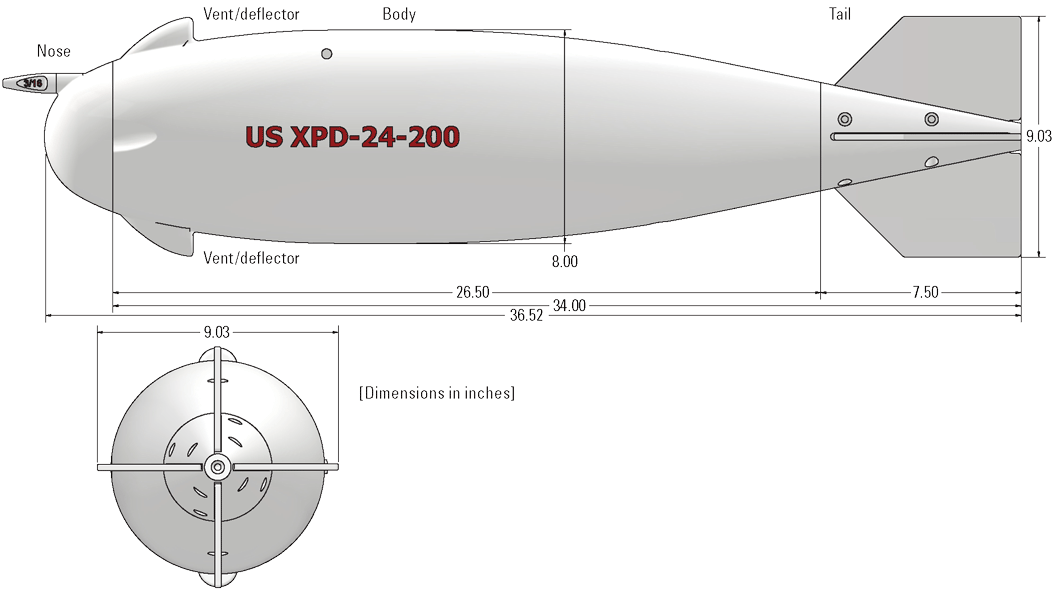
Schematic of the US XPD-24-200 sampler. Dimensions in inches. Figure modified from Carnet Technology.
The overall length of the sampler is 36.6 in., and it weighs approximately 200 pounds. The prototype was fabricated from three-dimensional (3D) printed plastic with a core of resin-infused lead. The tail section was made with a 3D printer. All metal parts are ultraviolet (UV)-curable coated. The sampler’s nozzles, internal flow path, and valve were fabricated from polytetrafluoroethylene (PTFE). The US XPD-24-200 can accommodate nozzle sizes of 3/16 in., 1/4 in., and 5/16 in. Plastic bags were used for all IE testing.
Methods
The US XPD-24-200 was deployed in a tow tank and in a lake to evaluate and determine its suitability for collecting suspended-sediment and water-quality samples as a point- or a depth-integrating sampler. The methods were designed to be comparable to previous methods used to evaluate preexisting point- and depth-integrating samplers (for example, US P-6 and US D-96). The following sections outline the general approach used to test and assess the US XPD-24-200’s mechanical operation, sampling characteristics, and performance.
Test Objectives
The primary objectives of the testing were the following:
-
1. Verify proper valve function and electrical actuation during submersion.
-
2. Evaluate the sampler’s performance as a point- or depth-integrating sampler.
-
3. Assess sample-volume capacity and check for leakage, overfilling, or incomplete filling.
-
4. Observe unidirectional sampling behavior, including operator control over sample termination.
-
5. Compare and evaluate IEs at known velocities.
Testing Environment and Setup
Controlled testing was conducted at the former USGS HIF tow tank (figs. 2 and 3). Tow-tank testing took place over 10 days in 2023 and 2024 (Groten, 2026). The sampler was towed at velocities that ranged from 1.5 to 12 feet per second (ft/s; Groten, 2026). Tow-tank testing was conducted in near-room-temperature water. The maximum water depth was 10 ft. The sampler was suspended from an electrical reel system by using a two-conductor cable (fig. 3) that transmitted power to charge the solenoid and open the valve.
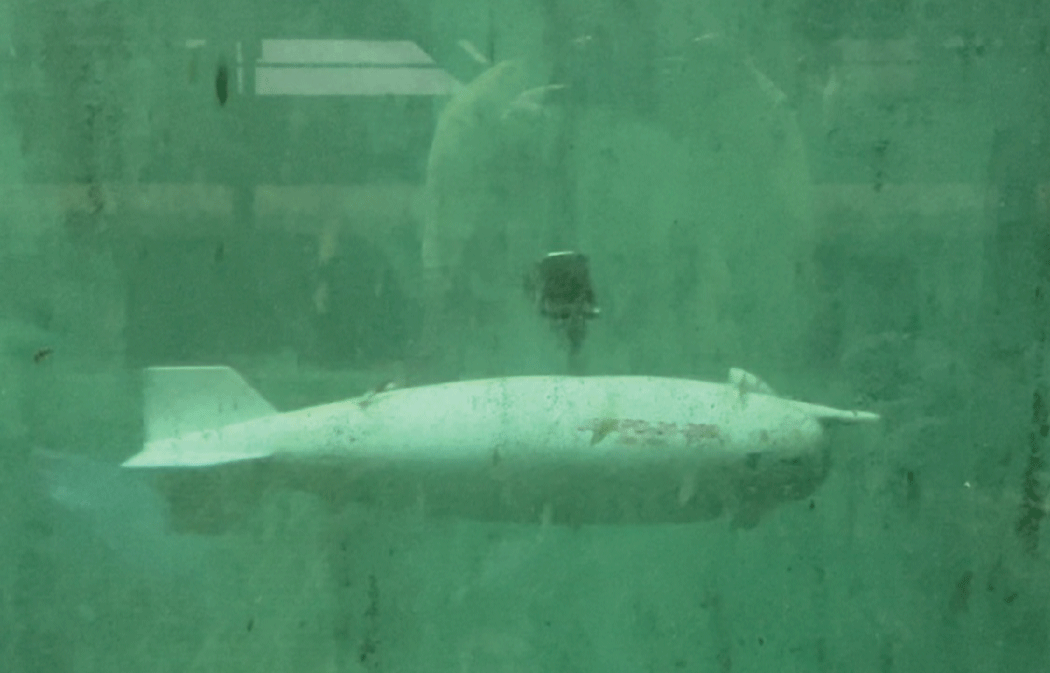
Underwater photograph of the US XPD-24-200 in the tow tank at the former U.S. Geological Survey Hydrologic Instrumentation Facility at John C. Stennis Space Center, Mississippi. Photograph by U.S. Geological Survey.
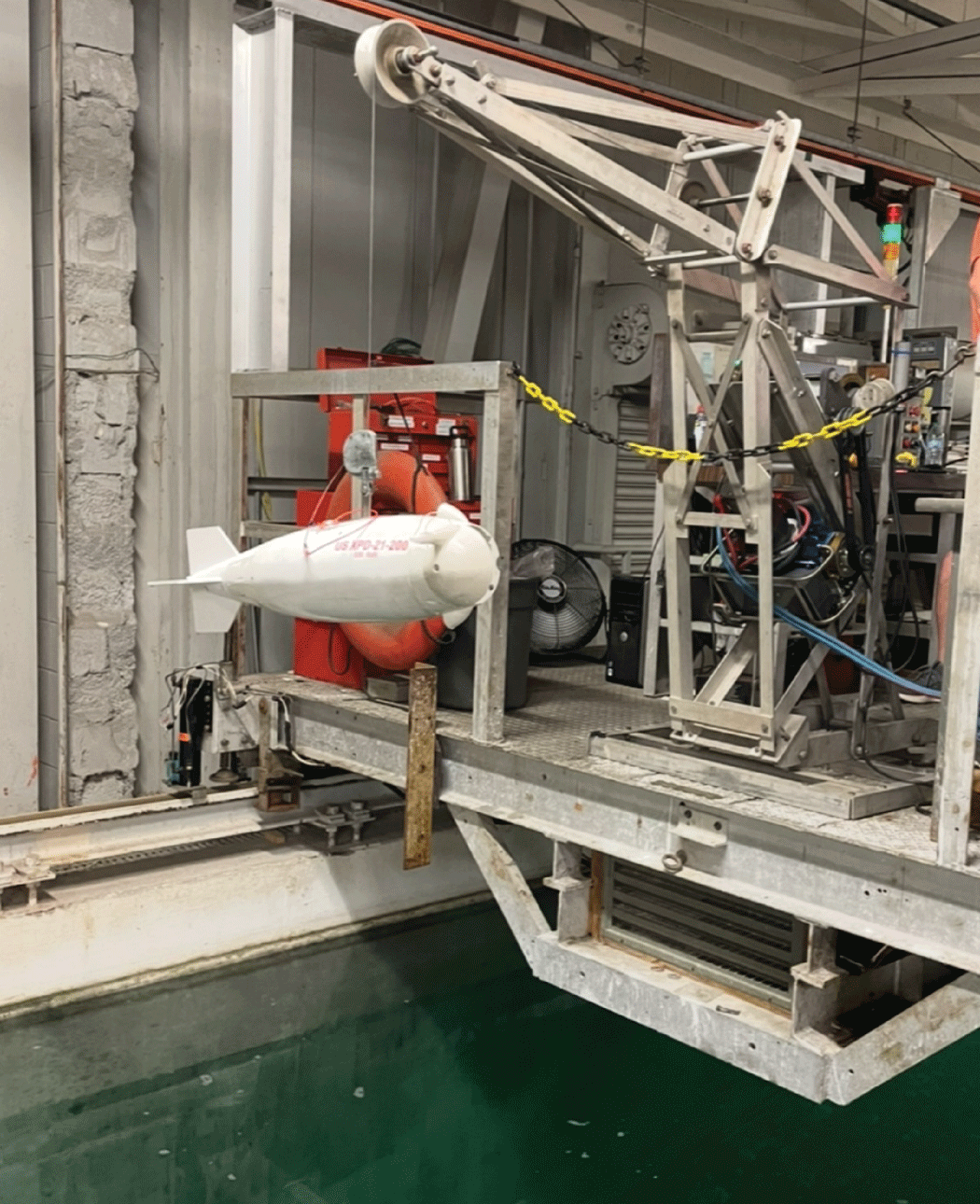
Photograph of the US XPD-24-200 sampler hanging from a crane at the tow tank at the former U.S. Geological Survey Hydrologic Instrumentation Facility at John C. Stennis Space Center, Mississippi. Photograph by U.S. Geological Survey.
The test setup included the following:
-
• A crane overhanging the tow-tank cart structure was used to deploy the sampler.
-
• A timer was used to measure the sample duration.
-
• A scale was used to measure the collected sample volume.
Field testing was conducted at Lake Tuscaloosa, Alabama (fig. 4). Field testing occurred over 3 days in April 2025 (Groten, 2026). A motorboat was used to tow the US XPD-24-200 at velocities from 1.43 to 15 ft/s (Groten, 2026). Lake testing was conducted at approximately 16 degrees Celsius. The water depths exceeded 90 ft during testing. The sampler was suspended from an electrical reel system, using a two-conductor cable capable of transmitting power to charge the solenoid and open the valve.
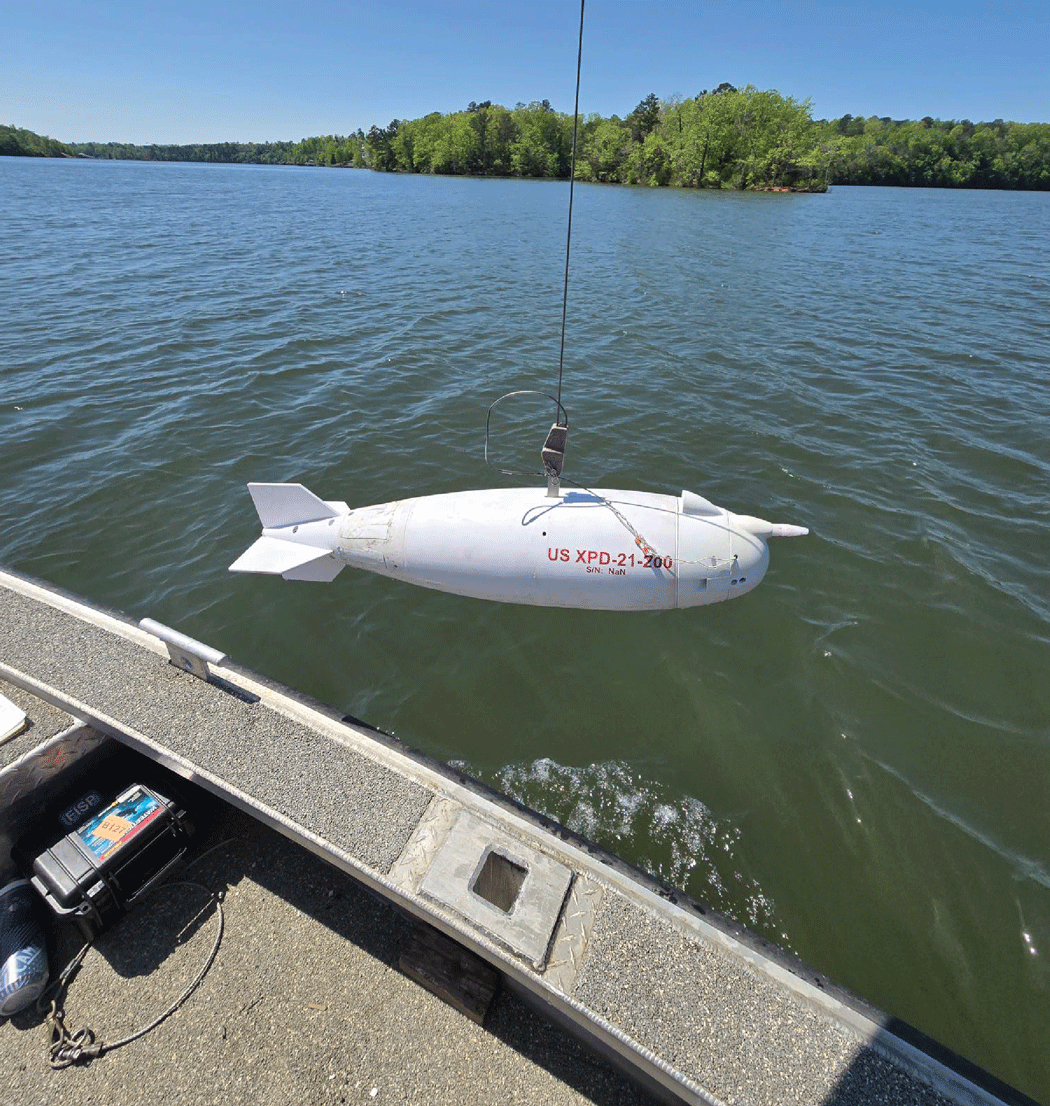
Photograph of the US XPD-24-200 sampler hanging from the crane on Lake Tuscaloosa, Alabama. Photograph by U.S. Geological Survey.
The test setup included the following:
-
• A crane overhanging the bow of the boat was used to deploy the sampler.
-
• A timer was used to measure the sample duration.
-
• A scale was used to measure the volume of the collected sample.
-
• An acoustic Doppler current profiler fitted with an external heading sensor was used for velocity measurements.
Point-Integrating Sampling Tests
For these tests, the US XPD-24-200’s valve was kept closed during descent and opened at the desired depth. The valve was held open for a defined duration of time, which was based on the expected filling time at the estimated velocity, and then closed after the defined duration of time had lapsed. Tests were used to evaluate the IEs across replicate trials and from a range of velocities.
Depth-Integrating Sampling Tests
Some tow-tank tests and all field tests included unidirectional depth-integrating sampling by keeping the US XPD-24-200’s valve open during the descent, closing it at a predetermined depth, and remaining closed during the ascent. During tow‑tank testing, if equipment malfunctions prevented the valve from cycling properly, the valve remained open throughout both the descent and ascent. Tests were used to evaluate IEs across replicate trials and from a range of velocities.
Operational Evaluation
In addition to performance tests, the following qualitative observations were recorded:
-
• Sampler orientation and tail stability
-
• Valve actuation responsiveness to signal input
-
• Nozzle positioning and drift
-
• Overall sampler stability during vertical transit
-
• Ease of sample bag removal and replacement
-
• Cable handling and sampler balance
-
• Potential limitations related to weight or maneuverability in the field
Potential Future Testing
Pending further development, the following tests could be beneficial:
-
• Laboratory flume testing for nozzle inflow efficiency
-
• Long-duration valve cycling to assess solenoid reliability
-
• Field comparisons of sediment concentration with preexisting FISP-approved samplers
-
• Performance testing across a wider range of velocities and depths
-
• IE testing with a perfluoroalkoxy (PFA) bag, required to ensure the US XPD-24-200 meets the water-quality sampling protocols outlined in the USGS National Field Manual (Wilde and others, 2014)
Intake Efficiency
Testing to determine the IE of the US XPD-24-200 sampler was conducted in a tow tank and in a lake. The IE was quantified for each test by measuring the physical parameters that control the relation between the sampler’s intake velocity through the nozzle and the ambient velocity at the nozzle. Three primary measurements were collected during each test:
-
• Sampler velocity as measured by towing speed
-
• Volume of water collected during the sampling interval
-
• Time duration of sample collection
These measurements were used to calculate the volumetric flow rate (eq. 1), nozzle entrance velocity (eq. 2), and IE (eq. 3):
whereQ
is volumetric flow rate, in cubic centimeters per second;
V
is volume of water collected during the sampling interval, in cubic centimeters; and
t
is time duration of sample collection, in seconds.
vn
is water velocity through the nozzle entrance, in feet per second;
K
is conversion factor indexed to internal nozzle diameter and equal to 0.1841 for a 3/16-in. nozzle, 0.1036 for a 1/4 in.-nozzle, and 0.0663 for a 5/16-in. nozzle (Manaster and others, 2022); and
Q
is volumetric flow rate, in cubic centimeters per second.
IE
is intake efficiency, dimensionless;
vn
is water velocity through the nozzle entrance, in feet per second; and
ve
is water velocity at the nozzle entrance measured as the towing speed; in feet per second.
All measurements and calculated values are available as a USGS data release (Groten, 2026).
Results
This section presents the results from controlled laboratory and field testing of the US XPD-24-200 sampler’s IEs (Groten, 2026). Iterative modifications were made to the US XPD-24-200 during all years of IE testing (Groten, 2026); the most extensive modifications were made in 2023. Because the 2023 results were strongly influenced by these early modifications, they are not included here, as they do not represent the finalized sampler configuration. The 2024 and 2025 results are presented instead, acknowledging that some variability may still reflect ongoing adjustments to the sampler (Groten, 2026). Water samples were collected by using the US XPD-24-200 with nozzles of 3/16-in., 1/4-in., and 5/16-in. diameter. Graphical summary plots and summary statistics are provided to illustrate the performance and variability of the sampler across nozzle sizes and testing conditions.
A scatter plot of velocity data was analyzed against the 1:1 reference line (fig. 5). The velocity data have a strong linear trend that tracks the overall trend but shows a systematic deviation from the 1:1 line. At velocities of approximately 5 ft/s and less, the velocity data mostly fall below the 1:1 line, indicating that nozzle velocities are slightly lower than observed values in this range (fig. 5). At velocities greater than 9 ft/s, velocity data remain above the 1:1 line, suggesting that nozzle velocities are higher than observed values (fig. 5). This pattern reflects a mild bias with lower nozzle velocities at the lower velocity range and higher nozzle velocities at the higher velocity ranges. This pattern is common when the relationship is slightly nonlinear (Shapiro-Wilk with a p-value of less than 0.001) or influenced by specific conditions.
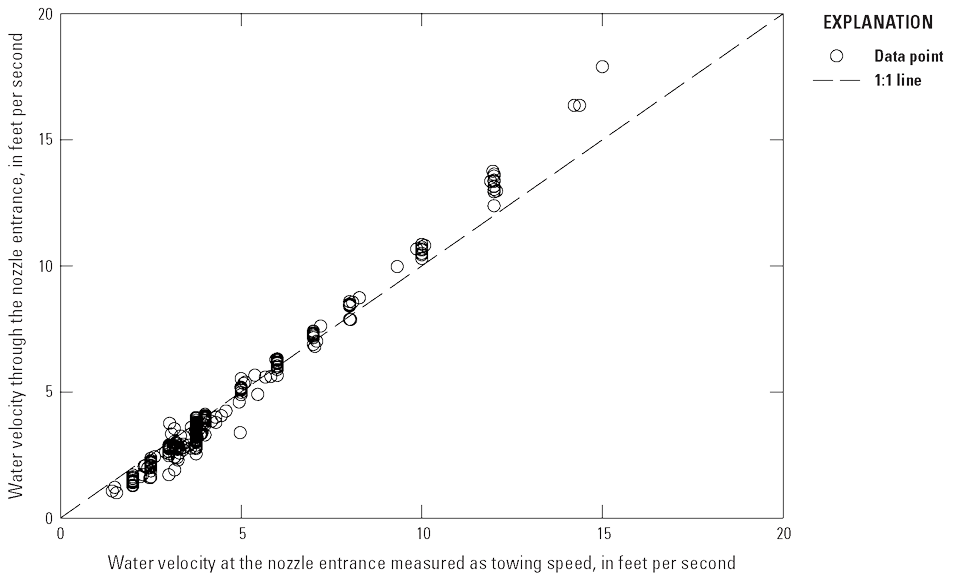
Scatter plot of water velocity at the nozzle entrance (measured as towing speed) and through the nozzle entrance of three US XPD-24-200 nozzles (3/16 inch [in.], 1/4 in., and 5/16 in.) and 1:1 line.
With a maximum collected volume of 2,624 mL, the US XPD-24-200 achieved a 5.5-fold increase in maximum sample volume relative to the US P-6 sampler. Approximately 73 percent of IE measurements fell within the 0.9–1.1 range (figs. 6 through 10). Values outside this interval were predominantly lower than 0.9, comprising approximately 24 percent of the dataset, whereas only approximately 2 percent of measurements exceeded 1.1. IE values below 0.9 occurred most frequently at a velocities less than 4 ft/s, which also had the largest number of observations (table 1). These velocities exhibited the greatest variability in IE, which was likely due to the higher number of repeated velocity measurements and modifications made to the sampler at this velocity range than at other ranges. IE values greater than 1.1 were observed primarily at high velocities (approximately 12 ft/s or above), although these instances were rare, with only about 10 measurements recorded.
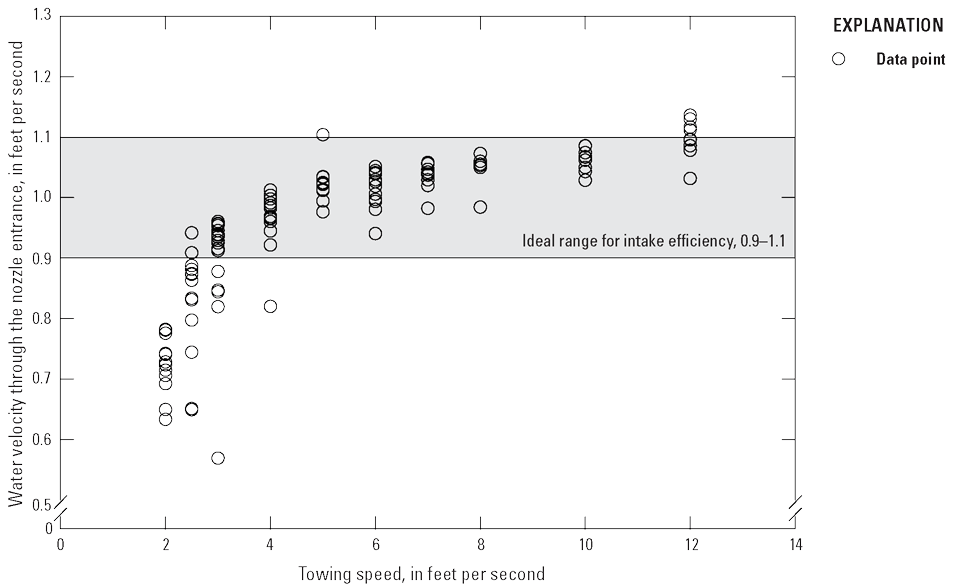
US XPD-24-200 nozzle intake efficiency results for nozzles with internal diameters of 3/16 inch (in.), 1/4 in., and 5/16 in. at velocities ranging from 2 to 15 feet per second (excluding replicate velocities of 3.75 feet per second, which are shown in fig. 7) in tow-tank tests.
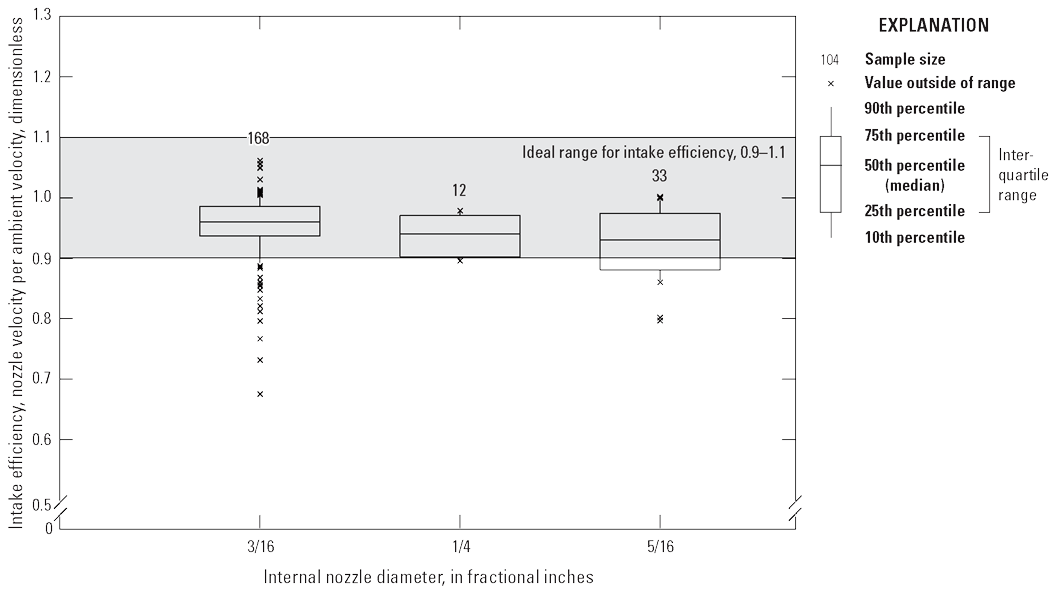
Box plots of US XPD-24-200 nozzle intake efficiency results for nozzles with internal diameters of 3/16 inch (in.), 1/4 in., and 5/16 in. at replicate velocities of 3.75 feet per second in tow-tank tests.
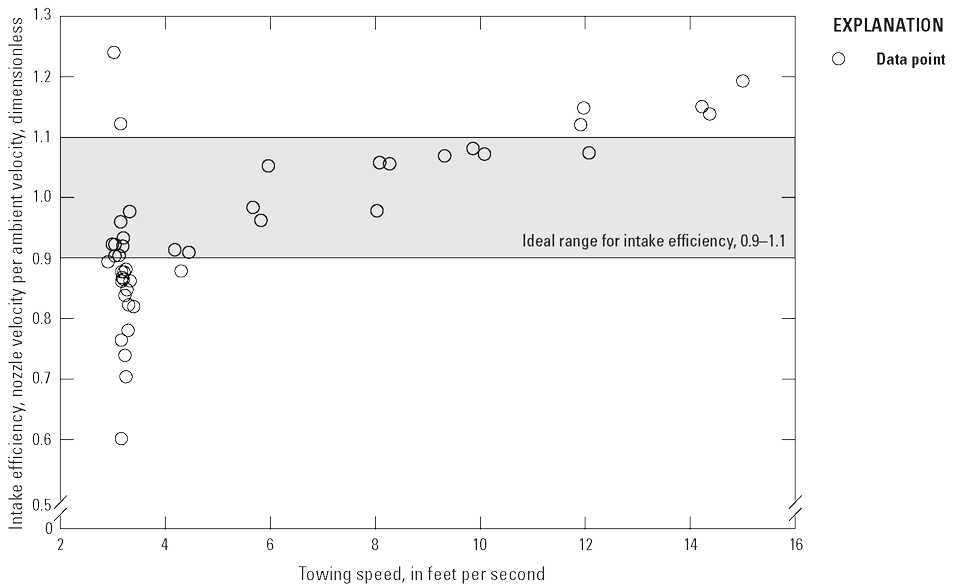
US XPD-24-200 nozzle intake efficiency results for a plastic nozzle with an internal diameter of 3/16 inch (in.) at velocities ranging from 1.43 to 15 feet per second in lake tests.
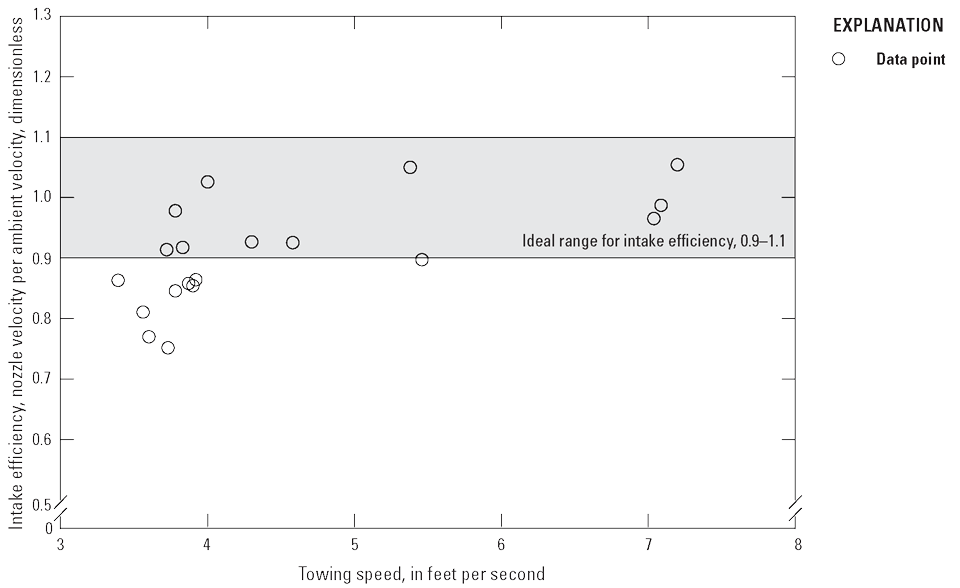
US XPD-24-200 nozzle intake efficiency results for a plastic nozzle with an internal diameter of 1/4 inch (in.) at velocities ranging from 3.4 to 7.2 feet per second in lake tests.
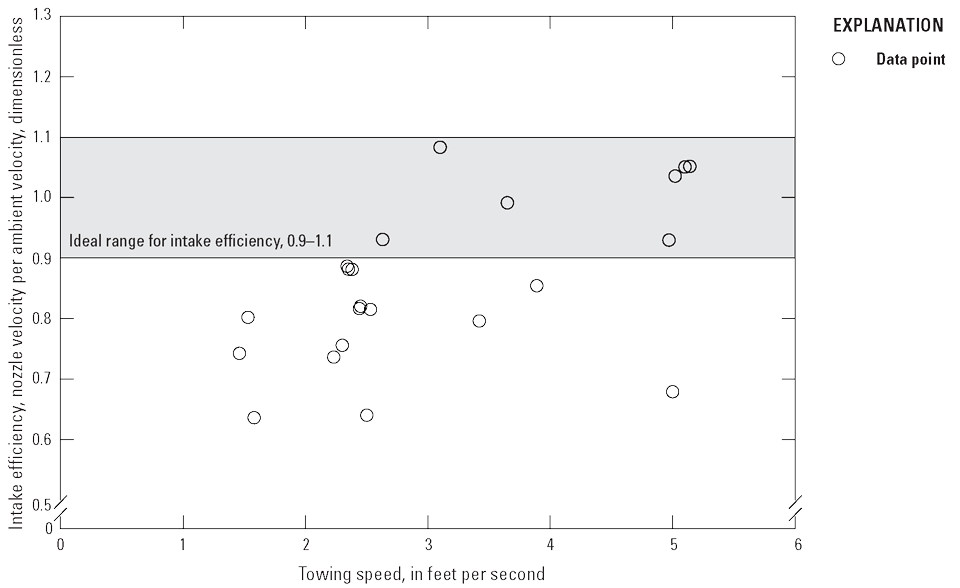
US XPD-24-200 nozzle intake efficiency results for a plastic nozzle with an internal diameter of 5/16 inch (in.) at velocities ranging from 1.43 to 5.11 feet per second in lake tests.
Table 1.
Summary statistics of the US XPD-24-200 sampler intake efficiency.[”, inch; ft/s, foot per second]
Across all measurements, IE exhibited consistent central tendencies; variability was strongly dependent on test environment and nozzle diameter. Tow-tank trials showed tightly clustered IE values, with means ranging from 0.926 to 0.952 and relatively small standard deviations (0.0115–0.0546), indicating stable performance under controlled laboratory conditions (table 1). The 3/16-in. nozzle, tested across a broad velocity range (2–12 ft/s), demonstrated particularly low variability (standard deviation = 0.0115), suggesting that IE remained uniform despite changes in velocity (table 1). In contrast, field measurements from Lake Tuscaloosa displayed greater dispersion and a wider dynamic range. Mean IEs were slightly lower overall (0.834–0.946), and standard deviations were higher (0.0886–0.137; table 1), reflecting the potential influence of natural environmental variability such as turbulence, temperature gradients, and unsteady inflow conditions. The maximum IE in the lake dataset was as high as 1.240, exceeding the tow-tank maxima, while minimum values were also lower, resulting in a broader spread of IEs (table 1). Collectively, these results highlight the stability and repeatability of tow-tank measurements and the more variable, environmentally driven performance observed in open-water conditions.
Summary
The US XPD-24-200 sampler was developed to address longstanding limitations in preexisting suspended-sediment and water-quality samplers, particularly the limited sample volume, mechanical complexity, and single-purpose design of point-integrating samplers such as the US P-6 and the overfilling risks associated with depth-integrating samplers such as the US D-96. The US XPD-24-200 incorporates a collapsible-bag collection system, simplified valve mechanics, and interchangeable nozzle sizes, enabling it to function as a point-integrating or depth-integrating sampler. Its maximum sample volume is 5.5 times greater than that of the US P-6 sampler. A key advancement is its ability to perform unidirectional depth-integrating sampling, allowing operators to terminate sample collection at depth and reduce the risk of overfilling during high-velocity and (or) deepwater deployments.
Controlled tow-tank testing and field trials in Lake Tuscaloosa, Alabama, were conducted to evaluate the sampler’s intake efficiency (IE), mechanical reliability, and operational practicality. IEs were assessed across a range of velocities and nozzle diameters, following established testing procedures. Approximately 73 percent of IE measurements fell within the target isokinetic range of 0.9–1.1, with a mild bias occurring at the lowest and highest test velocities. Tow-tank tests showed tightly clustered IE values with low variability, whereas field tests exhibited more dispersion due to natural environmental variability. Across all tests, the sampler demonstrated stable performance, reliable valve actuation, and consistent sample collection behavior.
Operational evaluations confirmed that the US XPD-24-200 is mechanically simpler to deploy and maintain than preexisting samplers, while offering greater sampling flexibility and increased sample volume. The sampler’s design supports both suspended-sediment and water-quality applications, but additional IE testing with a perfluoroalkoxy (PFA) bag is needed to ensure that it meets the requirements of the U.S. Geological Survey National Field Manual. Overall, results indicate that the US XPD-24-200 performs comparably to established Federal Interagency Sedimentation Project (FISP) samplers while providing substantial improvements in versatility, depth capability, and operational efficiency.
References Cited
Davis, B.E., 2001, The US D-96—An isokinetic suspended-sediment/water-quality collapsible-bag sampler: Federal Interagency Sedimentation Project Report PP, 37 p., accessed February 2022 at https://water.usgs.gov/fisp/docs/Report_PP,_US_D-96_011114.pdf.
Davis, B.E., and Federal Interagency Sedimentation Project, 2005, A guide to the proper selection and use of federally approved sediment and water-quality samplers: U.S. Geological Survey Open-File Report 2005–1087, 20 p., accessed February 2022 at https://doi.org/10.3133/ofr20051087.
Edwards, T.K., and Glysson, G.D., 1999, Field methods for measurement of fluvial sediment: U.S. Geological Survey Techniques of Water-Resources Investigations, book 3, chap. C2, 89 p., accessed February 2022 at https://doi.org/10.3133/twri03C2.
Federal Interagency Sedimentation Project, 1941, Laboratory investigation of suspended sediment samplers: Iowa City, Iowa, University of Iowa Hydraulic Laboratory, Report No. 5, 99 p., accessed February 2022 at https://water.usgs.gov/fisp/docs/Report_5.pdf.
Federal Interagency Sedimentation Project, 1952, The design of improved types of suspended sediment samplers: Minneapolis, Minn., St. Anthony Falls Hydraulic Laboratory, Report No. 6, 103 p., accessed December 2025 at https://water.usgs.gov/fisp/docs/Report_6.pdf.
Federal Interagency Sedimentation Project, 2011, US P-6 point integrating suspended-sediment sampler: Federal Interagency Sedimentation Project Technical Committee Memorandum 2011.01, accessed December 19, 2025, at https://water.usgs.gov/fisp/docs/FISP_Tech_Memo_US_P-6.pdf.
Federal Interagency Sedimentation Project, 2026, Federal Interagency Sedimentation Project: U.S. Geological Survey project web page, accessed January 27, 2026, at https://water.usgs.gov/fisp/.
Groten, J.T., 2026, Intake efficiency testing data for the US XPD-24-200 isokinetic suspended sediment and water quality collapsible-bag sampler: U.S. Geological Survey data release, https://doi.org/10.5066/P13AXK4I.
Knott, J.M., Glysson, G.D., Malo, B.A., and Schroder, L.J., 1993, Quality assurance plan for the collection and processing of sediment data by the U.S. Geological Survey, Water Resources Division: U.S. Geological Survey Open-File Report 92–499, 18 p., accessed January 29, 2026, at https://pubs.usgs.gov/of/1992/0499/report.pdf.
Manaster, A.E., Landers, M.N., and Straub, T.D., 2022, Intake efficiency field results for Federal Interagency Sedimentation Project bag samplers: U.S. Geological Survey Open-File Report 2022–1036, 27 p., accessed June 18, 2025, at https://doi.org/10.3133/ofr20221036.
Wilde, F.D., Sandstrom, M.W., and Skrobialowski, S.C., 2014, Selection of equipment for water sampling (ver. 3.1): U.S. Geological Survey Techniques of Water-Resources Investigations, book 9, chap. A2, 78 p. [Also available at https://pubs.usgs.gov/twri/twri9a2/Chapter2_V3-1.pdf.]
Conversion Factors
For more information about this report, contact:
Director, USGS Upper Midwest Water Science Center
1992 Folwell Avenue
St. Paul, MN 55108
763-314-1929
https://www.usgs.gov/centers/umid-water
Publishing support provided by the
USGS Science Publishing Network
Pembroke and Rolla Publishing Service Centers
Disclaimers
Any use of trade, firm, or product names is for descriptive purposes only and does not imply endorsement by the U.S. Government.
Although this information product, for the most part, is in the public domain, it also may contain copyrighted materials as noted in the text. Permission to reproduce copyrighted items must be secured from the copyright owner.
Suggested Citation
Groten, J.T., Rose, C.E., O’Neal, W., Simmons, L.B., Straub, T.D., and Diaz, P., Jr., 2026, The US XPD-24–200—An isokinetic suspended-sediment and water-quality collapsible-bag sampler with point- or depth-integrating sampling capabilities: U.S. Geological Survey Open-File Report 2026–1022, 13 p., https://doi.org/10.3133/ofr20261022.
ISSN: 2331-1258 (online)
| Publication type | Report |
|---|---|
| Publication Subtype | USGS Numbered Series |
| Title | The US XPD-24–200—An isokinetic suspended-sediment and water-quality collapsible-bag sampler with point- or depth-integrating sampling capabilities |
| Series title | Open-File Report |
| Series number | 2026-1022 |
| DOI | 10.3133/ofr20261022 |
| Publication Date | June 22, 2026 |
| Year Published | 2026 |
| Language | English |
| Publisher | U.S. Geological Survey |
| Publisher location | Reston, VA |
| Contributing office(s) | Upper Midwest Water Science Center |
| Description | Report: vi, 13 p.; Data Release; Project Site |
| Online Only (Y/N) | Y |
| Additional Online Files (Y/N) | N |