


Sensitivity of Benthic Biota and Toxicity of Cadmium, Cobalt, Copper, Nickel, Lead, and Zinc Mixtures in Near-Surface Porewater in the Upper Columbia River Basin, Washington, United States, and British Columbia, Canada
Links
- Document: Report (2.2 MB pdf) , HTML , XML
- NGMDB Index Page: National Geologic Map Database Index Page (html)
- Download citation as: RIS | Dublin Core
Abstract
Relative sensitivities and responses of juvenile white sturgeon (Acipenser transmontanus), Hyalella azteca, two families of mayfly (Ephemerellidae, Heptageniidae), one family of caddisfly (Brachycentridae), and a natural community of benthic macroinvertebrates (BMI) to multiple metals are predicted using previously collected laboratory and field samples and a metal mixture model. Biological responses in single metal exposures are used to parameterize toxicity functions, which include accumulations of hydrogen and selected metals on biological receptors, intrinsic potencies of hydrogen and metals, sensitivities of organisms, and times of exposure. The model then is used to predict responses in multiple metal laboratory exposures and field-collected porewater. The following sensitivity sequence in porewater was determined based on endpoints of survival or total abundance: juvenile white sturgeon greater than (>) Ephemerellidae family > Hyalella azteca > Heptageniidae family about equal to (~) benthic macroinvertebrate community > Brachycentridae family. The fraction of porewater samples that are predicted to have adverse impacts on benthic biota (20-percent or greater negative response) depends on organism sensitivities and metal toxicities, and ranges from 44 to 48 percent for juvenile white sturgeon, 23 to 26 percent for the Ephemerellidae family, 16 to 22 percent for Hyalella azteca, 5 to 8 percent for the Heptageniidae family and BMI community, and 0 percent for the caddisfly family. The most toxic porewater in the upper Columbia River Basin (UCR) is at the backwater bar site at Deadmans Eddy and China Bend. The model also indicates that the element responsible for the most toxic conditions in UCR porewater is copper for all organisms, except Hyalella azteca and the metal-insensitive Brachycentridae family. Copper and lead result in the most toxic conditions for Hyalella azteca. This approach and results can aid in assessing metal toxicity and its potential risk to aquatic biota in ecosystems impacted by historical mining activities.
Introduction
Ecological risk assessments identify hazardous chemicals, ecological receptors, pathways of exposure, and media that result in exposure. Risks are characterized, solutions for mitigating those risks are developed, and results are communicated to risk managers and decision makers (Barnthouse, 2008; Harford and others, 2022). To identify and characterize those risks, an understanding of physical and biogeochemical processes that redistribute chemicals in the environment and affect uptake by biota is necessary. Knowledge is required about sources, concentrations, distributions, speciation, and bioavailability of chemicals, as well as identities, life stages, habitats, and mechanisms of exposure to biological receptors. The evaluation of risks also relies on identification of background chemical concentrations and benchmarks of toxicity for chemicals in water, sediment, soil, and biota. Integration of all this information is required to develop successful strategies for remediation activities that minimize risks.
Ecosystems containing highly mineralized rock pose potential risks to humans, terrestrial and aquatic life, and the environment. One such system is the upper Columbia River Basin in northeastern Washington, United States, and British Columbia, Canada (fig. 1). This basin contains mineralized deposits primarily containing copper (Cu), gold, lead (Pb), silver, and zinc (Zn). Mining, smelting, and processing of ore have occurred in this region since the mid-to-late 1800s. Early mining activities released a solid waste product from processing of natural ore (that is, slag) and liquid effluent into several fast-flowing rivers, resulting in a legacy of metal enrichment in downstream sediment and porewater (Johnson and others, 1990; Paulson and Cox, 2007; Besser and others, 2018). Remedial investigations, feasibility studies, and baseline ecological risk assessments are currently being conducted in the main stem of the upper Columbia River Basin (UCR) near the United States-Canadian border (U.S. Environmental Protection Agency, 2024). Two field studies in the UCR in which in situ porewater was collected and its composition analyzed (Cox and others, 2016; Environmental Resources Management, 2022) are of interest to the present study. Previous research examined the toxicity of metal mixtures in these porewater samples to juvenile white sturgeon (Acipenser transmontanus) using several different metal-mixture models (Balistrieri, 2024; Balistrieri and others, 2018). The present work expands upon this previous work by considering metal-mixture toxicity to multiple benthic organisms in UCR porewater using a new metal-mixture model (Tipping and others, 2023).
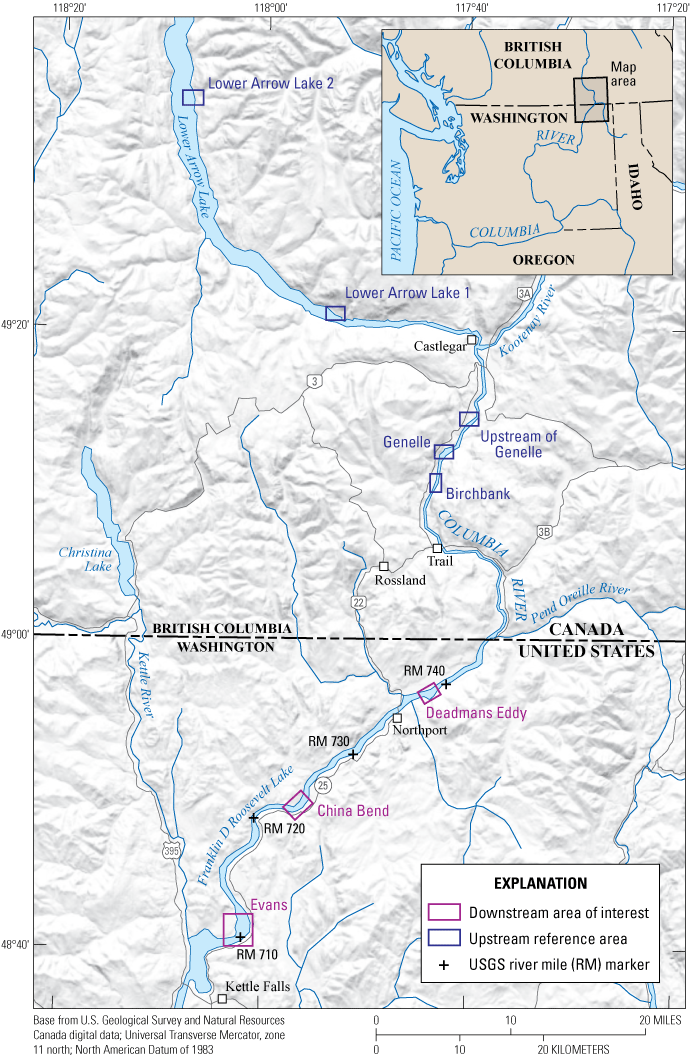
Study area in the upper Columbia River Basin in northeastern Washington State, United States, and British Columbia, Canada. USGS, U.S. Geological Survey.
Purpose and Scope
The objectives of this work are threefold: (1) to provide a comparison of the relative sensitivities of multiple organisms—including the benthic life stage of white sturgeon, Hyalella azteca; families of Ephemerellidae, Heptageniidae, and Brachycentridae; and a community of benthic macroinvertebrates—to multiple metal mixtures using a consistent modeling framework; (2) to evaluate the toxicity of dissolved metals in near-surface porewater in the UCR to these organisms; and (3) to identify the element(s) that cause the most toxic conditions in UCR porewater. This approach provides a tool for evaluating risks of metal exposure to aquatic biota in the upper Columbia River Basin and other areas impacted by historical mining activities.
Methods
Laboratory Data Sets
Laboratory studies of toxicity to aquatic organisms in single metal solutions provide the fundamental data for model validation. Laboratory data include the composition of water samples [temperature, pH, concentrations of major ions (calcium [Ca], magnesium [Mg], sodium [Na], potassium [K], chlorine [Cl], sulfate [SO4], carbonate species), dissolved organic carbon (DOC), and metals of interest] as well as responses of biota upon exposure to metals. Laboratory studies provide an opportunity to validate models because they consider well-controlled and less-complex systems and generally examine a wider range of metal concentrations than those observed in natural, pristine environments. Previously collected laboratory data for six organisms are used in this study and summarized in sections, “Juvenile White Sturgeon (Acipenser transmontanus),” “Hyalella azteca,” and “Natural Benthic Macroinvertebrate Community.”
Juvenile White Sturgeon (Acipenser transmontanus)
Studies of the toxicity of individual dissolved metals (cadmium [Cd], copper, lead, zinc) to juvenile white sturgeon (less than 27 days post hatch) were conducted at the U.S. Geological Survey Columbia Environmental Research Center (Calfee and others, 2014; Ingersoll and Mebane, 2014; Wang and others, 2014). Data are summarized in Balistrieri and others (2018). The 84 samples had endpoints of effective survival, which includes behavioral characteristics as well as survival, and growth for 4–53 days of exposure.
Hyalella azteca
Studies that determined the response of Hyalella azteca as a function of individual dissolved metal (Cd, Co [cobalt], Cu, Ni [nickel], Pb, Zn) concentrations were conducted in tap water from Lake Ontario. Paired 28-day LC25 and LC50 (lethal concentrations at 25 or 50 percent mortality) for each of the six metals (that is, 12 values) are summarized in Norwood and others (2013). To predict a larger range of metal concentrations and mortalities of Hyalella azteca for the present study, a logistic curve was fit to the published individual dissolved metal concentrations at 25 and 50 percent mortality and presented as solid curves in model results for Hyalella azteca.
Natural Benthic Macroinvertebrate Community
Four mesocosm experiments of metal toxicity to benthic macroinvertebrates (BMI) were conducted at the U.S. Geological Survey (Balistrieri and others, 2020; Mebane and others, 2017, 2020; Schmidt and others, 2018). A natural community of BMI was colonized in the field, transferred to laboratory streams, and exposed to dissolved single metals and metal mixtures of Cd, Co, Cu, Ni, and Zn. Mixtures included dissolved concentrations of Cd+Zn, Co+Cu, Cu+Ni, Cu+Zn, Ni+Zn, Cd+Cu+Zn, Co+Cu+Ni, and Cu+Ni+Zn. Water and larvae were collected after 32 days of exposure in 144 streams. Larvae were identified and counted; water samples were analyzed for their composition. Data are summarized in Schmidt and others (2019). Total abundance of the BMI community and families of Ephemerellidae, Heptageniidae, and Brachycentridae are used in this work. The members (1) of the Ephemerellidae family were Drunella doddsii, Drunella grandis, and Ephemerella sp.; (2) of the Heptageniidae family were Cinygmula sp., Epeorus longimanus, and Rhithrogena sp.; and (3) of the Brachycentridae family were Brachycentrus americanus, Brachycentrus occidentalis, and Micrasema bactro.
Field Datasets
Two sets of in situ porewater were collected in the UCR and analyzed for their composition (that is, temperature, pH, dissolved concentrations of major ions, DOC, and metals of interest). The first set of 78 samples included surface water and porewater and was collected in 2015 across the sediment-water interface at 7.5 centimeters (cm) above the interface (surface water), at the interface (0 cm; sediment-water interface), 4.5 cm below the interface (shallow porewater), and 14.5 cm below the interface (deep porewater) at locations between the United States-Canadian border and China Bend (fig. 1). These data are summarized in Cox and others (2016) and more fully discussed in Balistrieri and others (2018). The porewater had an average pH of 7.91±0.21, a hardness of 94±14 milligrams per liter (mg /L) of calcium carbonate (CaCO3), and 0.56±0.22 mg/L of DOC. The second set of samples was 122 composite porewater samples collected in 2019 from 0 to 15 cm below the sediment-water interface at areas of interest (AOIs) in the UCR. These areas include reference sites above the United States-Canadian border and sites downstream from the border at Deadmans Eddy, China Bend, and Evans (fig. 1; Environmental Resources Management, 2022). Samples at Deadmans Eddy were collected at an eddy site in the main stem of the river and within the backwater of a sand bar. The data are summarized and more fully discussed in Balistrieri (2024). These porewater samples had average pH of 7.82±0.78, hardness of 88±43 mg/L of CaCO3, and 1.1±1.2 mg/L of DOC. Although metal concentrations were reported for all porewater samples in this study, many were qualified as non-detectable or less than detection limits. In these cases, dissolved metal concentrations were assigned to be 50 percent of reported values.
WHAM-FTOXβ Model
The WHAM-FTOXβ model, which was developed by Tipping and others (2023), is used to evaluate hydrogen and metal toxicity to biota in laboratory and field studies. An overview of the model using Cd and Zn as example metals and mayfly and fish as example organisms is presented in figure 2. Responses for mayfly to metals are less sensitive than responses for fish in the example. Laboratory and field metal-toxicity studies characterize the responses of organisms that are exposed to ranges of dissolved metal concentrations. Typically, responses are related to metal concentrations for single metal solutions or toxic units or other multiple metal metrics for metal mixtures (Schmidt and others, 2012; Mebane and others, 2015). In the WHAM-FTOXβ model, biological responses are related to toxicity functions. These toxicity functions, FTOXβ, include accumulations of hydrogen and metals on biological receptors, intrinsic potency coefficients for hydrogen and metals, sensitivity values for biota, and times of exposure to metals. The accumulations of hydrogen and metals are determined by treating biological receptors as humic acid. This approach uses a comprehensive database of metal-organic matter interactions that is incorporated into the computer program Windermere Humic Aqueous Model 7 (WHAM 7) (Tipping and others, 2011; Lofts, 2012). Thus, accumulations of elements on all biological receptors are represented by accumulations of elements on humic acid. This assumption means that the amount of hydrogen and metals bound to biological receptors is the same for all organisms in each water sample. Toxicity functions, FTOXβ, are compared to positive responses (R) of biota exposed to hydrogen and metals and the data are fit using three piece-wise linear sections and lower (FTOXβ, LT) and upper (FTOXβ, UT) thresholds of FTOXβ. For FTOXβ<FTOXβ, LT; R=maximum response (for example, 100 percent) and for FTOXβ>FTOXβ, UT; R=minimum response (for example, 0 percent). Responses decrease linearly between the lower and upper thresholds. Therefore, as FTOXβ increases, responses become less positive (fig. 2). This model is applicable to single and multiple metal toxicity studies.
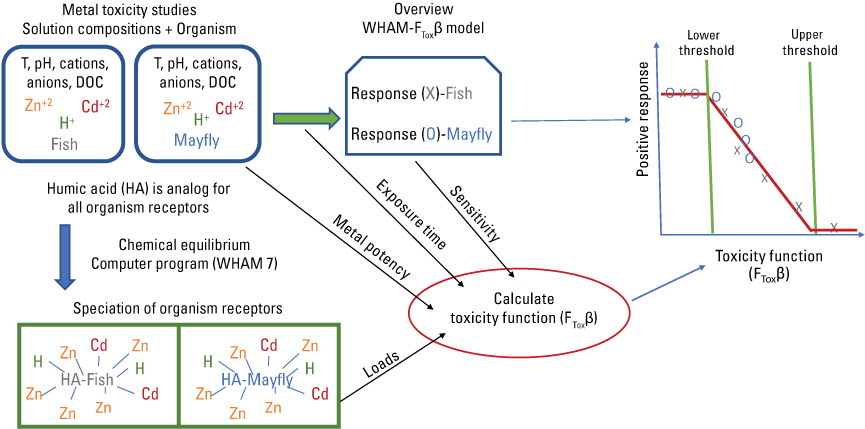
Diagram showing summary of the WHAM-FTOXβ model as developed by Tipping and others (2023). T, temperature; DOC, dissolved organic carbon; Zn, zinc; Zn+2, zinc cation; Cd, cadmium; Cd+2 cadmium cation; H, hydrogen; H+, hydrogen ion.
The toxicity function in equation form is:
whereαH
is potency coefficient for hydrogen,
θH
is fractional accumulation of hydrogen on biological receptors,
αMX
is potency coefficients for metals,
θMX
is fractional accumulations of metals on biological receptors,
β
is sensitivity of the organism,
αMX*
is intrinsic potency coefficients of metals,
k
is rate constant (per day), and
t
is time of exposure (day).
Fractional accumulations of hydrogen and metals on biological receptors are calculated from the compositions of water in laboratory and field studies using WHAM 7. The water composition of each sample is required for the calculations and includes temperature, pH, and total concentrations of major cations (Ca, Mg, Na, K), major anions (Cl, SO4, inorganic carbonate species or alkalinity), DOC, and metals of interest (Cd, Co, Cu, Ni, Pb, Zn). Dissolved organic matter is assumed to be 100 percent fulvic acid (FA) and 50 percent DOC. Sixty five percent of DOC is considered to actively complex with metals (Bryan and others, 2002). Thus, FA (in grams per liter [g/L]) = 1.3×DOC (g/L). The analog for biological receptors [that is, humic acid (HA)] is included for each sample at concentrations of 1×10⁻⁹ g/L. This concentration does not affect the dissolved chemical speciation of the solution. Solutions are assumed to be in equilibrium with amorphous iron and aluminum hydroxides (Tipping and others, 2002). Fractional accumulations are moles of hydrogen or metal per gram HA normalized to total binding sites on humic acid (HA–hydrogen [H]/HAtotal or HA–MX/HAtotal, where HAtotal=5.1×10⁻³ moles/g HA; Tipping and others, 2023).
The meta-analysis of toxicity studies done by Tipping and others (2023) resulted in values for intrinsic potency coefficients for metals relative to the potency coefficient for hydrogen (that is, αH=1), sensitivity parameters for many biological species including juvenile white sturgeon and Hyalella azteca, mean values for the lower and upper thresholds of FToxβ, and the time dependent rate constant (k). The lower threshold of the toxicity function (FTOXβ, LT) is 0.503 and the upper threshold (FTOXβ, UT) is 1.137 by assuming that the toxicity function equals 0.820 at 50-percent response (Tipping and others, 2023). A summary of all parameters that are needed to model metal toxicity using the WHAM-FTOXβ model is in table 1.
Table 1.
Summary of intrinsic potency coefficients for hydrogen and metals (αH, αMX) and sensitivity (β) parameters for organisms in the WHAM-FTOXβ model.[Rate constant (k) =0.77/d. Lower threshold value for toxicity function (FTOXβ, LT) =0.503. Upper threshold value for toxicity function (FTOXβ, UT) =1.137. Maximum positive response=100 percent. Minimum positive response=0 percent. Data for single metal exposures were fit. Endpoints: survival or growth (juvenile white sturgeon), survival (Hyalella azteca), total abundance (BMI community, families of mayfly and caddisfly). Abbreviations: BMI, benthic macroinvertebrate community; N/A, data not available; na, not applicable]
| Chemical element |
Tipping and others (2023) meta-analysis |
Juvenile white sturgeon |
Hyalella azteca | BMI community | Ephemerellidae family (mayfly) |
Heptageniidae family (mayfly) |
Brachycentridae family (caddisfly) |
|---|---|---|---|---|---|---|---|
| Hydrogen | 1 | 1 | 1 | 1 | 1 | 1 | 1 |
| Cadmium | 464.9 | 316.4 | 4,901.0 | 4,903.3 | 5,080.5 | 3,977.5 | 464.9 |
| Cobalt | 29.3 | N/A | 2,261.6 | 109.1 | 303.5 | 393.6 | 29.3 |
| Copper | 24.4 | 65.6 | 12.7 | 94.4 | 134.0 | 92.1 | 24.4 |
| Nickel | 19.0 | N/A | 270.5 | 104.6 | 104.0 | 59.5 | 19.0 |
| Lead | 41.6 | 121.8 | 422.7 | N/A | N/A | N/A | 41.6 |
| Zinc | 12.5 | 12.5 | 12.5 | 12.5 | 12.5 | 12.5 | 12.5 |
| na | na | 1.40 | 1.96 | 0.32 | 0.42 | 0.39 | 0.11 |
| na | na | 1.32 | 2.32 | N/A | N/A | N/A | N/A |
Toxicity Quotient
Porewater samples in the UCR contain mixtures of metals and the toxicity function for each mixture is calculated using the WHAM-FTOXβ model. The toxicity of these metal mixtures to various benthic biota is assessed by comparing the calculated toxicity function for a porewater sample (FTOXβ) to a benchmark toxicity function. The benchmark chosen for this work is the toxicity function at 20 percent negative response (TF20). Thus, this ratio, which is called a Toxicity Quotient (TQ), is defined as:
TQs greater than or equal to (≥) 1 for porewater samples indicate adverse impacts to benthic biota.
Predictions of Metal Toxicity to Benthic Biota
The approach for assessing metal toxicity in the UCR is to use laboratory data to validate the WHAM-FTOXβ model, adjust parameters if necessary, and then use the model and field porewater data to predict toxicity functions, responses, and TQs for the various organisms in multiple metal laboratory exposures and porewater in the UCR.
Laboratory Studies—WHAM-FTOXβ Predictions of Response in Single Metal Exposures
The WHAM-FTOXβ model was developed for individual organisms. All parameters that are needed for modeling toxicity are available only for juvenile white sturgeon and Hyalella azteca. Sensitivity parameters for mayfly, caddisfly, or a community of BMI were not determined in the meta-analysis of Tipping and others (2023). One test of the model is to evaluate whether responses of juvenile white sturgeon and Hyalella azteca are predicted in single metal solutions using the parameters developed in the meta-analysis. The first step is to calculate accumulations of hydrogen and metals in the single metal toxicity studies for juvenile white sturgeon and Hyalella azteca. The toxicity functions then are calculated using the accumulations and meta-analysis parameters (eqs. 1 and 2; table 1). The results indicate that responses to zinc are reasonably predicted for the two organisms (fig. 3). In contrast, responses to Cd, Co, Cu, Ni, and Pb for these organisms are poorly predicted. The WHAM-FTOXβ model was developed on the premise that each metal has intrinsic potency (that is, does not vary among organisms) and that the sensitivities of organisms to metals vary (Tipping and others, 2023). If the lower and upper thresholds for FTOXβ and minimum and maximum responses are set at the meta-analysis values, then it is not possible for Cd, Cu, or Pb to have unique intrinsic potency coefficients that fit both sets of data.
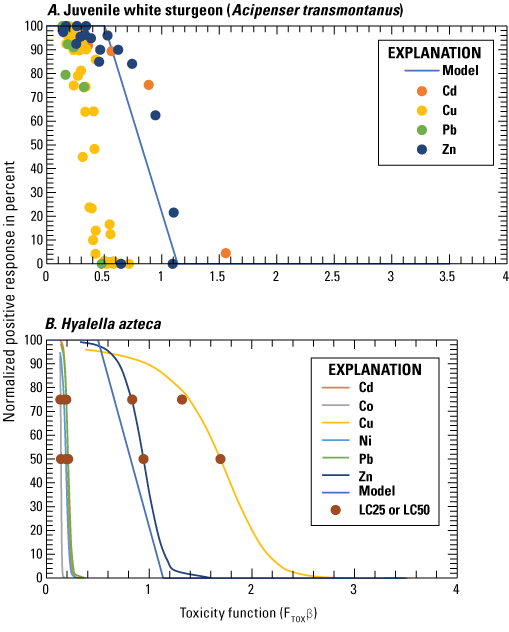
Laboratory data for single metal exposures and WHAM-FTOXβ model fit using meta-analysis parameters of Tipping and others (2023; table 1) for (A) juvenile white sturgeon (Acipenser transmontanus) and (B) Hyalella azteca. Endpoints: survival or growth (juvenile white sturgeon), survival (Hyalella azteca). LC25 and LC50 data (lethal concentrations at 25 and 50 percent mortality) for Hyalella azteca were fit with a logistic curve (that is, dissolved metal concentrations as a function of survival) and predicted dissolved metal concentrations were used in the WHAM-FTOXβ model to calculate toxicity functions, which are compared to predicted survival (solid lines). Cd, cadmium; Co, cobalt; Cu, copper; Ni, nickel; Pb, lead; Zn, zinc.
The approach taken in this work is to use the meta-analysis values for αH (1), αZn* (12.5), lower threshold (0.503) and upper threshold (1.137) of the toxicity function, and minimum positive response (0 percent) and maximum positive response (100 percent). The intrinsic potency coefficient for Zn (αZn*) determined in the meta-analysis was used because laboratory Zn data for juvenile white sturgeon and Hyalella azteca were reasonably predicted using this value (fig. 3). Additionally, fixing some parameters minimizes the number of adjustable parameters in the model. Values of the sensitivity coefficients (β) for all studied organisms are determined by fitting Zn data. Intrinsic potency coefficients (αMX*) for Cd, Co, Cu, Pb, and Ni then are determined by fitting the single metal data for each organism (that is, juvenile white sturgeon, Hyalella azteca, BMI community, Ephemerellidae family, Heptageniidae family). Intrinsic potency coefficients for all metals were kept at the meta-analysis values for the insensitive Brachycentridae family. Data were fit using SOLVER in Excel and by minimizing the absolute difference between measured and predicted responses. The fitting parameters are in table 1 and the model fits for single metal exposures are in figure 4. It is clear from table 1 that a single intrinsic potency coefficient for each metal does not fit all datasets. For example, intrinsic potency coefficients for Cd range from 316.4 to 5,080.5 for the organisms.
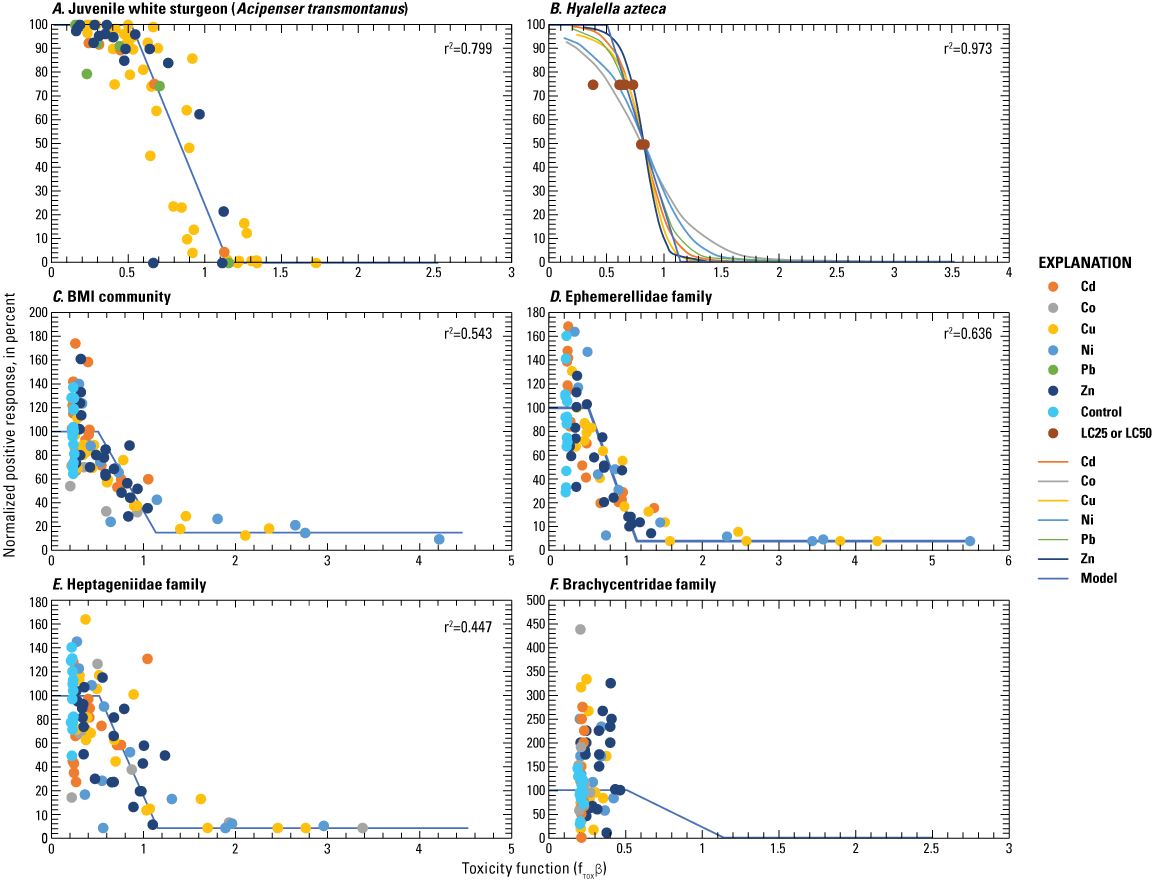
Laboratory data from single metal exposures and WHAM-FTOXβ best fit models (table 1) for all studied benthic biota. Endpoints: survival or growth (juvenile white sturgeon [Acipenser transmontanus]), survival (Hyalella azteca), total abundance (BMI community, families of mayfly and caddisfly). See figure 3 caption for explanation of Hyalella azteca curves. BMI, benthic macroinvertebrates; r2, coefficient of determination.
Laboratory Studies—WHAM-FTOXβ Predictions of Response in Metal Mixture Exposures
The four mesocosm studies also evaluated responses of families of mayfly and caddisfly and a community of BMI to metal mixtures (Schmidt and others, 2019). Because porewater solutions contain metal mixtures, the predicted responses of these organisms in metal mixtures based on parameters developed in single metal solutions are of interest. Like the single metal exposures, the toxicity function was calculated for each multi-metal mesocosm sample and compared to the normalized responses of the mayfly and BMI community. The responses of mayfly and the BMI community are well predicted in multiple metal solutions using the optimized WHAM-FTOXβ model based on fits in single metal solutions (fig. 5) and bodes favorably for predicting toxicity functions and responses in porewater with metal mixtures.
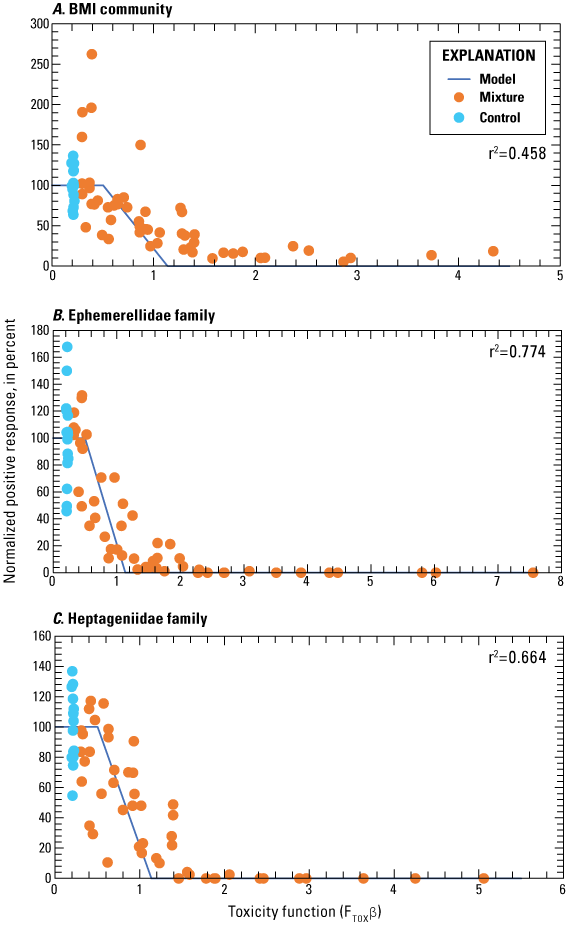
Laboratory data from metal mixture exposures in mesocosm studies and WHAM-FTOXβ best fit models (table 1). BMI, benthic macroinvertebrates; r2, coefficient of determination.
Field Porewater— Optimized WHAM-FTOXβ Predictions of Toxicity Functions, Responses, and Toxicity Quotients
Because there are no organism responses for the field-collected porewater samples, the toxicity functions, responses, and TQs are predicted for multiple metal porewater in the UCR using the optimized WHAM-FTOXβ model and parameterizations from laboratory experiments. The first step is to run WHAM 7 to determine accumulations of hydrogen and metals on HA for each porewater sample. The accumulations of hydrogen and metals are the same for all organisms in each field porewater sample as the biological receptors are all treated as HA. Boxplots of hydrogen and metal accumulations by HA in 2019 UCR porewater indicate that hydrogen accumulation is largest followed by Cu accumulations (fig. 6). The smallest accumulations are for Cd. The toxicity functions are calculated (eqs. 2 and 3; table 1) and used to predict responses for each porewater sample and each organism. Because intrinsic potency coefficients of metals and sensitivity coefficients are different among the organisms (table 1), the magnitude of the toxicity function for a given porewater varies for the organisms. Predictions of response for benthic biota in 2019 UCR porewater indicate that their sensitivity decreases as follows: juvenile white sturgeon > Ephemerellidae family > Hyalella azteca > Heptageniidae family ~ BMI community > Brachycentridae family (fig. 7). The relative sensitivities of the studied organisms to metal mixtures are reflected in decreasing toxicity functions for a given porewater sample. Biological responses become more positive as calculated toxicity functions decrease.
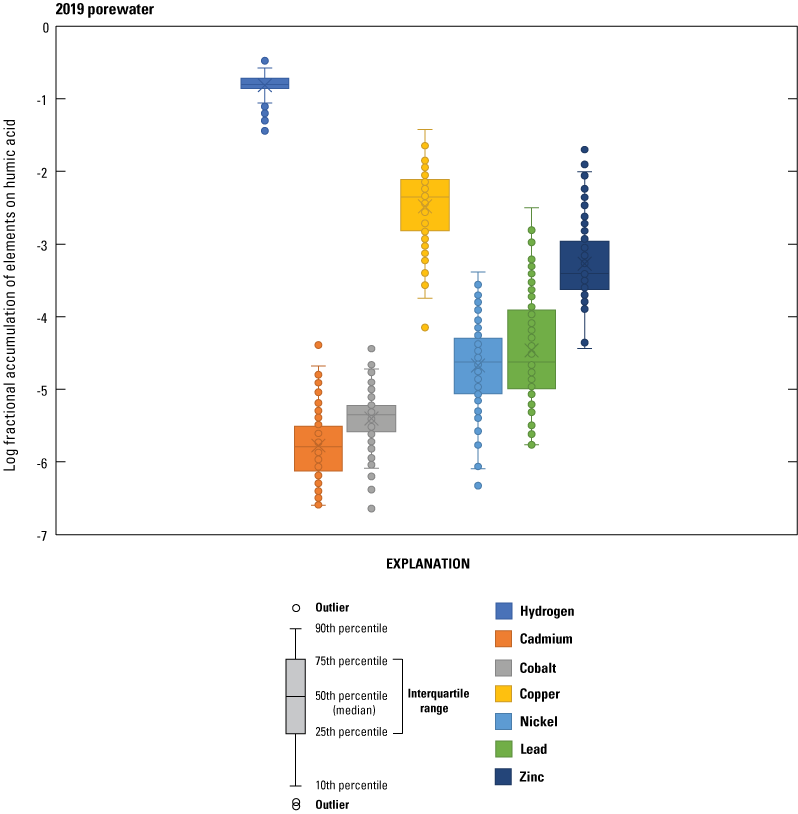
Fractional accumulations of hydrogen and metals on biological receptors (that is, humic acid) in upper Columbia River Basin porewater, 2019.
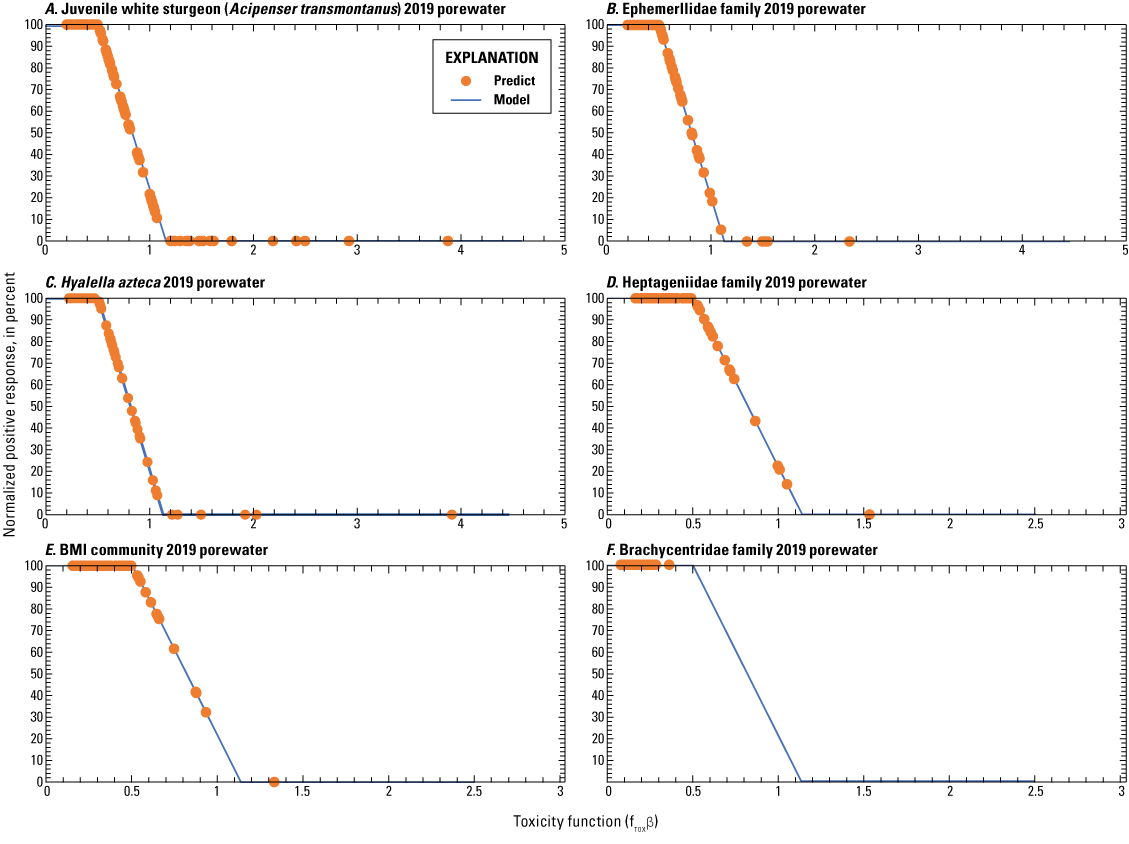
Predictions of toxicity functions (FTOXβ) compared to predicted normalized positive responses for studied organisms in upper Columbia River Basin porewater, 2019. Organisms are arranged in decreasing sensitivity. As organism sensitivity decreases, predicted toxicity functions decrease for porewater samples and predicted positive responses increase. BMI, benthic macroinvertebrates.
The fraction of porewater samples that predict adverse impacts to organisms is examined using TQs. The three piece-wise linear sections of the model that depict positive responses compared to toxicity functions are the same for all organisms (that is, same threshold values and minimum and maximum responses); thus, the value of the toxicity function at 20-percent negative response (TF20) is calculated at 0.63. Hence, a TQ can be calculated for each porewater sample (eq. 3). The fraction of porewater samples collected during 2015 and 2019 with a TQ≥1 varies with the metal toxicities and sensitivities of the studied organisms (fig. 8). Adverse impacts are predicted to decrease as the sensitivity of the organisms decreases. From 44 to 48 percent of porewater samples are predicted to have adverse impacts on the most sensitive organism (that is, juvenile white sturgeon), whereas no samples are predicted to have adverse impacts on the least sensitive Brachycentridae family.
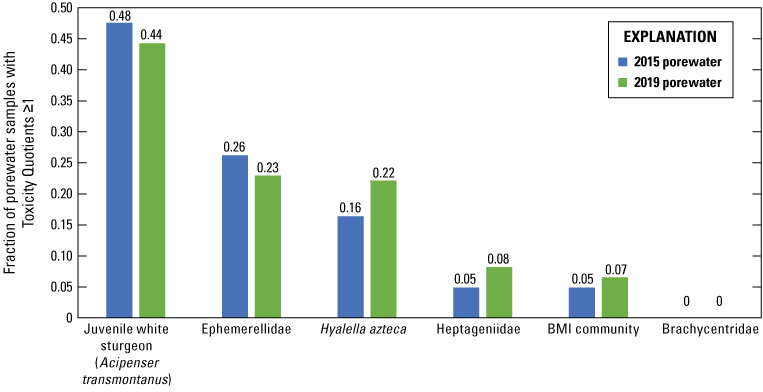
Decimal fractions of upper Columbia River Basin porewater samples with Toxicity Quotients greater than or equal to (≥) 1 for each organism, 2015 and 2019. BMI, benthic macroinvertebrates.
The two porewater datasets from the UCR were collected for different reasons. The 2015 study examined water compositions across the sediment-water interface and the 2019 study considered porewater compositions at AOIs in the basin (that is, reference, Deadmans Eddy at eddy and bar sites, China Bend, and Evans; fig. 1). The fraction of shallow and deep porewater samples that are predicted to have a TQ≥1 for juvenile white sturgeon, the Ephemerellidae family, and Hyalella azteca is greater than 0.2 whereas the fraction of porewater samples that have a TQ≥1 for the Heptageniidae family and BMI community is less than 0.1 (fig. 9). All surface water and other sampled depths for the Brachycentridae family have no samples with a TQ≥1. The bar samples at Deadmans Eddy have the most adverse impacts (that is, fractions range from 0.28 to 0.89) for all organisms except the Brachycentridae family. The fraction of China Bend samples that have a TQ≥1 for the most sensitive organisms (that is, juvenile white sturgeon, Ephemerellidae family, and Hyalella azteca) ranges from 0.33 to 0.64.
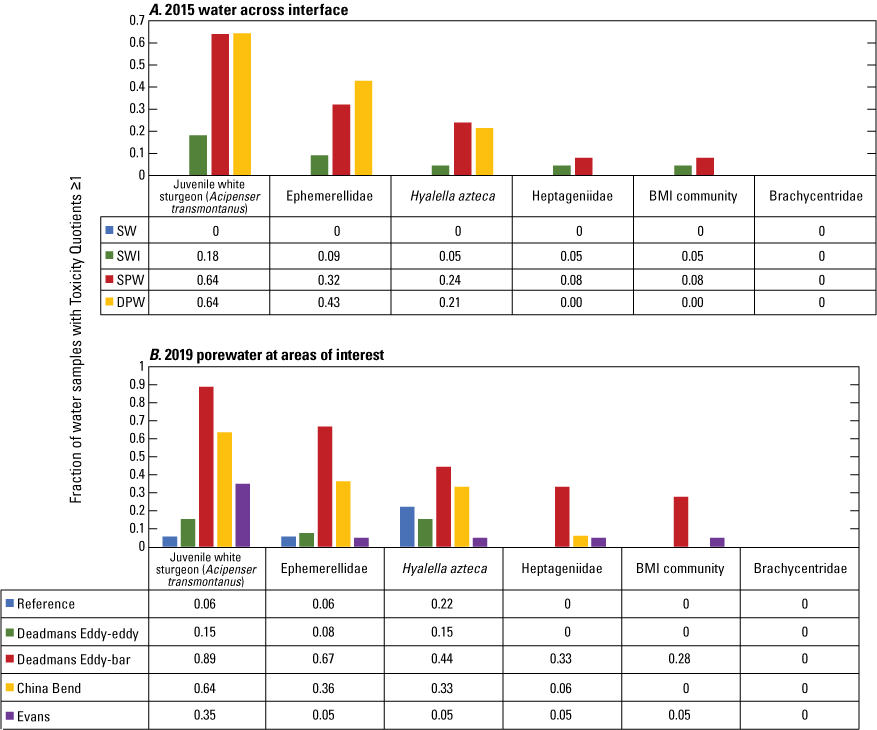
Decimal fractions of water samples across the interface (2015) and at areas of interest (AOIs; 2019) with Toxicity Quotients greater than or equal to (≥) 1 for each organism. SW, surface water; SWI, sediment-water interface; SPW, shallow porewater; DPW, deep porewater; BMI, benthic macroinvertebrates.
Field Porewater—Contributions of Hydrogen and Metals to the Toxicity Function (FTOXβ)
The composition of metal mixtures in UCR porewater varies and each organism has unique responses to the mixtures depending on metal potency and their sensitivity. Organism sensitivity, hydrogen and metal potency, accumulations of H and metals on the biological receptors, and exposure time contribute to toxicity functions (eqs. 1 and 2). Identification of the dominant ion or ions that result in adverse toxic conditions is important because of differences in the chemical behavior and toxicity of each metal to biota. Knowledge of the dominant metal that causes toxicity is critical for assessing risk and developing appropriate remediation strategies. TQs for each organism compared to contributions of H and metals to the toxicity function indicate that Cu is the major contributor to adverse conditions (that is, TQ≥1) in the UCR for most benthic biota (fig. 10). The exceptions are the insensitive Brachycentridae family and Hyalella azteca, where Cu and Pb contribute to the most toxic conditions.
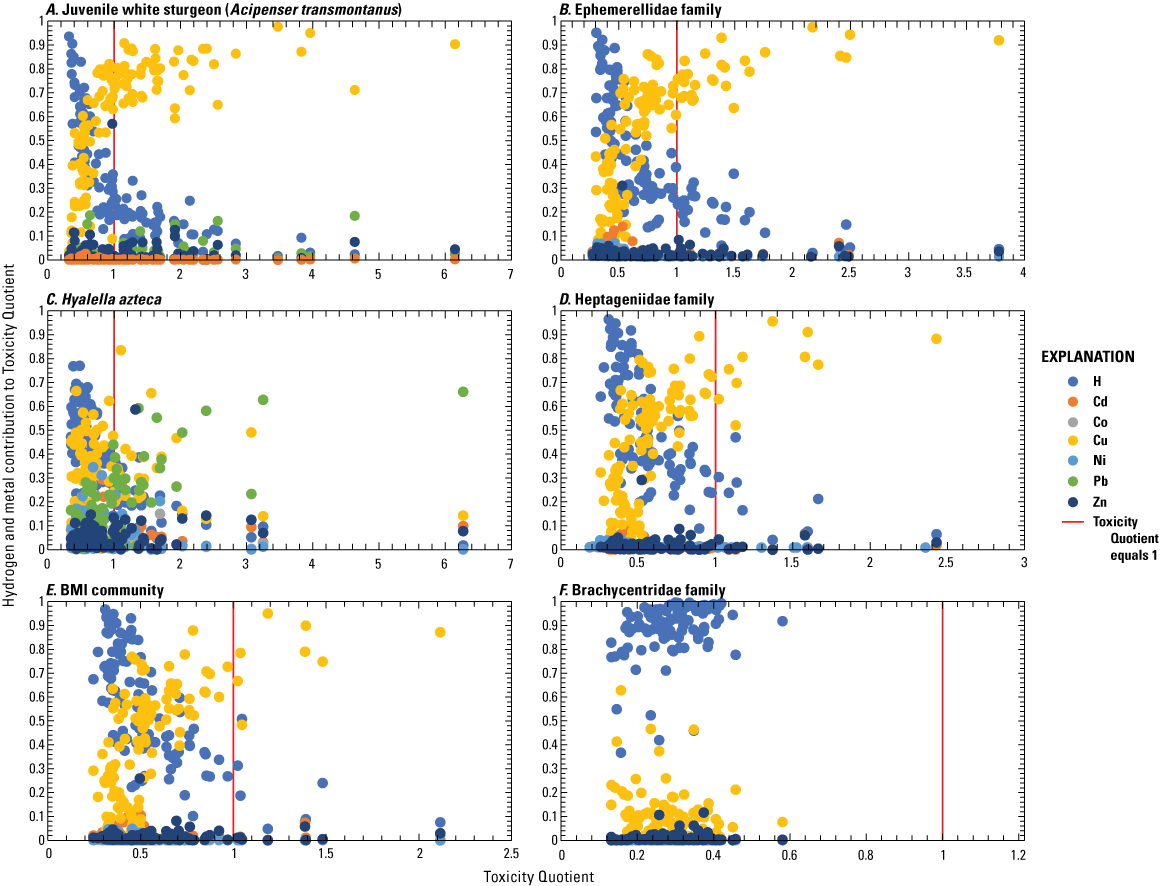
Toxicity Quotients compared to fractional contributions of hydrogen and each metal to the toxicity function (FTOXβ) for studied organisms in the upper Columbia River Basin porewater, 2019. Vertical lines indicate that TQ equals 1 (adverse conditions when TQ is greater than or equal to 1). BMI, benthic macroinvertebrates; H, hydrogen; Cd, cadmium; Co, cobalt; Cu, copper; Ni, nickel; Pb, lead; Zn, zinc.
Summary
Assessments of risk in metal-enriched environments involve consideration of many factors controlling the characteristics of metals and behavior of biological organisms. Modeling is only one component that provides insights into potential risks. This work uses a consistent modeling framework to evaluate sensitivities of multiple benthic organisms to hydrogen (H) and metals in porewater. The model includes accumulations of H and metals on biological receptors, relative toxicities or potencies of H and metals, sensitivities of organisms to H and metals, and times of exposure. Intrinsic potency coefficients for metals and sensitivities are unique to each organism. Outcomes of the model are the identification of a sentinel organism that is most sensitive to H and metals, a relative sensitivity sequence for all studied organisms, and identification of metals that contribute most to adverse conditions. Results indicate that aquatic organisms represent a spectrum of risk in metal-enriched systems. An organism with less sensitivity to metals will result in an evaluation of less risk than an organism that is more sensitive to metals.
The application of the WHAM-FTOXβ model to field porewater is new and further research is needed to evaluate the model and its assumptions in other aquatic systems. Several assumptions are inherent in the model: (1) the binding of H and metals to humic acid is a valid representation of biological receptors on all organisms, (2) binding to humic acid alone and not some other model formulation (for example, biotic ligand or biodynamic processes) is responsible for H and metal accumulation, (3) potency coefficients for individual metals are unique, and (4) sensitivities to hydrogen and metals vary among organisms. The laboratory results for the organisms in this study indicate that the assumption of unique intrinsic potency coefficients for metals for all organisms is not valid.
Of the studied aquatic benthic biota in the upper Columbia River Basin, juvenile white sturgeon (Acipenser transmontanus), mayfly of the Ephemerellidae family, and Hyalella azteca are most sensitive to H and metals in near surface porewater, whereas mayfly of the Heptageniidae family, a community of benthic macroinvertebrates (BMI), and caddisfly of the Brachycentridae family are the least sensitive. About one-half of all porewater samples have Toxicity Quotients greater than or equal to (>) 1 for juvenile white sturgeon and about one-quarter of the samples have Toxicity Quotients >1 for the Ephemerellidae family. From 16 to 22 percent of porewater samples have Toxicity Quotients >1 for Hyalella azteca and less than or equal to 8 percent of porewater samples are predicted to have adverse conditions for the BMI community and families of Heptageniidae and Brachycentridae. Shallow and deeper porewater and samples from the backwater bar at Deadmans Eddy and at China Bend have the largest fractions of porewater with adverse conditions to the most sensitive organisms. Copper (Cu) is responsible for the most toxic conditions for most metal sensitive organisms. Both Cu and Pb play important roles in the most toxic conditions for Hyalella azteca.
This study provides an evaluation of a modeling approach that predicts potential toxicity of metal mixtures to aquatic benthic biota. This approach, in conjunction with other environmental and biological information, can be used to evaluate ecological risk in metal-enriched systems affected by historical mining activities.
Acknowledgments
This study was done as part of the U.S. Department of the Interior's contribution to the upper Columbia River Remedial Investigation/Feasibility Study (RI/FS). Comments on presentations of this work by colleagues on the U.S. Department of Interior’s Technical Advisory Group and U.S. Environmental Protection Agency’s contractors were helpful. Reviews of the draft manuscript by Christopher Mebane and Patrick Moran and technical edits by John Osias (all with the U.S. Geological Survey) were much appreciated.
References Cited
Balistrieri, L.S., 2024, Using multiple metal mixture models to predict toxicity of riverine sediment porewater to the benthic life stage of juvenile white sturgeon (Acipenser transmontanus): Environmental Toxicology and Chemistry, v. 43, no. 1, p. 62–73, accessed May 7, 2024, at https://doi.org/10.1002/etc.5752.
Balistrieri, L.S., Mebane, C.A., Cox, S.E., Puglis, H.J., Calfee, R.D., and Wang, N., 2018, Potential toxicity of dissolved metal mixtures (Cd, Cu, Pb, Zn) to early life stage white sturgeon (Acipenser transmontanus) in the Upper Columbia River, Washington, United States: Environmental Science & Technology, v. 52, no. 17, p. 9793–9800, accessed May 7, 2024, at https://doi.org/10.1021/acs.est.8b02261.
Balistrieri, L.S., Mebane, C.A., and Schmidt, T.S., 2020, Time-dependent accumulation of Cd, Co, Cu, Ni, and Zn in natural communities of mayfly and caddisfly larvae—Metal sensitivity, uptake pathways, and mixture toxicity: Science of the Total Environment, 16 p., accessed May 7, 2024, at https://doi.org/10.1016/j.scitotenv.2020.139011.
Barnthouse, L., 2008, The strengths of the ecological risk assessment process—Linking science to decision making: Integrated Environmental Assessment and Management, v. 4, no. 3, p. 299–305, accessed May 7, 2024, at https://doi.org/10.1897/IEAM_2007-065.1.
Besser, J.M., Steevens, J., Kunz, J.L., Brumbaugh, W.G., Ingersoll, C.G., Cox, S., Mebane, C., Balistrieri, L., Sinclair, J., and MacDonald, D., 2018, Characterizing toxicity of metal-contaminated sediments from the Upper Columbia River, Washington, USA, to benthic invertebrates: Environmental Toxicology and Chemistry, v. 37, no. 12, p. 3102–3114, accessed May 10, 2023, at https://doi.org/10.1002/etc.4276.
Bryan, S.E., Tipping, E., and Hamilton-Taylor, J., 2002, Comparison of measured and modelled copper binding by natural organic matter in freshwaters: Comparative Biochemistry and Physiology Toxicology & Pharmacology, v. 133, nos. 1–2, p. 37–49, accessed June 11, 2024, at https://doi.org/10.1016/S1532-0456(02)00083-2.
Calfee, R.D., Little, E.E., Puglis, H.J., Scott, E., Brumbaugh, W.G., and Mebane, C.A., 2014, Acute sensitivity of white sturgeon (Acipenser transmontanus) and rainbow trout (Oncorhynchus mykiss) to copper, cadmium, or zinc in water‐only laboratory exposures: Environmental Toxicology and Chemistry, v. 33, no. 10, p. 2259–2272, accessed June 11, 2024, at https://doi.org/10.1002/etc.2684.
Cox, S.E., Brumbaugh, W.G., Balistrieri, L.S., Wolf, R.E., Adams, M., Spanjer, A.J., and Olsen, T.D., 2016, Trace elements concentrations in pore water and surface water near the sediment-water interface in the Upper Columbia River, Washington (2015): U.S. Geological Survey data release, accessed May 10, 2024, at https://doi.org/10.5066/F73N21GJ.
Environmental Resources Management, 2022, Quality assurance project plan and data summary report for—Phase 3 sediment toxicity study (2019): Prepared by Tech American Incorporated, Spokane, Washington, for Environmental Resources Management, Carpinteria, California, 6006 p., accessed June 11, 2024, at https://www.ucr-rifs.com/documents/studies/2019-sediment-toxicity/.
Harford, A.J., Bartolo, R.E., Humphrey, C.L., Nicholson, J.D., Richardson, D.L., Rissik, D., Iles, M., and Dambacher, J.M., 2022, Resolving ecosystem complexity in ecological risk assessment for mine site rehabilitation: Journal of Environmental Management, v. 319, 12 p., accessed May 9, 2023, at https://doi.org/10.1016/j.jenvman.2022.115488.
Ingersoll, C.G., and Mebane, C.A., eds., 2014, Acute and chronic sensitivity of white sturgeon (Acipenser transmontanus) and rainbow trout (Oncorhynchus mykiss) to cadmium, copper, lead, or zinc in laboratory water-only exposures. U.S. Geological Survey Scientific Investigations Report 2013–5204, 70 p., plus appendixes, accessed June 11, 2024, at https://doi.org/10.3133/sir20135204.
Johnson, A., Norton, D., Yake, B., and Twiss, S., 1990, Transboundary metal pollution of the Columbia River (Franklin D. Roosevelt Lake): Bulletin of Environmental Contamination and Toxicology, v. 45, no. 5, p. 703–710, accessed June 13, 2024, at https://doi.org/10.1007/BF01700989.
Lofts, S., 2012, User’s guide to WHAM7: NERC Centre for Ecology and Hydrology: Bangor, United Kingdom, UK Centre for Ecology and Hydrology, accessed March 14, 2012, at https://www.ceh.ac.uk/data/software-models/windermere-humic-aqueous-model-wham.
Mebane, C.A., Eakins, R.J., Fraser, B.G., and Adams, W.J., 2015, Recovery of a mining-damaged stream ecosystem: Elementa—Science of the Anthropocene, v. 3, 34 p., accessed June 13, 2024, at https://doi.org/10.12952/journal.elementa.000042.
Mebane, C.A., Schmidt, T.S., and Balistrieri, L.S., 2017, Larval aquatic insect responses to cadmium and zinc in experimental streams: Environmental Toxicology and Chemistry, v. 36, no. 3, p. 749–762, accessed June 13, 2024, at https://doi.org/10.1002/etc.3599.
Mebane, C.A., Schmidt, T.S., Miller, J.L., and Balistrieri, L.S., 2020, Bioaccumulation and toxicity of cadmium, copper, nickel, and zinc and their mixtures to aquatic insect communities: Environmental Toxicology and Chemistry, v. 39, no. 4, p. 812–833, accessed June 9, 2024, at https://doi.org/10.1002/etc.4663.
Norwood, W.P., Borgmann, U., and Dixon, D.G., 2013, An effects addition model based on bioaccumulation of metals from exposure to mixtures of metals can predict chronic mortality in the aquatic invertebrate Hyalella azteca: Environmental Toxicology and Chemistry, v. 32, no. 7, p. 1672–1681, accessed September 17, 2024, at https://doi.org/10.1002/etc.2236.
Paulson, A.J., and Cox, S.E., 2007, Release of elements to natural water from sediments of Lake Roosevelt, Washington, USA: Environmental Toxicology and Chemistry, v. 26, no. 12, p. 2550–2559, accessed June 13, 2024, at https://doi.org/10.1897/07-052.1.
Schmidt, T.S., Clements, W.H., Wanty, R.B., Verplanck, P.L., Church, S.E., San Juan, C.A., Fey, D.L., Rockwell, B.W., DeWitt, E.H., and Klein, T.L., 2012, Geologic processes influence the effects of mining on aquatic ecosystems: Ecological Applications, v. 22, no. 3, p. 870–879, accessed June 13, 2024, at https://doi.org/10.1890/11-0806.1.
Schmidt, T.S., Mebane, C.A., Miller, J.L., and Balistrieri, L.S., 2019, Effects of metal mixtures on aquatic insect communities in experimental streams—Cadmium (Cd), cobalt (Co), copper (Cu), nickel (Ni), and zinc (Zn): U.S. Geological Survey data release, accessed June 13, 2024, at https://doi.org/10.5066/P9XXBSAK.
Schmidt, T.S., Rogers, H.A., Miller, J.L., Mebane, C.A., and Balistrieri, L.S., 2018, Understanding the captivity effect on invertebrate communities transplanted into an experimental stream laboratory: Environmental Toxicology and Chemistry, v. 37, no. 11, p. 2820–2834, accessed June 11, 2024, at https://doi.org/10.1002/etc.4237.
Tipping, E., Lofts, S., and Sonke, J.E., 2011, Humic Ion-Binding Model VII—A revised parameterisation of cation-binding by humic substances: Environmental Chemistry, v. 8, no. 3, p. 225–235, accessed June 13, 2024, at https://doi.org/10.1071/EN11016.
Tipping, E., Lofts, S., and Stockdale, A., 2023, WHAM-FTOXβ—An aquatic toxicity model based on intrinsic metal toxic potency and intrinsic species sensitivity: Aquatic Toxicology, v. 258, 10 p., accessed June 13, 2024, at https://doi.org/10.1016/j.aquatox.2023.106503.
Tipping, E., Rey-Castro, C., Bryan, S.E., and Hamilton-Taylor, J., 2002, Al(III) and Fe(III) binding by humic substances in freshwaters, and implications for trace metal speciation: Geochimica et Cosmochimica Acta, v. 66, no. 18, p. 3211–3224, accessed June 11, 2024, at https://doi.org/10.1016/S0016-7037(02)00930-4.
U.S. Environmental Protection Agency, 2024, Upper Columbia River study area: U.S. Environmental Protection Agency web page, accessed September 6, 2024, at https://www.epa.gov/columbiariver/upper-columbia-river-remedial-site.
Wang, N., Ingersoll, C.G., Dorman, R.A., Brumbaugh, W.G., Mebane, C.A., Kunz, J.L., and Hardesty, D.K., 2014, Chronic sensitivity of white sturgeon (Acipenser transmontanus) and rainbow trout (Oncorhynchus mykiss) to cadmium, copper, lead, or zinc in laboratory water‐only exposures: Environmental Toxicology and Chemistry, v. 33, no. 10, p. 2246–2258, accessed June 12, 2024, at https://doi.org/10.1002/etc.2641.
Supplemental Information
Concentrations of chemical constituents in water are in either grams per liter (g/L) or milligrams per liter (mg/L).
For information about the research in this report, contact the
Director, Washington Water Science Center
U.S. Geological Survey
934 Broadway, Suite 300
Tacoma, Washington 98402
https://www.usgs.gov/centers/washington-water-science-center
Manuscript approved on January 21, 2025
Publishing support provided by the U.S. Geological Survey
Science Publishing Network, Tacoma Publishing Service Center
Edited by John Osias
Design and layout by Yanis Castillo
Disclaimers
Any use of trade, firm, or product names is for descriptive purposes only and does not imply endorsement by the U.S. Government.
Although this information product, for the most part, is in the public domain, it also may contain copyrighted materials as noted in the text. Permission to reproduce copyrighted items must be secured from the copyright owner.
Suggested Citation
Balistrieri, L.S., 2025, Sensitivity of benthic biota and toxicity of cadmium, cobalt, copper, nickel, lead, and zinc mixtures in Washington, United States, and British Columbia, Canada: U.S. Geological Survey Scientific Investigations Report 2025–5001, 19 p., https://doi.org/10.3133/sir20255001.
ISSN: 2328-0328 (online)
Study Area
| Publication type | Report |
|---|---|
| Publication Subtype | USGS Numbered Series |
| Title | Sensitivity of benthic biota and toxicity of cadmium, cobalt, copper, nickel, lead, and zinc mixtures in Washington, United States, and British Columbia, Canada |
| Series title | Scientific Investigations Report |
| Series number | 2025-5001 |
| DOI | 10.3133/sir20255001 |
| Publication Date | February 13, 2025 |
| Year Published | 2025 |
| Language | English |
| Publisher | U.S. Geological Survey |
| Publisher location | Reston, VA |
| Contributing office(s) | Geology, Minerals, Energy, and Geophysics Science Center |
| Description | v, 19 p. |
| Country | Canada, United States |
| State | British Columbia, Washington |
| Other Geospatial | Upper Columbia River basin |
| Online Only (Y/N) | Y |