Sidescan-Sonar Imagery of the Shoreface and Inner Continental Shelf, Wrightsville Beach, North Carolina


Discussion

The discussion is covered on the following pages:

Cross-Shore Transport: Bottom stresses due to waves are probably the major component contributing to the resuspension of sediment in rippled scour depressions (sea-floor depressions floored with rippled, coarse shell hash and gravel [RSDs] ) (Cacchione and others 1984; Black and Healy 1988). The principal geomorphic evidence used in this hypothesis is that the symmetrical, long-crested shape of individual ripples suggest that they are primarily wave generated. Cacchione and others (1984) suggest that the concurrent transporting action of a quasisteady current, such as a current flowing generally seaward across the shoreface and inner shelf during storm-induced downwelling events, is the likely cause for the RSDs. Black and Healy (1988), however, suggest that the ripples and the RSDs are formed as a direct result of bed mobilization by convergent waves.

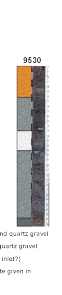
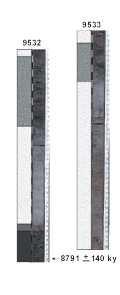
 Figure 8. Vibracores taken across the large rippled scour depression. Figure 8. Vibracores taken across the large rippled scour depression Figure 8. Vibracores taken across the large rippled scour depression Figure 8. Vibracores taken across the large rippled scour depression
Figure 8. Click for larger image with caption.
Following the model of Cacchione and others (1984), we infer that the enhanced bottom stresses produced by an intensified quasisteady current (e.g., downwelling currents due to storm set-up) and oscillatory flows (waves) are capable of transporting gravelly shellhash across the shoreface of Wrightsville Beach during storms, where it is concentrated in the floors of RSDs. Such currents may be laterally restricted or topographically enhanced (Cacchione and Drake 1990). The finer-grained sand in between the RSDs should also be mobilized during these storm events. However, the enhanced erosion within the RSDs due to the greater surface roughness, with localized scour around sediment particles on the bed, must inhibit deposition of fine sediment, thus maintaining the general morphology and textural quality of the RSDs. This provides a possible explanation for the apparent morphologic stability of the RSD through time (Figures 7 and Figure 8). The formation and maintenance of the RSDs may also involve cross-shore processes operating at the kilometer-scale of the entire shoreface. For example, variations in island shape (a concave- to convex-seaward shape change at the middle of the island (see Figure 1) and the presence of a large jetty and ebb-tidal delta complex at the downdrift end of the island may enhance seaward-directed flows during storm events from the northeast, as water accumulates in the bight formed by the jetty/delta and island. Thus, the excess water may escape the shoreface via strong downwelling currents that are topographically controlled by these larger-scale physiographic features, as well as the nearshore ridges (Figure 1) and smaller-scale RSD topography (Figures 1, Figure 7 and Figure 9 ). Topographic steering of downwelling flows has also been suggested by Cacchione and Drake (1990) for RSDs on the northern California shelf.
Back to Top
Previous Page Next Page
bar.gif (3055 bytes)
Based on E. Robert Thieler, William C. Schwab, Mead A. Allison, Jane F. Denny, and William W. Danforth, Sidescan-Sonar Imagery of the Shoreface and Inner Continental Shelf, Wrightsville Beach, North Carolina: U.S. Geological Survey Open-file Report OF 98-616.
bar.gif (3055 bytes)
Web page: Donna Newman
[an error occurred while processing this directive]