


Multidecadal Change in Pesticide Concentrations Relative to Human Health Benchmarks in the Nation’s Groundwater
Links
- Document: Report (4.14 MB pdf) , HTML , XML
- Data Release: USGS data release - Water quality data for multidecadal change in pesticide concentrations relative to human health benchmarks in the Nation’s groundwater
- NGMDB Index Page: National Geologic Map Database Index Page
- Download citation as: RIS | Dublin Core
Abstract
Groundwater-quality trend assessments identify aquifers that are responding to changes in pesticide use and the compounds that may pose a threat to water availability. The U.S. Geological Survey has been monitoring pesticide concentrations in groundwater for 25 principal aquifers across the conterminous United States since 1993. The groundwater well locations represent a range of soils, climate, and landforms. The wells are used to monitor groundwater underlying selected agricultural and urban settings and groundwater used for domestic supply. This study examined changes in relative concentrations, defined here as the percentage of wells with pesticide concentrations exceeding a human health benchmark (HHB). HHBs used in this report are legally enforceable drinking-water standards and nonenforceable drinking water levels. Relative pesticide concentration increases may lead to decreased water availability, as restrictions may be put in place for groundwater used as a drinking-water source.
This study focused on concentration changes in 22 pesticides that were included in laboratory analysis from 1993 to 2023. The analysis and interpretation of these pesticide concentrations in groundwater have been separated into approximate decadal intervals (decade 1 (1993–2001), decade 2 (2002–12), and decade 3 (2013–22). For one pesticide, 1,2-dibromo-3-chloropropane (DBCP), concentration data were also collected in decade 4 (2023–onward).
Atrazine, deethylatrazine, alachlor, prometon, and simazine were 5 pesticides detected at moderate concentrations (greater than 10 percent of the HHB but less than or equal to the HHB). The percentage of wells that had groundwater pesticide concentrations in the moderate concentration category decreased from 7 percent in decade 1 to 2 percent in decade 3. The agricultural networks had the highest percentages of wells with moderate concentrations, and these percentages decreased from 13 percent in decade 1 to 4 percent in decade 3. Moderate concentrations in the urban networks decreased between decades 1 and 2 from 4 percent to 0 percent. No moderate concentrations occurred in the urban networks in decade 3. The percentage of wells with moderate concentrations in the domestic supply networks (1 percent) was the lowest of all the network types and did not change across the three decades. Moderate atrazine or deethylatrazine concentrations occurred across all three decades in aggregated ecoregions representing similar soils, climate, and landforms in the Semiarid West, Midcontinent, and Northeastern United States. Moderate concentrations of prometon, alachlor, and simazine also occurred in the Midcontinent, Arid West, Northeast, South Atlantic Gulf, and Semiarid West regions, but the moderate concentrations did not persist across all three decades.
DBCP was the only pesticide that exceeded its respective HHB, and the exceedances occurred across all four decades. In this report, the DBCP analysis was limited to one well network in the Central Valley, California. Agricultural use of DBCP was suspended in 1977. Forty-five years after being banned, DBCP concentrations were greater than the maximum contaminant level of 2 micrograms per liter (µg/L), but the number of exceedances decreased from 50 percent to 15 percent of the samples between 1993 and 2023.
This assessment of decadal groundwater pesticide concentrations provides a characterization of changes in water availability because of pesticide contamination in areas where groundwater is used as a drinking-water source. The results highlight the importance of continued long-term monitoring and assessment of groundwater pesticides to identify locations and specific compounds that may pose a potential risk to human health.
Introduction
The widespread use of pesticides in both agricultural and urban environments to protect crops, lawns, gardens, ornamental plants, and turf from diseases, weeds, and insect damage (Hoffman and others, 2000; Coupe and Capel, 2016) has led to the contamination of groundwater resources (Gilliom, 2007; DeSimone and others, 2014; Remigio and others, 2024). The time lag between use on the land surface and detection in groundwater can span years or decades, and the potential for increasing pesticide concentrations is of particular concern in areas where groundwater is heavily used as a drinking-water source. In the United States, groundwater from domestic supply wells is used as a drinking-water source for 13 percent of the U.S. population (Dieter and others, 2018; Johnson and others, 2019). Domestic-supply wells are not regulated by state or federal law, and homeowners are responsible for the maintenance and any monitoring of these drinking-water sources (Leistra and Boesten, 1989; DeSimone, 2009; Tesoriero and others, 2024). Pesticides in groundwater can become problematic from a human health perspective if concentrations are elevated relative to human health benchmarks (HHBs) and the groundwater source is used as a drinking-water source (Gilliom and others, 2006; McKnight and others, 2015; Hakoun and others, 2017; McGinley and others, 2023). Multidecadal analysis of trends in groundwater concentrations can demonstrate the time scales over which groundwater systems respond to changes in pesticide use and identify compounds that may pose a threat to water quality before large-scale problems occur.
Three decades ago, the U.S. Geological Survey (USGS) established a water quality monitoring network through the National Water-Quality Assessment (NAWQA) Program that is currently known as the National Water Quality Network (NWQN) (Gilliom and others, 2006; Rowe and others, 2013). The groundwater (GW) portion of the network was designed to provide an overview of water quality underlying areas of agricultural and urban land use and domestic drinking-water supply wells. The USGS monitors pesticide concentrations in 59 well networks that are distributed throughout eight aggregated ecoregions (Pacific Northwest, Pacific Coast, Arid West, Semiarid West, Mountain West, Midcontinent, South Atlantic Gulf, and Northeast). These aggregated ecoregions represent a range of soils, climate, and landforms in the conterminous United States. The NWQN-GW is the largest spatially distributed groundwater-quality monitoring network in the world (Lindsey and others, 2023). The land use networks (agricultural and urban) capture the quality of groundwater for the two different land use types, whereas the domestic supply wells capture the quality of groundwater used as a drinking-water source.
Groundwater pesticide concentration data from these monitoring locations supported a prior multidecadal pesticide assessment. The analysis of 80 pesticide concentrations in groundwater was separated into approximate decadal intervals (decade 1 [1993–2001], decade 2 [2002–12]). The prior study included an analysis of about 80 parent and degradate compounds; transformation of parent compounds by chemical, photochemical, or biological reactions in the environment produces degradate pesticide compounds in the environment. Groundwater pesticides were compared to HHBs to assess the potential risk to human health in locations where groundwater is used as a drinking-water source. HHBs used in this report are legally enforceable drinking-water standards and nonenforceable drinking water levels (U.S. Environmental Protection Agency, 2018, 2021; U.S. Geological Survey, 2024). More information about the HHBs is provided in the Methods Section, “Human health benchmarks for potential toxicity.”
Ten years have passed since the previous national-scale analysis of changes in groundwater pesticide concentrations was completed. Given the potential risk of pesticides to reducing water availability, particularly in regions where groundwater is a drinking-water source, another analysis is warranted. The availability of additional data, from 2013 through 2024, provides an opportunity to do an updated assessment for the conterminous United States.
Purpose and Scope
Through the 2009 SECURE Water Act, the U.S. Congress tasked the USGS to perform regular, comprehensive water availability assessments (Alley and others, 2013; Evenson and others, 2018). The USGS completed an assessment of water supply, quality, and use for the period 2010–20 (Stets, 2025). The results from this assessment can be used to inform water resource managers about the availability of the Nation’s freshwater, with respect to both quantity and quality, for human and environmental needs. Groundwater quality is a key water resources domain that can affect water availability trends (Stackpoole and others, 2023), and the purpose of this multi-decadal groundwater pesticide trends study is to assess changes in concentrations within the NWQN-GW. An analysis of groundwater pesticide concentrations over time can be used to identify which groundwater systems are responding to changes in pesticide use and transport. The results of 2 separate pesticide components in this report can also be used to determine which compounds may pose a threat to human health where groundwater is used as a drinking-water source.
The first component of this study assessed pesticide concentrations by network type and aggregated ecoregion and is referred to as the “National Groundwater Network Decadal Pesticide Analysis” in this document. Relative pesticide concentrations for pesticide compounds were estimated from 59 groundwater-quality monitoring networks distributed in the 25 principal aquifers of the conterminous United States. Relative concentrations are defined here as the percentage of wells with pesticide concentrations exceeding a HHB. The total number of pesticides included in this study is less than the previous national assessment (n=80) (Toccalino and others, 2014), because only 21 compounds were included in laboratory analysis from 1993 to 2023 and also had HHBs to evaluate potential risk to human health. Changes in the relative concentrations of groundwater pesticides were examined by network type (agricultural, urban, and domestic supply). In addition to the network type analysis, relative concentrations were examined across eight aggregated ecoregions (Pacific Northwest, Pacific Coast, Arid West, Semiarid West, Mountain West, Midcontinent, South Atlantic Gulf, and Northeast) with similar soils, climate, and landforms.
The second component of the study is referred to as the “DBCP in the Central Valley, Calif. change analysis” and focused on concentration changes for an additional pesticide, DBCP, in one well network in the Central Valley, California. The scope is limited to that network because prior USGS groundwater quality studies that focused on DBCP in the Central Valley found DBCP concentrations in groundwater above its HHB (Burow and others, 1998; Burow and others, 2007). This study serves as an update on DBCP trends for that location.
Methods
This study examined the proportion of pesticide concentrations relative to HHBs from 1993 to 2023. In this section, we describe the monitoring network for data collection, laboratory pesticide analysis, HHBs, and the analytical methods used for the “National Groundwater Network Decadal Pesticide Analysis” and the “DBCP in the Central Valley, Calif. change analysis.”
Groundwater Pesticide Sampling—National Groundwater Network
The national groundwater network decadal pesticide analysis focused on samples collected from the USGS NWQN-GW. The current study presents pesticide data from 59 well networks (Lindsey and Kingsbury, 2024). The groundwater quality monitoring networks are defined as groups of wells with similar characteristics, and each network was originally designed with 20 to 30 wells using spatially distributed randomized sampling (Scott, 1990; fig. 1). Samples were collected from each network about every 10 years between 1993 and 2022. The alphanumeric network identifier is an abbreviation indicating the drainage basin name and the network type, such as ccptlusag2b for the Central Columbia Plateau (ccpt) land use study network (lus) focused on agricultural land use (ag) (table 1). The first decade of groundwater pesticide sampling was 1993–2001, the second was 2002–12, the third was 2013–22, and the fourth decade of sampling started in 2023. Herein, the term “decadal sampling” refers to the frequency of water quality sampling in this network. The “National Groundwater Network Decadal Pesticide Analysis” examines data from decades 1, 2, and 3, but the “DBCP in the Central Valley, Calif. change analysis” examines data from decades 1-4.
During each year in decades 1 and 2, pesticide samples were collected from 20 to 30 wells in 8 to 10 networks, resulting in all networks being sampled within a 10 year period. Because groundwater pesticide concentrations in exceedance of HHBs were not detected in the first two decades of monitoring and analysis (Toccalino and others, 2014), the number of monitored wells where groundwater pesticide samples were collected was reduced. In the third decade, the rotating schedule of network sampling was maintained, but the collection of pesticide samples was reduced to 8 wells within each network. Pesticide samples from groundwater were collected from these locations following protocols established by the USGS; raw samples were collected (before any treatment for domestic well water), and they were passed through 0.7-micrometer filters (Lapham and others, 1995; Koterba, 1998).
The objective of this monitoring framework was to evaluate the quality of groundwater underlying selected agricultural (number of well networks [n]=24) and urban (n=15) settings or groundwater used for domestic supply (n=20) within 25 principal aquifers of the United States (Gilliom and others, 1995). Wells in the agricultural and urban land use networks are typically shallower (average well depth, 6 meters [m] below surface) than wells in the domestic supply networks (average well depth, 43 m below surface), but well depths can vary by aquifers (Lindsey and Rupert, 2012) (table 1). For the purposes of discussion, wells in agricultural networks are referred to as “agricultural wells.” Comparable language is used for wells in urban networks. Previous studies have referred to the well networks representing the depth zone used for domestic supply as major aquifer studies (Lindsey and others, 2023). Those networks are referred to herein as “the domestic supply network type.”
The well networks are distributed across seven of the eight aggregated ecoregions (Pacific Northwest, Pacific Coast, Arid West, Semiarid West, Midcontinent, South Atlantic Gulf, and Northeast), which are regions of the conterminous United States with similar soils, climate, and landforms. There were no wells with pesticide monitoring in the Mountain West. These aggregated ecoregions have been used in prior groundwater-quality trend reports (Lindsey and others, 2023). The aggregated ecoregions combine multiple factors that affect groundwater quality such as soils, climate, and landforms into large, relatively homogenous units (Commission for Environmental Cooperation, 1997), with the latest ecoregions reflecting a regrouping of the EPA Level 3 ecoregions (Commission for Environmental Cooperation, 2021; Lindsey and others, 2023). The boundaries of the 59 well networks shown in figure 1 fall within the aggregated ecoregions. The boundaries of the aggregated ecoregions cross the boundaries of the principal aquifers shown in figure 1.
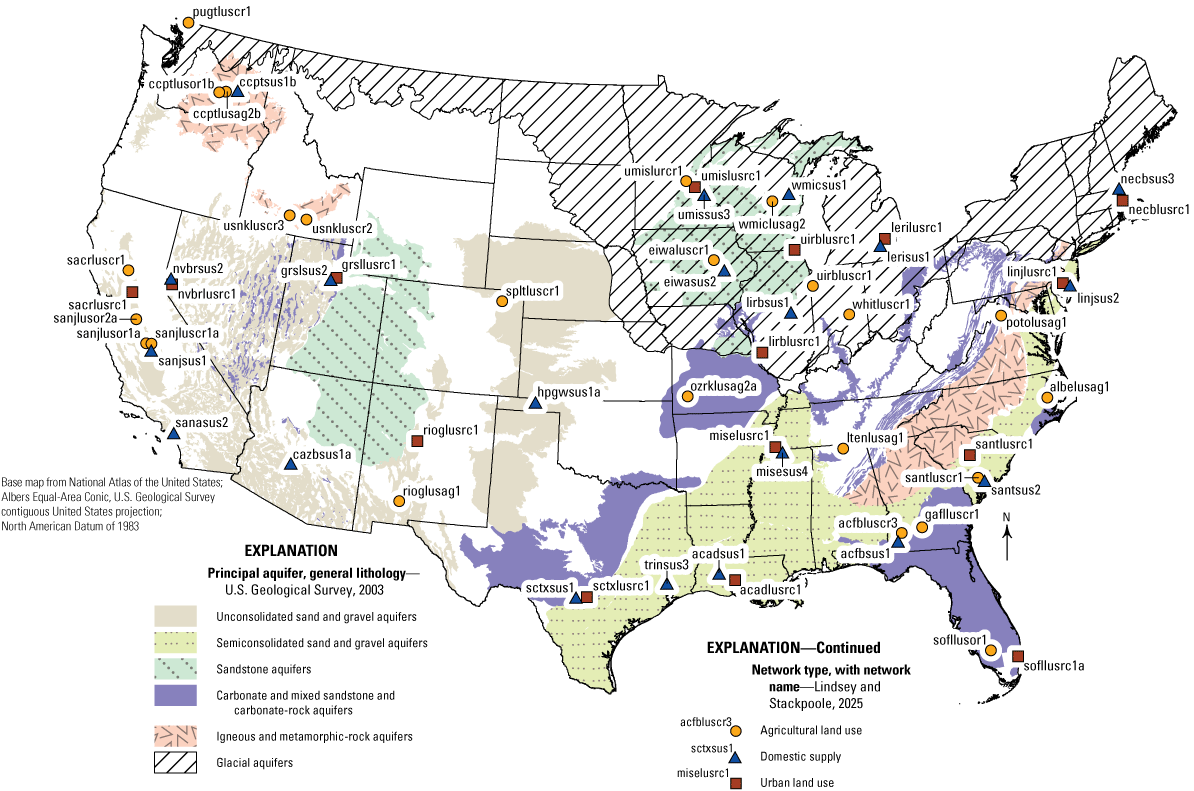
Map showing the U.S. Geological Survey National Water Quality Network for Groundwater and the associated principal aquifers and dominant lithology. Symbols are on the centroid of each network type.
Table 1.
Overview of pesticide sampling across 59 well networks in the United States, including network identifiers, drainage basin-based study units, principal aquifer systems, network types, years sampled across three decades, the number of wells sampled, median well depth (meters), and aggregated ecoregion.[ID, identifier]
Groundwater Pesticide Sampling—1,2-Dibromo-3-Chloropropane (DBCP) in the Central Valley, California
The 1,2-dibromo-3-chloropropane (DBCP) in the Central Valley, Calif. change analysis relied on two sets of sampling data. Decadal samples of DBCP were collected from one well network in the San Joaquin-Tulare River Basin; refer to the sanjlusor1a network in figure 1 and table 1. The decadal concentration samples were collected from 36 wells in 1993, 2001, 2013, and 2023. The USGS also evaluated changes in DBCP concentrations at shorter time scales through a type of NWQN-GW well network known as an Enhanced Trends Network (ETN; Mathany and others, 2019). The ETN in the Central Valley aquifer of California collected bimonthly DBCP samples from a 98-m deep supply well and a 71-m deep monitoring well from 2014 to 2019 (Saraceno and others, 2018). Unfiltered DBCP samples were collected before any treatment for domestic well water (Lapham and others, 1995; Koterba, 1998).
Laboratory Pesticide Analysis
Water quality samples were analyzed for pesticide concentrations at the USGS National Water Quality Laboratory (NWQL) in Denver, Colorado. Water quality samples for the national groundwater network decadal pesticide analysis were analyzed using two different laboratory methods. Samples collected in decades 1 and 2 were analyzed using gas chromatography/mass spectrometry (Zaugg and others, 1995) or high-performance liquid chromatography (Werner and others, 1996; Furlong and others, 2001), also known as NWQL Laboratory Schedule 2033. Decade 3 samples were analyzed at the NWQL using a broad-spectrum liquid chromatography-tandem mass spectrometry method (Sandstrom and others, 2015), also known as NWQL Laboratory Schedule 2437. The change in laboratory analytical methods between decades 2 and 3 has the potential to introduce bias into the analysis of datasets that span all three decades. For this report, the relative comparability of the older and newer concentration data was confirmed based on the findings of a prior USGS report from Martin and others (2017), which compared the data from the 2033 method to the 2437 method. Martin and others (2017) focused on data collected from surface waters and incorporated adjustments for changes in laboratory recovery as assessed through laboratory spikes for 21 pesticide compounds included in this report. Martin and others (2017) found that the relation between the atrazine concentrations based on the older and newer NWQL methods was weak at concentrations below 0.01 micrograms per liter (µg/L). For concentrations greater than 0.1 µg/L, the relation between concentrations from both methods was close to a 1:1 line (fig. 2). The results of the two different analytical methods are comparable at concentrations relevant to reporting on potential risk to human health, that is, at concentrations greater than 10 percent of the human-health benchmark. A relation similar to the one found for atrazine was also observed for the other pesticides that have been commonly detected in groundwater (metolachlor, prometon, and simazine). Therefore, for this report, we treat pesticide data from decades 1 and 2 as comparable to decade 3.
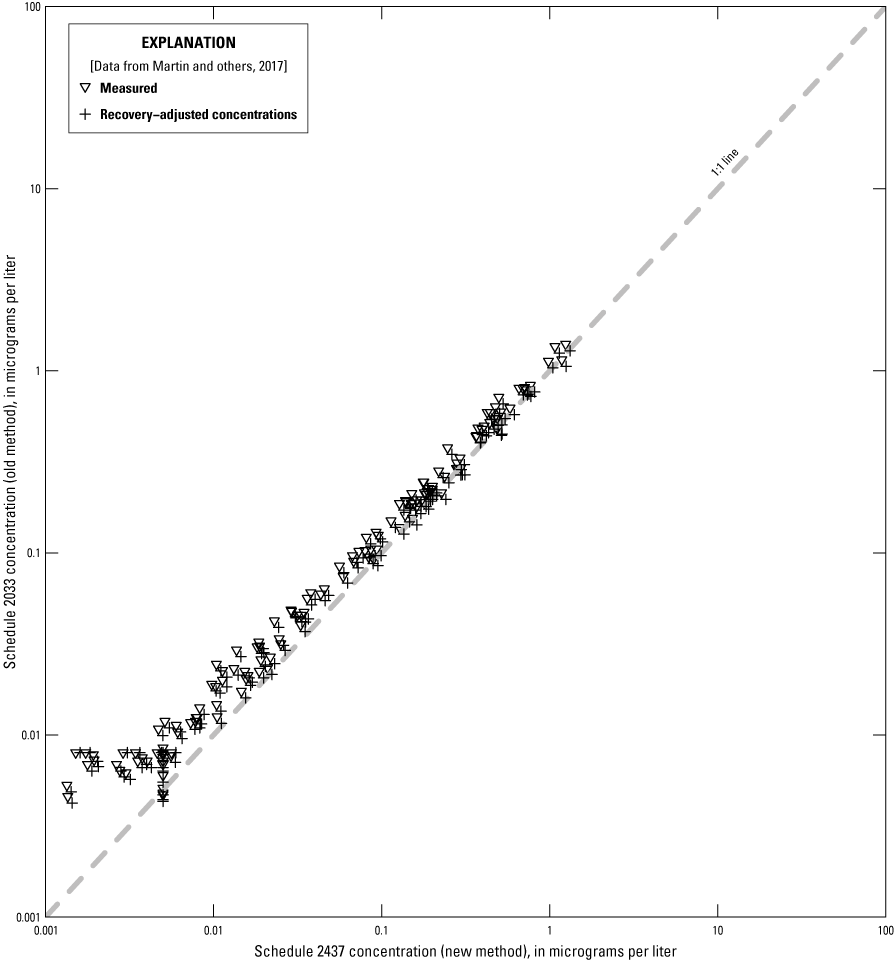
Graph showing the comparison of pesticide concentrations determined by two different analytical methods (2033 older and 2437 newer) during the period of study. This example plot shows that for atrazine, the results of the two different analytical methods are comparable at concentrations relevant to reporting on potential risk to human health, that is, at concentrations greater than 0.3 ug/L, which is the concentration that is 10 percent of the human health benchmark.
Water quality samples for the DBCP concentration change analysis in the Central Valley, Calif. relied on a different laboratory analysis because DBCP is a volatile organic compound. In decade 1, the USGS DBCP laboratory analysis method had a reporting level of 0.03 µg/L (Fishman, 1993). An enhanced method, to measure concentrations for more compounds, at lower concentrations, was implemented, which resulted in a lower reporting level of 0.02 µg/L (Rose and others, 2016).
Similar to prior USGS pesticide (Toccalino and others, 2014) and DBCP analysis (Rowe and others, 2007) studies, this report analyzed data across multiple laboratory schedules and laboratory reporting levels (LRL). Results that are greater than the LRL are reported, and results that are less the LRL are reported as nondetects (Bonn, 2008). The highest magnitude LRL for all decades was used in our analysis and this value is included in table 2.
Quality-assurance and quality-control (QAQC) samples were collected for all 22 pesticides. These QAQC field blank samples were used to evaluate the potential for sample collection, handling, and analysis to introduce contamination to water quality samples. The QAQC field replicate samples are used to characterize the variability of analytical results caused by random measurement error, and to estimate any positive or negative bias that might result from method performance. QAQC matrix spikes prepared in the field or laboratory samples were used to assess the effects of the sample matrix and (or) analyte degradation between sampling and analysis (Rowe and others, 2007, Toccalino and others, 2014). We did not identify any QAQC issues that would affect the results of our analysis. The accepted holding time for pesticide samples is 14 days (Sandstrom and others, 2015; Rose and others, 2016); we did not delete any data because of holding time issues. The quality of pesticide data collected in the third decade of sampling is summarized in Bexfield and others (2020), and QAQC of DBCP data for the public supply wells is the same as it is for other groundwater wells and is summarized in Bexfield and others (2022a; 2022b). The data analyzed in this study are available at Lindsey and Stackpoole (2025).
Table 2.
Characteristics of the 22 pesticides and their corresponding human health benchmarks (HHBs), including magnitude and type, in relation to multidecadal change in the Nation’s groundwater.[Reporting Level is the maximum reporting level present in the dataset for this report. Individual samples with raised reporting limits were removed if they were greater than 5 percent of the respective HHB. Samples with raised reporting limits were retained if the value was less than or equal to 5 percent of the HHB. µg/L, microgram per liter; HHB, human health benchmark; MCL, maximum contaminant level; HHBP-NC, Chronic, human health benchmark for pesticides noncancer chronic; HHBP-NC, Acute, human health benchmark for pesticides noncancer acute; HBSL-C, health based screening levels cancer; HBSL-NC, health based screening levels noncancer]
Cancer HBSLs are a range. The range represents a one-in-one million (10-6) to one-in-ten thousand (10-4) cancer risk range. The lower value of the range (30 ug/L) was used in this study’s analysis.
Reference for this benchmark is U.S. Geological Survey (2024). This value is the acute HHBP for children; the acute population adjusted dose adequately accounts for all chronic toxicity, including carcinogenicity.
Human Health Benchmarks for Potential Toxicity
The national groundwater network and the DBCP in the Central Valley, Calif. change analyses examined pesticide concentrations relative to HHBs, defined here as relative concentrations. HHBs were used to classify groundwater pesticide concentrations into one of four categories. Pesticide concentrations above an HHB were defined as high. Concentrations that exceeded 0.10 of the HHB but were lower than or equal to the HHB were moderate. Concentrations that exceeded 0.05 of the HHB but were lower than or equal to 0.10 of the HHB were defined as low-moderate. Concentrations lower than or equal to 0.05 of the HHB were low (fig. 3A). These definitions are modified from the definitions used in prior USGS groundwater quality assessment studies (Belitz and others, 2022), with the addition of the low-moderate category.
The HHBs used for this study were the U.S. Environmental Protection Agency (EPA) maximum contaminant levels (MCLs) (U.S. Environmental Protection Agency, 2018). MCLs, established through the Safe Drinking Water Act of 1974 (42 U.S.C. 300(f)), are legally enforceable drinking-water standards for public water supplies. If MCLs were not available, then the EPA human health benchmarks for pesticides (HHBPs) (U.S. Environmental Protection Agency, 2021) or the USGS Health-Based Screening Levels (HBSLs) (U.S. Geological Survey, 2024) were used. HHBPs are nonenforceable drinking water levels that offer information about adverse health effects from drinking water exposure to contaminants that have no drinking water standards or health advisories, and they include noncancer benchmarks for acute (one-day) and chronic (lifetime) drinking water exposures. HBSLs are also nonenforceable guidelines for pesticides for which the EPA has not issued a drinking water health advisory or set an enforceable Federal drinking water standard. The HBSLs are determined only for those compounds that do not already have a MCL or a HHBP. HBSLs are typically determined using the same methodology that the EPA uses for chronic non-cancer HHBPs, with the exception of permethrin, for which the HHBP non cancer acute benchmark was used; the USEPA determined that there is no lower concentration level to protect against chronic or carcinogenic toxicity (U.S. Geological Survey, 2024).
Only pesticides with an HHB were included in the multidecadal pesticide change analysis. Similar to other groundwater pesticide assessments, the assumption of equimolar toxicity described in Bexfield and others (2021) was used for pesticide parent products and their degradates in this analysis. The results represent the number of wells with an exceedance for at least one pesticide; if multiple pesticides exceeded a HHB in a well, only one HHB exceedance was counted for that well. As a result, changes in the potential combined risk of mixtures of pesticides are not addressed in this study.
For most of the compounds analyzed in this study, the magnitude of the HHBs was at least 100 times the magnitude of the highest LRL; therefore, the changing LRLs over time did not affect the application of the method of reporting concentrations relative to HHBs for these compounds. However, for 2 compounds, terbufos and methyl-parathion, the highest LRL was greater than both 10 percent and 5 percent of the HHB. These two pesticides are less likely than the others to be quantified when they are present in groundwater at concentrations near their HHBs, meaning these compounds may be reported as nondetects, when they are actually in the sample (Bexfield and others, 2020). Terbufos and methyl-parathion were only evaluated for potentially exceeding a HHB, not the moderate or low-moderate categories. The highest LRL that we used for DBCP was greater than both 10 percent and 5 percent of the HHB, but not higher than the HHB. We only focused on reporting changes in concentration greater than the HHB for this compound.
National Groundwater Network Decadal Pesticide Analysis
The change in relative concentrations of 21 pesticides sampled across all 59 networks over three decades is presented by category (high, moderate, low-moderate, and low) for each network type and aggregated ecoregion. Toccalino and others (2014) used a different method, the Wilcoxon-Pratt signed-rank test, to determine changes in groundwater pesticide concentrations between decades 1 and 2. The Wilcoxon-Pratt signed-rank test (Pratt, 1959) is a nonparametric test that can be used for analysis of change between matched pairs of wells and two sampling periods. This test was used because 20 to 30 matched-pair trend tests within a well network were available for both decades 1 and 2. This study employed a more conservative, semi-quantitative approach because fewer wells were represented in decade 3, as compared to decades 1 and 2. In the third decade, the rotating schedule of network sampling was maintained, but the collection of pesticide samples was reduced to 8 wells within each network.
DBCP in the Central Valley, California Change Analysis
DBCP concentrations were obtained once per decade from 36 wells over four decades from one network in the Central Valley, Calif. The Wilcoxon-Pratt signed-rank test was used for the analysis of change between two sampling periods, and the Regional Kendall test was used to evaluate changes in DBCP concentration across all four sampling periods (Frans and Helsel, 2005; Helsel and others, 2006). The Regional Kendall test is an adaptation of the Seasonal Kendall test, where the wells were used instead of season of year as the “season” variable.
Bimonthly concentrations from two monitoring wells from 2014 to 2019 to the MCL (0.2 µg/L) were also collected. A Mann-Kendall trend test was used to evaluate temporal changes in these bimonthly data for the period 2014–19 (Helsel and others, 2020). The Mann-Kendall trend test can be used to test for monotonic trends, either a decrease or an increase in concentrations over time, and it does not assume that the data are normally distributed. The statistical analyses performed for this study were considered significant at a probability value (p-value) of less than or equal to 0.1.
Results
National Groundwater Network Decadal Pesticide Analysis
No pesticides were detected at high concentrations, and five pesticides were detected at moderate concentrations (alachlor, atrazine, deethylatrazine [DEA], prometon, and simazine). The percentage of all wells that had pesticide concentrations in the moderate category decreased each decade, from 7 percent in decade 1 to 2 percent in decade 3 (fig. 3A). Alachlor and prometon were detected at moderate concentrations in decade 1. Simazine was detected at moderate concentrations in decades 1 and 3. Atrazine or DEA were detected at moderate concentrations in decades 1, 2, and 3.
The agricultural wells were the well type that had the highest percentages of moderate concentrations, and these percentages decreased each decade (fig. 3B). Moderate concentrations were generally less frequent in the urban as compared to the agricultural wells. Moderate concentrations in the urban wells decreased between decades 1 and 2 from 4 percent to 0 percent and remained at 0 percent in decade 3. The percentage of domestic wells with moderate concentrations (1 percent) was the lowest of all the network types and did not change across the three decades.
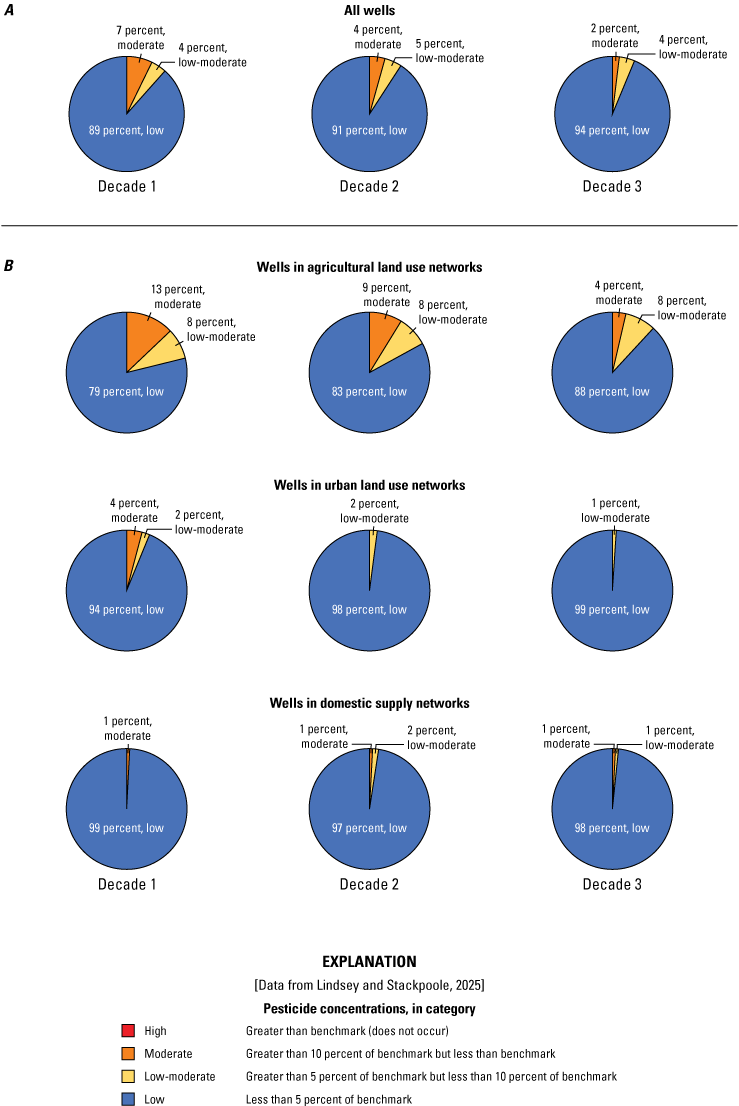
Graph showing the percentage of pesticide detections in each concentration category (high, moderate, low-moderate, and low) for each decade. A, all wells and B, wells separated out by network type: agricultural land use, urban land use, and domestic supply for the period 1993–2022.
Four pesticides (alachlor, atrazine, DEA, and simazine) were detected at low-moderate concentrations. The percentage of wells with detections in that category showed little change across all three decades (fig. 3A). The highest percentages of low-moderate concentrations occurred in the agricultural wells and remained at about 8 percent for each decade (fig. 3B). The percentage of wells with low-moderate concentrations also had little change across the decades in the urban and domestic supply wells.
Pesticides were detected at moderate or low-moderate concentrations during at least one decade in 6 of the 8 aggregated ecoregions. The Northeast, Midcontinent, and the Semiarid West aggregated ecoregions had wells with moderate concentrations in all three decades (figs. 4A and 4B). Atrazine or DEA occurred at moderate concentrations in 6 of the 8 aggregated ecoregions in at least one of the three decades. Moderate concentrations of alachlor, prometon, and simazine were also found in groundwater from some NWQN-GW wells in decades 1 and 3. The Pacific Coast was the only ecoregion where groundwater pesticide monitoring took place in all three decades, and no pesticides were detected in this ecoregion at moderate concentrations. No pesticide monitoring occurred in the Mountain West ecoregion.
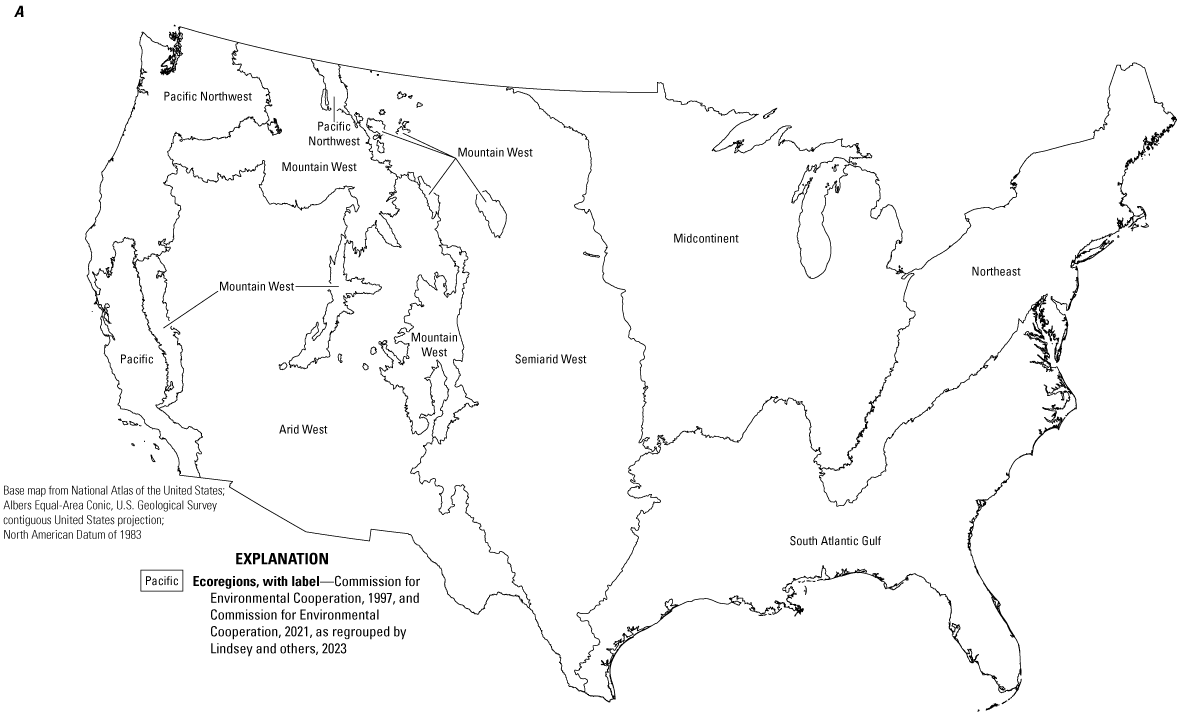
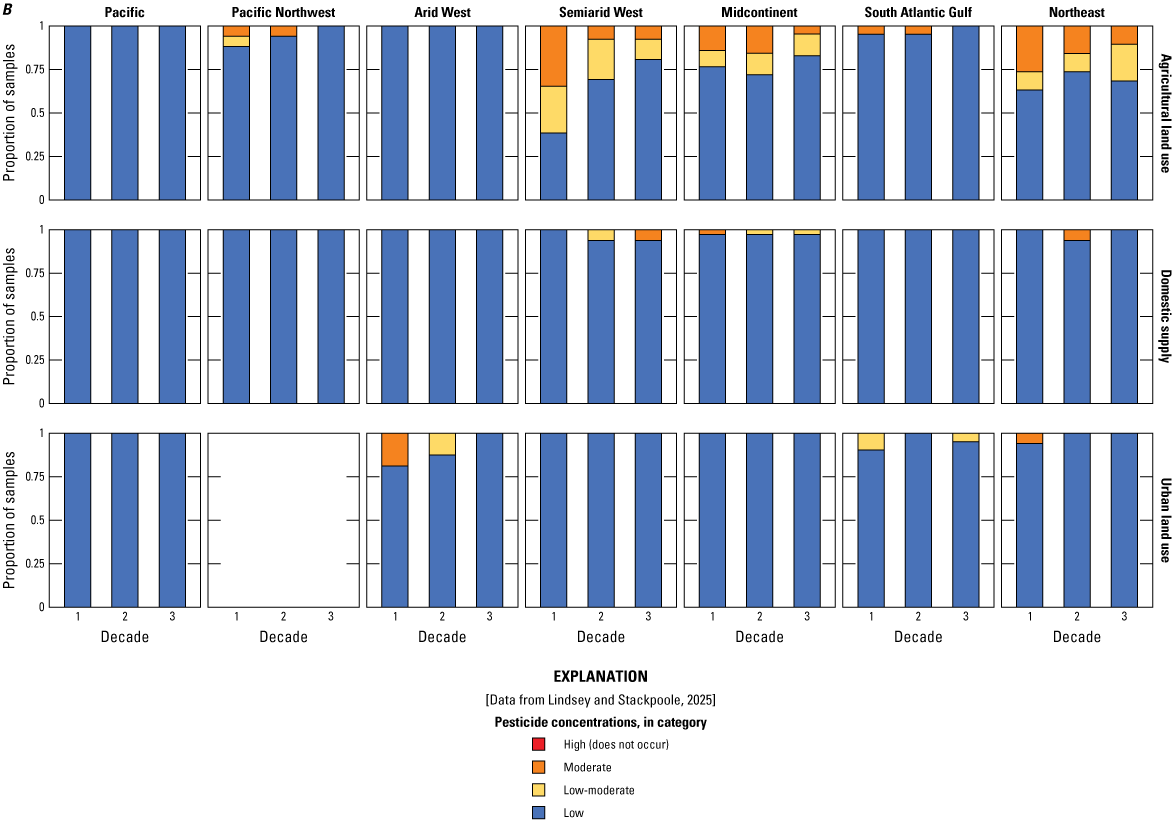
A, Map showing the conterminous United States with aggregated ecoregions: Pacific, Pacific Northwest, Arid West, Semiarid West, Midcontinent, South Atlantic Gulf, and Northeast. B, Graph showing changes in groundwater pesticide concentrations relative to a human health benchmark by aggregated ecoregion and land use for the period 1993–2022. Stacked bar charts are arranged from left to right according to their geographic location by aggregated ecoregions: Pacific, Pacific Northwest, Arid West, Semiarid West, Midcontinent, South Atlantic Gulf, and Northeast. There is no bar plot for the urban network in the Pacific Northwest ecoregion because there is no monitoring network for this land use type in that ecoregion. There are no bar plots for the Mountain West because there was no groundwater pesticide monitoring in that aggregated ecoregion.
DBCP in the Central Valley, California Change Analysis
One network in the Central Valley had DBCP concentrations that exceeded the 0.2 µg/L HHB in the first and second decades of sampling, so continued monitoring of DBCP concentrations in 20–30 wells in this network continued into the third and fourth decades of sampling. The results of the Wilcoxon-Pratt signed rank test indicated statistically significant decreases from the first to second decade (p=0.058) and the second to third decade (p=0.002), but there was no statistically significant change from the third to the fourth decade (p=0.34) (fig. 5). The Regional Kendall test for changes at the network level indicated a statistically significant decrease in DBCP concentrations from 1993 to 2024 (p=0.0006). The percentage of samples exceeding the HHB dropped from 50 percent to 15 percent, most concentrations were less than the MCL in the fourth decade of sampling.
The Mann-Kendall trend test for DBCP concentrations in seasonal samples from the two wells sampled from 2014 to 2019 in the ETN indicated a significant negative trend for each well (monitoring well, tau=−0.6061, and p-value=0.0061; supply well, tau=−0.6095, p-value=0.0001). In the shallower monitoring well, (71-m deep), DBCP concentrations were greater than the HHB for the entire sampling period. In the deeper supply well, (98-m deep), all measured DBCP concentrations were less than the HHB by 2016 and remained less than the HHB to the most recent sampling in 2019 (fig. 6).
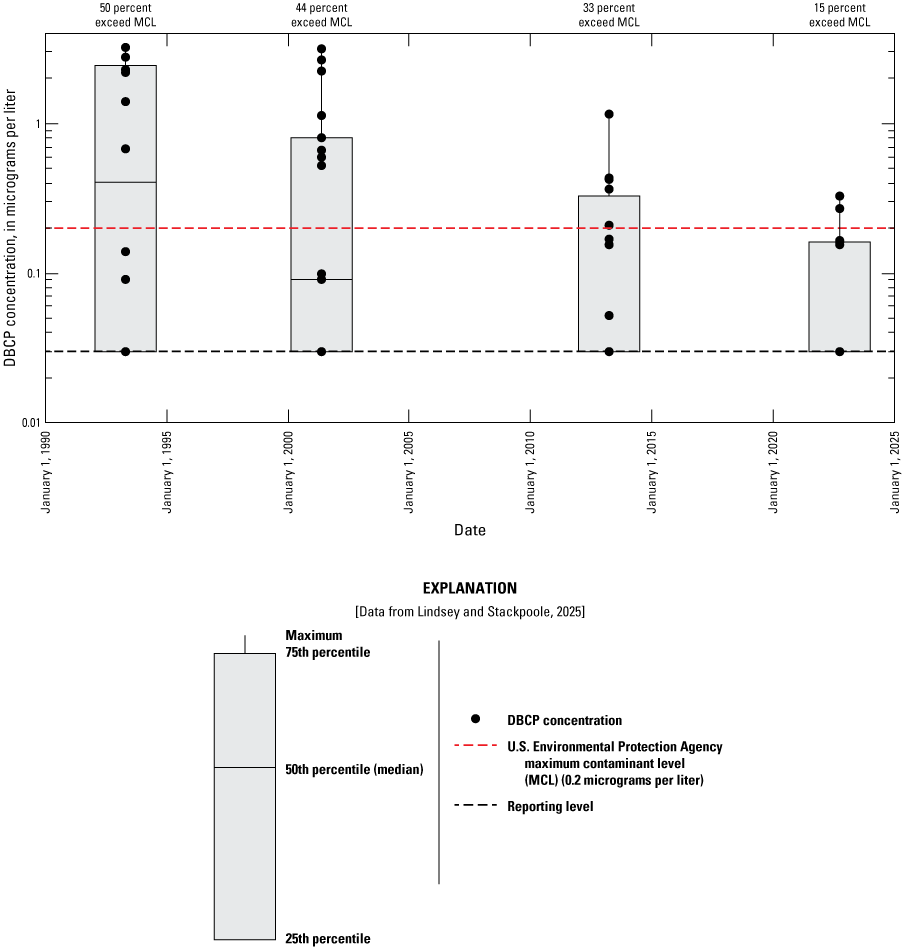
Graph showing 1,2-dibromo-3-chloropropane (DBCP) concentrations in groundwater from wells in the U.S. Geological Survey National Water Quality Network for Groundwater land use network in the Central Valley of California for the period from 1993 to 2024.

Graph showing 1,2-dibromo-3-chloropropane (DBCP) concentrations in two wells (98-meter [m] deep supply well and a 71-m deep monitoring well) sampled bimonthly for the period 2014 to 2019.
Discussion
National Groundwater Network Decadal Pesticide Analysis
The proportion of pesticide concentrations in the moderate category (greater than 10 percent of the HHB but less than or equal to HHB) decreased over time. Five of the 21 pesticides were found at moderate concentrations: alachalor, atrazine, DEA, simazine, and prometon. These compounds had the highest pesticide concentrations found, and they are the focus of our discussion. In our study, atrazine was detected at moderate concentrations in 6 different ecoregions (Pacific Northwest, Arid West, Semiarid West, Midcontinent, South Atlantic Gulf, and Northeast) in decade 1, but by decade 3, it was only detected in 1, the Midcontinent ecoregion. We hypothesize that one of the processes that may have contributed to the reduction of pesticide concentrations in groundwater include degradation through abiotic or biotic processes in soils or groundwater (Fenner and others, 2013; Aisopou and others, 2015; Kundu and others, 2019). Alternative explanations for the decrease include a reduction in pesticide use or a change in the transport of pesticides to groundwater over time. Changes in pesticide use and soil management, coupled with changes in precipitation and temperature, can vary over time, affecting pesticide transport to groundwater (Arias-Estévez and others, 2008; Bexfield and others, 2021).
Atrazine and its degradate, DEA, were the pesticides that were most commonly observed at moderate concentrations across all three decades in the Semiarid West, Midcontinent, and Northeast aggregated ecoregions. In the United States, atrazine is still one of the most heavily used agricultural pesticides (Wieben, 2025). For roughly the same period of record encompassed in this report, atrazine and DEA were frequently detected at elevated concentrations in surface water for the period from 1993 to 2017, (Larson and others, 1999; Stone and others, 2014; Nowell and others, 2018; Stackpoole and others, 2021). In the prior NGWN-GW groundwater pesticide trends assessment, these two compounds were frequently detected in groundwater in decades 1 and 2. Atrazine concentrations decreased in agricultural wells, and DEA concentrations increased in the urban and domestic drinking water supply wells (Toccalino and others, 2014).
The specific aquifers where atrazine and DEA detections occurred across all three decades include the South Platte River Basin Alluvial aquifer in the Semiarid West, the Western Lake Michigan Drainages Glacial aquifer in the Midcontinent, and the Potomac River Basin Valley and Ridge aquifer in the Northeast. In these specific geographic locations, if atrazine or DEA were detected at moderate concentrations in decade 1, they were also detected at moderate concentrations in decades 2 and 3. We also found geographic locations where either atrazine or DEA were only found in decade 3; this occurred in the Midcontinent ecoregion, the Glacial Aquifer system in the Eastern Iowa Basin, and in the Semiarid West ecoregion, the Alluvial Aquifer system in the High Plains of Texas. Identification of these new locations with moderate concentrations of atrazine or DEA would not have been possible without continued monitoring of this pesticide and its degradate in the environment across all three decades. However, we are unable to determine the drivers of these decadal patterns in the groundwater pesticide concentration data because we lack information about pesticide use and management and the soil conditions and precipitation, key factors affecting transport and degradation rates of pesticides near these aquifer locations.
Moderate concentrations of alachlor, prometon, and simazine were also found in groundwater from some NWQN-GW wells in decades 1 and 3. In 1990, alachlor was a heavily used herbicide, especially where corn was commonly a dominant agricultural crop. However, because of the introduction of acetochlor for corn and glyphosate-resistant soybeans, the use of alachlor has steadily declined since 1994 (Vecchia and others, 2009). Alachlor is not a pesticide that has frequently been detected in prior USGS national-scale groundwater reports, which were focused on decades 1 and 2 of sampling (Kolpin and others, 1998; Toccalino and others, 2014). Prometon was detected at moderate concentrations in the Semiarid West ecoregion in decade 1. Simazine was detected in moderate concentrations in the Arid West and the Northeast in decades 1 and 3. In prior USGS studies prometon and simazine were commonly detected in groundwater (Kolpin and others, 1998; Toccalino and others, 201472).
There were differences in groundwater pesticide trend patterns across the different well types. The agricultural and urban networks capture the quality of recently recharged groundwater underlying selected agricultural land uses, whereas the domestic drinking-water supply wells are generally deeper than the land use networks and reflect a mixed land use signal. A larger number of moderate concentrations were detected in the agricultural as compared to the urban or domestic use networks, but the percentage of agricultural wells with moderate concentrations decreased. In contrast, the percentage of urban and domestic wells with moderate concentrations was lower than the agricultural wells. Moreover, the percentage of moderate pesticide concentrations in urban wells decreased over the three decades, but the percentage remained the same in the domestic supply wells.
Groundwater from individual wells in the domestic-well networks is generally used by rural residents as a primary drinking-water source (U.S. Environmental Protection Agency, 1977; Degnan and others, 202118; Lindsey and others, 2021). In our study, pesticides were detected at moderate concentrations in domestic supply wells in three aggregated ecoregions: the Arid West, Northeast, and Semiarid West. The domestic-well networks within the NWQN-GW cover areas that supply groundwater to more than 6 million people, or about 13 percent of the total number of people relying on domestic supply in the United States (Dieter and others, 2018; Johnson and others, 2019), and these networks cover at least part of the principal aquifers that together represent 99 percent of the withdrawals for domestic supply (Maupin and Arnold, 2010). Domestic-supply wells are not regulated by federal or state laws, and individuals are responsible for the maintenance and any monitoring of these drinking-water sources (Leistra and Boesten, 1989; DeSimone, 2009; Tesoriero and others, 2024).
The rarity of HHB exceedances and the national-scale decrease in moderate concentrations of pesticides can be viewed as encouraging results from a human-health standpoint. However, continued monitoring and assessment of groundwater pesticides is warranted, as many negative human-health effects have been linked to pesticide exposure (Montiel-León and others, 2019; de Souza and others, 2020; Stradtman and Freeman, 2021; McGinley and others, 2023), and these negative effects can occur when pesticide concentrations are below the human health benchmarks used in this study (Ackerman, 2007; Kim and others, 2017; Remigio and others, 2024). Additionally, multiple geogenic constituents (arsenic, lithium, and strontium), as well as nitrate and salt, are common and widely distributed at concentrations exceeding current regulatory thresholds in aquifers underlying the hydrologic regions across the United States (Lindsey and others, 2023; Erickson and others, 2024). Currently, groundwater contaminants from either geogenic or anthropogenic origin are very likely to coexist in groundwater, and there is a scientific gap in understanding about the combined effects of these groundwater contaminants on human health (Xie and others, 2023; Tesoriero and others, 2024).
DBCP in the Central Valley, California Change Analysis
In this study, DBCP was the only pesticide that was found at high concentrations (above the HHB) in groundwater, and this occurred in one well network in the Central Valley, California. Prior studies have documented that nonpoint, agricultural sources of DBCP were found to contribute to groundwater contamination in the Central Valley, Calif. (Loague and Abrams, 1999). The half-life of DBCP, which has been assessed at 6 years (Burow and others, 1998; Burow and others, 2007), is likely a factor contributing to its persistence in the environment. Our study documented that, even 45 years after being banned, DBCP continued to be present in groundwater from some NWQN-GW wells at concentrations greater than the MCL of 2 µg/L. However, samples collected from the decadal NQWN-GW network of 36 wells between 1993 and 2024 and bimonthly samples collected from two ETN wells from 2014 to 2019 indicated that concentrations of DBCP at the locations and depths represented by these wells are steadily decreasing over time, and most concentrations are now less than the MCL.
The analysis of change in groundwater DBCP concentrations in part of the Central Valley of California provided an opportunity to illustrate a localized example of the effects of a legacy pesticide on the environment. Legacy pesticides are those that have been banned or phased out of use and are detected in either surface or groundwater years to decades after application of active ingredients in the environment has ceased (Rasmussen and others, 2015; McManus and others, 2017). Legacy pesticides in groundwater can become problematic for human health if concentrations are elevated relative to human health benchmarks and the groundwater source is used as a drinking-water source (Gilliom and others, 2006; McKnight and others, 2015; Hakoun and others, 2017; McGinley and others, 2023). Agricultural application of DBCP was banned in the conterminous United States in 1979 (California State Water Resources Control Board, 2002). Forty-five years after being banned, groundwater DBCP concentrations were still greater than the maximum contaminant level of 2 micrograms per liter (µg/L). The long-term monitoring data did show that number of exceedances decreased from 50 percent to 15 percent of the samples between 1993 and 2024, indicating progress toward reducing the human health risks of this pesticide in groundwater.
Summary
Increases in contaminant concentrations over time, and contaminant concentrations that exceed or approach levels of human-health concern, could affect groundwater used as a drinking-water source. We evaluated 21 pesticides in the national groundwater network. The percentage of wells that had groundwater pesticide concentrations in the moderate concentration category decreased from 7 percent in decade 1 to 2 percent in decade 3. Five pesticides (atrazine, deethyatrazine, alachlor, prometon, and simazine) had concentrations within 0.10 and 0.05 of the human health benchmark (HHB). We examined one specific pesticide, 1,2-dibromo-3-chloropropane, in a groundwater network in the Central Valley, California. Across all three decades, 1,2-dibromo-3-chloropropane, exceeded its respective HHB, but exceedances decreased over time. Given that groundwater from domestic or public supply wells is used as a drinking-water source for roughly 13 percent of the U.S. population, and that negative human-health impacts can potentially occur from consuming water with contaminant concentrations below HHBs, continued monitoring and evaluation of changes in pesticide concentrations in groundwater is important for the continued protection of human health.
Acknowledgments
Thank you to Laura Bexfield and Ken Belitz, former U.S. Geological Survey employees, who provided technical reviews, which greatly improved the quality of the final manuscript. Thank you to Jennifer Sharpe of U.S. Geological Survey for her review of the associated data release. Skylar Petrik assisted with the editorial review. Trisha Zalesak assisted with the report’s figures. This work was completed as part of the U.S. Geological Survey “Interpretation of Pesticide, PFAS, and Geogenic Constituents Data in Surface Water and Groundwater Nationwide to Support Integrated Water Availability Assessment Reports” project, an effort supported by the Water Resources Mission Area Water Quality Processes Program.
References Cited
Ackerman, F., 2007, The economics of atrazine: International Journal of Occupational and Environmental Health, v. 13, no. 4, p. 437–445, accessed May, 30, 2024, at https://www.tandfonline.com/doi/abs/10.1179/oeh.2007.13.4.437.
Aisopou, A., Binning, P.J., Albrechtsen, H.-J., and Bjerg, P.L., 2015, Modeling the factors impacting pesticide concentrations in groundwater wells: Groundwater, v. 53, no. 5, p. 722–736, accessed August 27, 2024, at https://ngwa.onlinelibrary.wiley.com/doi/10.1111/gwat.12264.
Alley, W.M., Evenson, E.J., Barber, N.L., Bruce, B.W., Dennehy, K.F., Freeman, M., Freeman, W.O., Fischer, J.M., Hughes, W.B., and Kennen, J., 2013, Progress toward establishing a national assessment of water availability and use: U.S. Geological Survey Circular 1384, 34 p., accessed June 6, 2025, at https://pubs.usgs.gov/circ/1384/.
Arias-Estévez, M., López-Periago, E., Martínez-Carballo, E., Simal-Gándara, J., Mejuto, J.-C., and García-Río, L., 2008, The mobility and degradation of pesticides in soils and the pollution of groundwater resources: Agriculture, Ecosystems & Environment, v. 123, no. 4, p. 247–260, accessed May 30, 2024, at https://www.sciencedirect.com/science/article/abs/pii/S0167880907001934.
Belitz, K., Fram, M.S., Lindsey, B.D., Stackelberg, P.E., Bexfield, L.M., Johnson, T.D., Jurgens, B.C., Kingsbury, J.A., McMahon, P.B., and Dubrovsky, N.M., 2022, Quality of groundwater used for public supply in the continental United States—A comprehensive assessment: ACS ES&T Water, v. 2, no. 12, p. 2645–2656, accessed January 8, 2024, at https://pubs.acs.org/doi/10.1021/acsestwater.2c00390.
Bexfield, L.M., Belitz, K., Fram, M.S., and Lindsey, B.D., 2022a, Volatile organic compounds in groundwater used for public supply across the United States—Occurrence, explanatory factors, and human-health context: Science of the Total Environment, v. 827, article 154313, 12 p., https://pubmed.ncbi.nlm.nih.gov/35257755/.
Bexfield, L.M., Belitz, K., Fram, M.S., Lindsey, B.D., Sandstrom, M.W., Beaty, D., and Rose, D.L., 2022b. Data for volatile organic compounds in groundwater used for public supply across the United States, 2013-19, and data for associated quality-control samples: U.S. Geological Survey data release, https://doi.org/10.5066/P9MXBT5Z.
Bexfield, L.M., Belitz, K., Lindsey, B.D., Toccalino, P.L., and Nowell, L.H., 2021, Pesticides and pesticide degradates in groundwater used for public supply across the United States—Occurrence and human-health context: Environmental Science & Technology, v. 55, no. 1, p. 362–372, accessed October 26, 2022, at https://pubs.acs.org/doi/10.1021/acs.est.0c05793.
Bexfield, L.M., Belitz, K., Sandstrom, M.W., Beaty, D., Medalie, L., Lindsey, B.D., and Nowell, L.H., 2020, Quality of pesticide data for groundwater analyzed for the National Water-Quality Assessment Project, 2013–18: U.S. Geological Survey Scientific Investigations Report 2020–5072, 35 p., accessed November 19, 2024, at https://pubs.usgs.gov/publication/sir20205072.
Bonn, B.A., 2008, Using the U.S. Geological Survey National Water Quality Laboratory LT-MDL to evaluate and analyze data: U.S. Geological Survey Open-File Report 2008–1227, 73 p., accessed February 4, 2025, at https://pubs.usgs.gov/of/2008/1227/pdf/ofr20081227.pdf.
Burow, K.R., Dubrovsky, N.M., and Shelton, J.L., 2007, Temporal trends in concentrations of DBCP and nitrate in groundwater in the eastern San Joaquin Valley, California, USA: Hydrogeology Journal, v. 15, p. 991–1007, accessed July 17, 2024, at https://link.springer.com/article/10.1007/s10040-006-0148-7.
Burow, K.R., Shelton, J.L., and Dubrovsky, N.M., 1998, Occurrence of nitrate and pesticides in ground water beneath three agricultural land-use settings in the eastern San Joaquin Valley, California, 1993–1995: U.S. Geological Survey Water Resources Investigations Report 97–4284, 51 p, accessed July 24, 2024, at https://www.researchgate.net/publication/280743034_Occurrence_of_nitrate_and_pesticides_in_ground_water_beneath_three_agricultural_land-use_settings_i n_the_eastern_San_Joaquin_Valley_California.
California State Water Resources Control Board, 2002, Groundwater information sheet— DBCP: California State Water Resources Control Board, accessed July 4, 2024, at https://www.waterboards.ca.gov/water_issues/programs/gama/docs/coc_dbcb_infosheet_jz0610.pdf.
Commission for Environmental Cooperation, 1997, Ecological regions of North America toward a common perspective: Commission for Environmental Cooperation, prepared by the Secretariat of the Commission for Environmental Cooperation, Montreal Canada, 71 p., accessed August 9, 2024, at http://www.cec.org/files/documents/publications/1701-ecological-regions-north-america-toward-common-perspective-en.pdf.
Commission for Environmental Cooperation, 2021, Ecological regions of North America, terrestrial ecoregions—Level III: Commission for Environmental Cooperation web page, accessed August 9, 2024, at http://www.cec.org/north-american-environmental-atlas/terrestrial-ecoregions-level-iii/.
Coupe, R.H., and Capel, P.D., 2016, Trends in pesticide use on soybean, corn and cotton since the introduction of major genetically modified crops in the United States: Pest Management Science, v. 72, no. 5, p. 1013–1022, accessed July 29, 2018, at https://pubmed.ncbi.nlm.nih.gov/26194175/.
de Souza, R.M., Seibert, D., Quesada, H.B., de Jesus Bassetti, F., Fagundes-Klen, M.R., and Bergamasco, R., 2020, Occurrence, impacts and general aspects of pesticides in surface water—A review: Process Safety and Environmental Protection, v. 135, p. 22–37, accessed September 3, 2024, at https://www.sciencedirect.com/science/article/abs/pii/S0957582019318683.
Degnan, J.R., Kauffman, L.J., Erickson, M., Belitz, K., and Stackelberg, P.E., 2021, Depth of groundwater used for drinking-water supplies in the United States: U.S. Geological Survey Scientific Investigations Report 2021–5069, 69 p., accessed May 9, 2024, at https://pubs.usgs.gov/publication/sir20215069.
DeSimone, L.A., 2009, Quality of water from domestic wells in principal aquifers of the United States, 1991–2004: U.S. Geological Survey Scientific Investigations Report 2008–5227, 127 p., accessed November 28, 2024, at https://pubs.usgs.gov/sir/2008/5227/.
DeSimone, L.A., McMahon, P.B., and Rosen, M.R., 2014, The quality of our Nation's waters—Water quality in principal aquifers of the United States, 1991–2010: U.S. Geological Survey Circular 1360, 151 p, accessed May 9, 2024, at https://pubs.usgs.gov/circ/1360/.
Dieter, C.A., Maupin, M.A., Caldwell, R.R., Harris, M.A., Ivahnenko, T.I., Lovelace, J.K., Barber, N.L., and Linsey, K.S., 2018, Estimated use of water in the United States in 2015: U.S. Geological Survey Circular 1441, 65 p., accessed November 10, 2021, at https://pubs.usgs.gov/circ/1441/circ1441.pdf. [Supersedes USGS Open-File Report 2017–1131.]
Erickson, M.L., Brown, C.J., Tomaszewski, E.J., Ayotte, J.D., Böhlke, J.K., Kent, D.B., and Qi, S., 2024, Prioritizing water availability study settings to address geogenic contaminants and related societal factors: Environmental Monitoring and Assessment, v. 196, article 303, 28 p., accessed May 28, 2024, at https://link.springer.com/article/10.1007/s10661-024-12362-2.
Evenson, E.J., Jones, S.A., Barber, N.L., Barlow, P.M., Blodgett, D.L., Bruce, B.W., Douglas-Mankin, K.R., Farmer, W.H., Fischer, J.M., Hughes, W.B., Kennan, J.G., Kiang, J.E., Maupin, M.A., Reeves, H.W., Senay, G.B., Stanton, J.S., Wagner, C.R., and Wilson, J.T., 2018, Continuing progress toward a national assessment of water availability and use: U.S. Geological Survey Circular 1440, 64 p., accessed June, 3, 2021, at https://pubs.usgs.gov/publication/cir1440.
Fenner, K., Canonica, S., Wackett, L.P., and Elsner, M., 2013, Evaluating pesticide degradation in the environment—Blind spots and emerging opportunities: Science, v. 341, p. 752–758, accessed January 9, 2020, at https://www.researchgate.net/publication/255959254_Evaluating_Pesticide_Degradation_in_the_Environment_Blind_Spots_and_Emerging_Opportunities.
Fishman, M.J., 1993, Methods of analysis by the U.S. Geological Survey National Water Quality Laboratory—Determination of inorganic and organic constituents in water and fluvial sediments: U.S. Geological Survey Open-File Report 93–125, 217 p, accessed March 5, 2025, at https://pubs.usgs.gov/publication/ofr93125.
Frans, L.M., and Helsel, D.R., 2005, Evaluating regional trends in groundwater nitrate concentrations of the Columbia Basin ground water management area: U.S. Geological Survey Scientific Investigations Report 2005−5078, 7 p., accessed December 3, 2024, at https://doi.org/10.3133/sir20055078.
Furlong, E.T., Anderson, B.D., Werner, S.L., Soliven, P.P., Coffey, L.J., and Burkhardt, M.R., 2001, Methods of analysis by the U.S. Geological Survey National Water Quality Laboratory—Determination of pesticides in water by graphitized carbon-based solid-phase extraction and high-performance liquid chromatography/mass spectrometry: U.S. Geological Survey Water-Resources Investigations Report 2001–4134, accessed June 6, 2025, at https://doi.org/10.3133/wri014134.
Gilliom, R.J., 2007, Pesticides in U.S. streams and groundwater: Environmental Science & Technology, v. 41, no. 10, p. 3409–3414, accessed June 6, 2019, at https://pubs.acs.org/doi/10.1021/es072531u.
Gilliom, R.J., Alley, W.M., and Gurtz, M.E., 1995, Design of the National Water-Quality Assessment Program; occurrence and distribution of water-quality conditions: U.S. Geological Survey Circular 1112, accessed June 3, 2024, at https://pubs.usgs.gov/publication/cir1112.
Gilliom, R.J., Barbash, J.E., Crawford, C.G., Hamilton, P.A., Martin, J.D., Nakagaki, N., Nowell, L.H., Scott, J.C., Stackelberg, P.E., and Thelin, G.P., 2006, Pesticides in the Nation’s streams and ground water, 1992–2001: U.S. Geological Survey Circular 1291, 184 p, accessed June 4, 2018, at https://pubs.usgs.gov/publication/cir1291.
Hakoun, V., Orban, P., Dassargues, A., and Brouyère, S., 2017, Factors controlling spatial and temporal patterns of multiple pesticide compounds in groundwater (Hesbaye chalk aquifer, Belgium): Environmental Pollution, v. 223, p. 185–199, accessed October 30, 2024, at https://pubmed.ncbi.nlm.nih.gov/28139324/.
Helsel, D.R., Hirsch, R.M., Ryberg, K.R., Archfield, S.A., and Gilroy, E.J., 2020, Statistical methods in water resources: U.S. Geological Survey Techniques and Methods book 4, chap. A3, 458 p., accessed January 24, 2025, at https://pubs.usgs.gov/tm/04/a03/tm4a3.pdf.
Helsel, D.R., Mueller, D.K., and Slack, J.R., 2006, Computer program for the Kendall family of trend tests: U.S. Geological Survey Scientific Investigations Report 2005–5275, 4 p., accessed June 6, 2025, at https://doi.org/10.3133/sir20055275.
Hoffman, R.S., Capel, P.D., and Larson, S.J., 2000, Comparison of pesticides in eight U.S. urban streams: Environmental Toxicology and Chemistry, v. 19, no. 9, p. 2249–2258, accessed January 10, 2020, at https://academic.oup.com/etc/article-abstract/19/9/2249/7830115?redirectedFrom=fulltext&login=false.
Johnson, T.D., Belitz, K., and Lombard, M.A., 2019, Estimating domestic well locations and populations served in the contiguous U.S. for years 2000 and 2010: Science of the Total Environment, v. 687, p. 1261–1273, accessed August 28, 2024, at https://pubmed.ncbi.nlm.nih.gov/31412460/.
Kim, K.-H., Kabir, E., and Jahan, S.A., 2017, Exposure to pesticides and the associated human health effects: Science of the Total Environment, v. 575, p. 525–535, accessed July 10, 2024, at https://pubmed.ncbi.nlm.nih.gov/27614863/.
Kolpin, D.W., Barbash, J.E., and Gilliom, R.J., 1998, Occurrence of pesticides in shallow groundwater of the United States—Initial results from the National Water-Quality Assessment program: Environmental Science & Technology, v. 32, no. 5, p. 558–566, accessed February 27, 2025, at https://pubs.acs.org/doi/abs/10.1021/es970412g.
Koterba, M.T., 1998, Ground-water data-collection protocols and procedures for the National Water-Quality Assessment Program—Collection, documentation, and compilation of required site, well, subsurface, and landscape data for wells: U.S. Geological Survey Water-Resources Investigations Report 98–4107, 91 p, accessed July 10, 2024, at https://pubs.usgs.gov/wri/1998/4107/report.pdf.
Kundu, K., Marozava, S., Ehrl, B., Merl-Pham, J., Griebler, C., and Elsner, M., 2019, Defining lower limits of biodegradation—Atrazine degradation regulated by mass transfer and maintenance demand in Arthrobacter aurescens TC1: The ISME Journal, v. 13, p. 2236–2251, accessed September 5, 2024, at https://pubmed.ncbi.nlm.nih.gov/31073212/.
Lapham, W.W., Wilde, F.D., and Koterba, M.T., 1995, Ground-water data-collection protocols and procedures for the National Water-Quality Assessment Program—Selection, installation, and documentation of wells, and collection of related data: U.S. Geological Survey Open-File Report 95–398, 70 p., accessed May 28, 2021, at https://pubs.usgs.gov/of/1995/ofr-95-398/pdf/of95-398.pdf.
Larson, S.J., Gilliom, R.J., and Capel, P.D., 1999. Pesticides in streams of the United States—Initial results from the National Water-Quality Assessment Program: U.S. Geological Survey Water-Resources Investigations Report 98–4222, 93 p. accessed February 26, 2025, at https://pubs.usgs.gov/publication/wri984222.
Leistra, M., and Boesten, J., 1989, Pesticide contamination of groundwater in western Europe: Agriculture, Ecosystems & Environment, v. 26, no. 3–4, p. 369–389, accessed September 3, 2024, at https://www.sciencedirect.com/science/article/abs/pii/0167880989900182.
Lindsey, B.D., and Stackpoole, S.M., 2025, Water quality data for multidecadal change in pesticide concentrations relative to human health benchmarks in the Nation’s groundwater: U.S. Geological Survey data release, https://doi.org/10.5066/P1CFEJIX.
Lindsey, B.D., Belitz, K., Cravotta, C.A., III, Toccalino, P.L., and Dubrovsky, N.M., 2021, Lithium in groundwater used for drinking-water supply in the United States: Science of the Total Environment, v. 767, article 144691, accessed January 1, 2025, at https://www.sciencedirect.com/science/article/abs/pii/S0048969720382243.
Lindsey, B.D., Fleming, B.J., Goodling, P.J., and Dondero, A.M., 2023, Thirty years of regional groundwater-quality trend studies in the United States—Major findings and lessons learned: Journal of Hydrology, v. 627, pt. A, article 130427, 22 p., accessed July 8, 2024, at https://www.sciencedirect.com/science/article/pii/S0022169423013690.
Lindsey, B.D., and Kingsbury, J.A., 2024, The U.S. Geological Survey National Water Quality Network—Groundwater—2023: U.S. Geological Survey General Information Product 247, 1 p., accessed June, 6, 2025, at https://pubs.usgs.gov/gip/247/gip247.pdf.
Lindsey, B.D., and Rupert, M.G., 2012, Methods for evaluating temporal groundwater quality data and results of decadal-scale changes in chloride, dissolved solids, and nitrate concentrations in groundwater in the United States, 1988–2010: U.S. Geological Survey Scientific Investigations Report 2012–5049, 46 p., accessed March 2, 2023, at https://pubs.usgs.gov/sir/2012/5049/.
Loague, K., and Abrams, R.H., 1999, DBCP contaminated groundwater—Hot spots and nonpoint sources: Journal of Environmental Quality, v. 28, no. 2, p. 429–446, accessed September 5, 2024, at https://acsess.onlinelibrary.wiley.com/doi/10.2134/jeq1999.00472425002800020009x.
Martin, J.D., Norman, J.E., Sandstrom, M.W., and Rose, C.E., 2017, A field study of selected U.S. Geological Survey analytical methods for measuring pesticides in filtered stream water, June–September 2012: U.S. Geological Survey Scientific Investigations Report 2017–5049, 106 p., accessed October 21, 2022, at https://pubs.usgs.gov/sir/2017/5049/sir20175049.pdf.
Mathany, T.M., Saraceno, J.F., and Kulongoski, J.T., 2019, Guidelines and standard procedures for high-frequency groundwater-quality monitoring stations—Design, operation, and record computation: U.S. Geological Survey Techniques and Methods 1–D7, 54 p., accessed May 3, 2021, at https://doi.org/10.3133/tm1D7.
Maupin, M.A., and Arnold, T.L., 2010, Estimates for self-supplied domestic withdrawals and population served for selected principal aquifers, calendar year 2005: U.S. Geological Survey Open-File Report 2010–1223, 10 p., accessed October 25, 2024, at https://pubs.usgs.gov/of/2010/1223/.
McGinley, J., Healy, M.G., Ryan, P.C., Harmon O’Driscoll, J., Mellander, P.-E., Morrison, L., and Siggins, A., 2023, Impact of historical legacy pesticides on achieving legislative goals in Europe: Science of the Total Environment, v. 873, article 162312, accessed September 5, 2024, at https://www.sciencedirect.com/science/article/pii/S0048969723009282.
McKnight, U.S., Rasmussen, J.J., Kronvang, B., Binning, P.J., and Bjerg, P.L., 2015, Sources, occurrence and predicted aquatic impact of legacy and contemporary pesticides in streams: Environmental Pollution, v. 200, p. 64–76, accessed May 21, 2024, at https://pubmed.ncbi.nlm.nih.gov/25697475/.
McManus, S.-L., Coxon, C.E., Mellander, P.-E., Danaher, M., and Richards, K.G., 2017, Hydrogeological characteristics influencing the occurrence of pesticides and pesticide metabolites in groundwater across the Republic of Ireland: Science of the Total Environment, v. 601–602, p. 594–602, accessed October 20, 2024, at https://www.sciencedirect.com/science/article/abs/pii/S0048969717311828.
Montiel-León, J.M., Munoz, G., Vo Duy, S., Do, D.T., Vaudreuil, M.-A., Goeury, K., Guillemette, F., Amyot, M., and Sauvé, S., 2019, Widespread occurrence and spatial distribution of glyphosate, atrazine, and neonicotinoids pesticides in the St. Lawrence and tributary rivers: Environmental Pollution, v. 250, p. 29–39, accessed September 5, 2024, at https://www.sciencedirect.com/science/article/abs/pii/S0269749119301721.
Nowell, L.H., Moran, P.W., Schmidt, T.S., Norman, J.E., Nakagaki, N., Shoda, M.E., Mahler, B.J., Van Metre, P.C., Stone, W.W., and Sandstrom, M.W., 2018, Complex mixtures of dissolved pesticides show potential aquatic toxicity in a synoptic study of Midwestern US streams: Science of the Total Environment, v. 613, p. 1469–1488, accessed June 4, 2018, at https://www.sciencedirect.com/science/article/abs/pii/S0048969717315735.
Rasmussen, J.J., Wiberg-Larsen, P., Baattrup-Pedersen, A., Cedergreen, N., McKnight, U.S., Kreuger, J., Jacobsen, D., Kristensen, E.A., and Friberg, N., 2015, The legacy of pesticide pollution—An overlooked factor in current risk assessments of freshwater systems: Water Research, v. 84, p. 25–32, accessed May 29, 2024, at https://www.sciencedirect.com/science/article/abs/pii/S0043135415301238.
Remigio, R.V., Andreotti, G., Sandler, D.P., Erickson, P.A., Koutros, S., Albert, P.S., Hurwitz, L.M., Parks, C.G., Lubin, J.H., Hofmann, J.N., and Beane Freeman, L.E., 2024, An updated evaluation of atrazine-cancer incidence associations among pesticide applicators in the agricultural health study cohort: Environmental Health Perspectives, v. 132, no. 2, article 27010, 12 p., accessed June 20, 2024, at https://ehp.niehs.nih.gov/doi/full/10.1289/EHP13684.
Rose, D.L., Sandstrom, M.W., and Murtagh, L.K., 2016, Determination of heat purgeable and ambient purgeable volatile organic compounds in water by gas chromatography/mass spectrometry: U.S. Geological Survey Techniques and Methods book 5, chap. B12, 61 p., accessed November 5, 2024, at https://pubs.usgs.gov/tm/05/b12/tm5b12.pdf.
Rowe, B., Toccalino, P.L., Moran, M.J., Zogorski, J.S., and Price, C.V., 2007, Occurrence and potential human-health relevance of volatile organic compounds in drinking water from domestic wells in the United States: Environmental Health Perspectives, v. 115, no. 11, p. 1539–1546, accessed July 3, 2024, at https://pubmed.ncbi.nlm.nih.gov/18007981/.
Rowe, G.L., Jr., Belitz, K., Demas, C.R., Essaid, H.I., Gilliom, R.J., Hamilton, P.A., Hoos, A.B., Lee, C.J., Munn, M.D., and Wolock, D.W., 2013, Design of Cycle 3 of the National Water-Quality Assessment Program, 2013–23—Part 2—Science plan for improved water-quality information and management: U.S. Geological Science Open-File Report 2013–1160, 110 p., accessed July 16, 2018, at https://pubs.usgs.gov/of/2013/1160/pdf/OF13-1160.pdf.
Sandstrom, M.W., Kanagy, L.K., Anderson, C.A., and Kanagy, C.J., 2015, Determination of pesticides and pesticide degradates in filtered water by direct aqueous-injection liquid chromatography-tandem mass spectrometry: U.S. Geological Survey Techniques and Methods, book 5, chap. B11, accessed February 4, 2019, at https://pubs.usgs.gov/tm/05/b11/tm5b11.pdf.
Saraceno, J., Kulongoski, J.T., and Mathany, T.M., 2018, A novel high-frequency groundwater quality monitoring system: Environmental Monitoring and Assessment, v. 190, article 477, accessed July 3, 2024, at https://link.springer.com/article/10.1007/s10661-018-6853-6.
Scott, J.C., 1990, Computerized stratified random site-selection approaches for design of a ground-water-quality sampling network: U.S. Geological Survey Water-Resources Investigations Report 90–4101, accessed May 9, 2024, at https://pubs.usgs.gov/publication/wri904101.
Stackpoole, S.M., Shoda, M.E., Medalie, L., and Stone, W.W., 2021, Pesticides in US Rivers—Regional differences in use, occurrence, and environmental toxicity, 2013 to 2017: Science of the Total Environment, v. 787, article 147147, accessed July 7, 2021, at https://pubmed.ncbi.nlm.nih.gov/33994194/.
Stackpoole, S.M., Oelsner, G.P., Stets, E.G., Hecht, J.S., Johnson, Z.C., Tesoriero, A.J., Walvoord, M.A., Chanat, J.G., Dunne, K.A., Goodling, P.J., Lindsey, B.D., Meador, M.R., and Spaulding, S.A., 2023, Integrated water resources trend assessments—State of the science, challenges, and opportunities for advancement: Journal of the American Water Resources Association, v. 59, p. 1181–1197., accessed May 30, 2023, at https://onlinelibrary.wiley.com/doi/10.1111/1752-1688.13137?msockid=2fb45f98637769ef065649d162da68ca.
Stets, E.G., ed., 2025, v. 1894. U.S. Geological Survey integrated water availability assessment—2010–20: U.S. Geological Survey Professional Paper. [variously paged]. [Also available at https://doi.org/10.3133/pp1894.]
Stone, W.W., Gilliom, R.J., and Ryberg, K.R., 2014, Pesticides in U.S. streams and rivers—Occurrence and trends during 1992–2011: Environmental Science & Technology, v. 48, no. 19, p. 11025–11030, accessed June 4, 2018, at https://pubs.acs.org/doi/10.1021/es5025367.
Stradtman, S.C., and Freeman, J.L., 2021, Mechanisms of neurotoxicity associated with exposure to the herbicide atrazine: Toxics, v. 9, no. 9, article 207, accessed August 29, 2024, at https://pubmed.ncbi.nlm.nih.gov/34564358/.
Tesoriero, A.J., Erickson, M.L., Conaway, C.H., Tomaszewski, E.J., and Green, C.T., 2024, Knowledge gaps and opportunities for understanding water-quality processes affecting water availability for beneficial uses: U.S. Geological Survey Open-File Report 2023–1086, 81 p., accessed November 8, 2024, at https://pubs.usgs.gov/of/2023/1086/ofr20231086.pdf.
Toccalino, P.L., Gilliom, R.J., Lindsey, B.D., and Rupert, M.G., 2014, Pesticides in groundwater of the United States—Decadal‐scale changes, 1993–2011: Groundwater, v. 52, p. 112–125, accessed March 7, 2024, at https://ca.water.usgs.gov/pubs/2014/ToccalinoEtAl2014.pdf.
U.S. Environmental Protection Agency, 1977, EPA safe drinking water standards go into effect—U.S. Environmental Protection Agency Press Release—June 25, 1977: U.S. Environmental Protection Agency web page, accessed October 25, 2024, at https://www.epa.gov/archive/epa/aboutepa/epa-safe-drinking-water-standards-go-effect.html.
U.S. Environmental Protection Agency, 2018, 2018 Edition of the Drinking Water Standards and Health Advisories, EPA 822–F–18–001: Washington, D.C., U.S. Environmental Protection Agency, Office of Water, 12 p., accessed November 19, 2019, at https://www.epa.gov/system/files/documents/2022-01/dwtable2018.pdf.
U.S. Environmental Protection Agency, 2021, 2021 human health benchmarks for pesticides: U.S. Environmental Protection Agency web page, accessed July 9, 2024, at https://iaspub.epa.gov/apex/pesticides/f?p=HHBP:home.
U.S. Geological Survey, 2024, Health-based screening levels for evaluating water-quality data: U.S. Geological Survey web page, accessed July 19, 2024, at https://water.usgs.gov/water-resources/hbsl/index.html.
Vecchia, A.V., Gilliom, R.J., Sullivan, D.J., Lorenz, D.L., and Martin, J.D., 2009, Trends in concentrations and use of agricultural herbicides for corn belt rivers, 1996−2006: Environmental Science & Technology, v. 43, p. 9096–9102, accessed July 17, 2024, at https://water.usgs.gov/nawqa/pubs/es902122j.pdf.
Werner, S.L., Burkhardt, M.R., and DeRusseau, S.N., 1996, Methods of analysis by the U.S. Geological Survey National Water Quality Laboratory—Determination of pesticides in water by Carbopak-B solid-phase extraction and high-performance liquid chromatography: U.S. Geological Survey Open-File Report 96–216, 42 p., accessed November 25. 2024, at https://pubs.usgs.gov/of/1996/0216/report.pdf.
Wieben, C.M., 2025, Estimated annual agricultural pesticide use by major crop or crop group for states of the conterminous United States, 1992–2022: U.S. Geological Survey data release, https://doi.org/10.5066/P900FZ6Y.
Xie, X., Shi, J., Pi, K., Deng, Y., Yan, B., Tong, L., Yao, L., Dong, Y., Li, J., Ma, L., Zheng, C., and Jiang, G., 2023, Groundwater Quality and Public Health: Annual Review of Environment and Resources, v. 48, p. 395–418, accessed November 8, 2024, at https://www.annualreviews.org/content/journals/10.1146/annurev-environ-112321-114701.
Zaugg, S.D., Sandstrom, M.W., Smith, S.G., and Fehlberg, K.M., 1995, Methods of analysis by the U.S. Geological Survey National Water Quality Laboratory—Determination of pesticides in water by C-18 solid-phase extraction and capillary-column gas chromatography/mass spectrometry with selected-ion monitoring: U.S. Geological Survey Open-File Report 95–181, 49 p., accessed November 5, 2024, at https://pubs.usgs.gov/of/1995/0181/report.pdf.
Supplemental Information
Concentrations of chemical constituents in water are in either milligrams per liter (mg/L) or micrograms per liter (µg/L).
Abbreviations
DBCP
1,2-dibromo-3-chloropropane
DEA
deethylatrazine
EPA
U.S. Environmental Protection Agency
ETN
Enhanced Trends Network
HHB
human health benchmark
HHBP
human health benchmarks for pesticides
LRL
laboratory reporting level
MCL
maximum contaminant level
NWQL
U.S. Geological Survey National Water Quality Laboratory
NWQN-GW
U.S. Geological Survey National Water Quality Network for Groundwater
QAQC
quality assurance and quality control
USGS
U.S. Geological Survey
For additional information, contact:
National Water Quality Program
Director, Water Resources Mission Area
U.S. Geological Survey
12201 Sunrise Valley Drive
Reston, Virginia 20192
or visit our website at
https://www.usgs.gov/programs/national-water-quality-program/welcome-national-water-quality-program
Publishing support provided by the U.S. Geological Survey, Science Publishing Network, Baltimore Publishing Service Center.
Disclaimers
Any use of trade, firm, or product names is for descriptive purposes only and does not imply endorsement by the U.S. Government.
Although this information product, for the most part, is in the public domain, it also may contain copyrighted materials as noted in the text. Permission to reproduce copyrighted items must be secured from the copyright owner.
Suggested Citation
Stackpoole, S.M., Lindsey, B.D., and Nell, C.S., 2025, Multidecadal change in pesticide concentrations relative to human health benchmarks in the Nation’s groundwater: U.S. Geological Survey Scientific Investigations Report 2025–5081, 21 p., https://doi.org/10.3133/sir20255081.
ISSN: 2328-0328 (online)
Study Area
| Publication type | Report |
|---|---|
| Publication Subtype | USGS Numbered Series |
| Title | Multidecadal change in pesticide concentrations relative to human health benchmarks in the Nation’s groundwater |
| Series title | Scientific Investigations Report |
| Series number | 2025-5081 |
| DOI | 10.3133/sir20255081 |
| Publication Date | September 26, 2025 |
| Year Published | 2025 |
| Language | English |
| Publisher | U.S. Geological Survey |
| Publisher location | Reston, VA |
| Contributing office(s) | WMA - Earth System Processes Division |
| Description | Report: iv, 21 p.; Data Release |
| Country | United States |
| Other Geospatial | continental United States |
| Online Only (Y/N) | Y |
| Additional Online Files (Y/N) | N |